The Jerusalem Post
Jpost search icon google-icon iphone
  Set as Homepage
Wed, Jun 19, 2013   11 Tammuz, 5773
newspapers magazines
 
    • Breaking News
    • Diplomacy & Politics
    • Defense
    • National
    • Mideast
    • Syria
    • Iran
    • World
    • Business
    • Sports
    • Health & Science
    • Environment
  • Video
  • Opinion
    • Columnists
    • Editorials
    • Op-Eds
    • Letters
  • Jewish World
  • Lifestyle
    • Arts & Culture
    • Food & Wine
    • Travel
  • Features
    • Insights & Features
    • Week in review
    • On the Web
    • Shalva Superheroes
    • Obama in Israel
  • Blogs
    • In the news
    • Judaism
    • From the Middle East
    • Lifestyle
    • Aliya
    • Science and Technology
  • JPost Apps
    • iPhone app
    • iPad app
    • Android app
    • Twitter
    • Facebook
    • RSS feeds
    • JPost Toolbar
    • JPost Newsletter
    • JPost Alert
  • Premium Zone
    • The Jerusalem Report
    • Magazine
    • Metro
    • In Jerusalem
    • ePaper
    • Expert Opinion
    • Q&A
    • Dash
    • Christian Edition
    • Ivrit
  • French
    • Politique & Social
    • Affaires Palestiniennes
    • Diplomatie & Monde
    • Art & Culture
    • Israel
  • Green Israel
JPost Learn Hebrew  
Advertise with us  
Nefesh Guided Aliyah  
Eldan  
AFMDA  
YTA  
Isram Group  
JPost Twitter  
JPost Facebook  
Classifieds  


Breaking News
 
 
  • JPost.com
  • Jewish World
  • Judaism
 

May one convert without intent to keep mitzvot?

By SHLOMO BRODY
04/19/2012 14:55
Tweet

Ask the Rabbi: Controversies over appropriate standards for conversion to Judaism have abounded since the Enlightenment period.

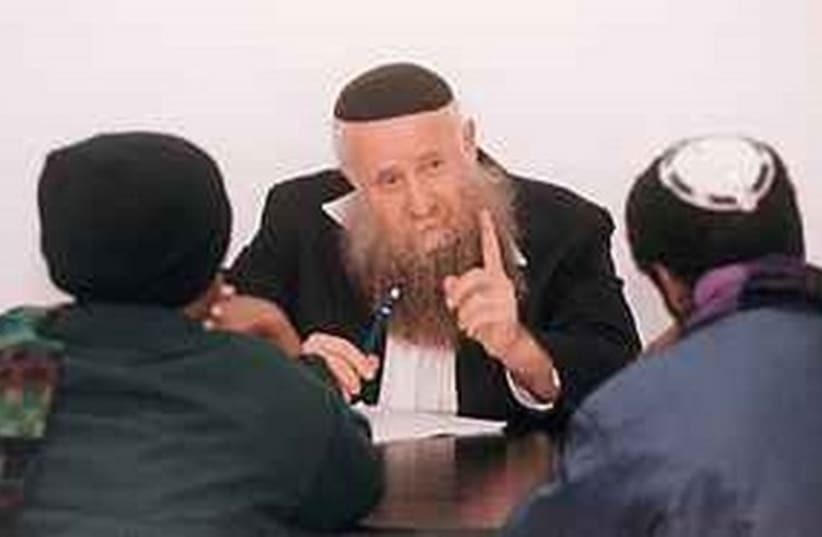
Rabbi teaching converts
Rabbi teaching converts Photo: Ariel Jerozolimski
Controversies over appropriate standards for conversion to Judaism have abounded since the Enlightenment period and continue to confound in Israel and across the Diaspora.

Medieval Jewry did not struggle with this issue, since Jewish social norms generally expected observance of Halacha, and certainly from a proselyte. In this regard, converts followed the model of Ruth, who declared to her mother-in-law Naomi, “Your people shall by my people and your God shall be my God” (Ruth 1:16). Conversion to a minority religion regularly subjugated to persecution was also relatively rare. Modern Jewish life, which features a plurality of cultural lifestyles in open societies, has broken this assumption and created great debates within the rabbinic world.

The formal procedure for conversion remains fairly simple: immersion in a mikve (ritual bath), circumcision for men and, in Temple times, an animal sacrifice. The most central criterion for conversion remains the acceptance to perform the commandments and the motivation behind this consent. The Sages did not want people to convert for financial or political gain or for the sake of marriage, for example. Potential converts were warned of the hardships that Jews might suffer as well as the punishments for sin. Once deemed sincere, they were taught various elements of Jewish law and required to take upon the yoke of Heaven. Maimonides significantly added the necessity of teaching the theological underpinnings of Judaism, a requirement not specified by the Talmud.

This conception of conversion raises a problem with converting children, who are presumed not to have the intellect necessary to take upon this responsibility. The Talmud, however, asserts that the judicial court serves as their guardian and can accept for them this categorical benefit. Once reaching the age of majority, the child can repudiate her Jewishness, but is presumed to consent if she continues to behave according to typical Jewish practice.

This paternalistic approach was challenged in the modern era in which the rabbinic judges fear that the child will be raised in a non-observant home, thereby setting her up to sin and become liable for punishment.

Rabbis Abraham Isaac Kook and Yosef Elyashiv contend that the judicial court may not convert a child unless they are confident that she will grow up to become religious.

While agreeing that this is preferable, Rabbi Chaim Grodzinsky asserts that it remains meritorious for a child to convert as long as she will become generally observant, since despite her potential sins, she will accrue many benefits.

Rabbi Ovadia Yosef believes that one can convert a child from a non-observant home if they remain committed to educating the child in a religious setting which will make it realistic that she will ultimately become consistently observant. This position was shared by Rabbi Moshe Feinstein, who further contemplated the possibility that it always remains meritorious for the child to enjoy the sanctity of the Jewish people while her sins will be exculpated because she acts out of ignorance.

A more complex case involves adult conversions in which the rabbinic court doubts whether the convert truly intends to become fully observant. The Talmud asserts that if a potential convert accepts everything except one aspect of Jewish law, the court should reject the candidacy. As such, many decisors, including Rabbi Feinstein, have argued that Jewish conversion requires intent to completely observe Jewish law.

To prevent intermarriage, Rabbi Grodzinsky more leniently ruled that as long as one generally intends to observe the basic facets of Jewish law, even if their performance will be lackluster in certain areas, the conversion should be permitted. His basic claim – that the Talmud only excluded those who explicitly conditioned their conversion on not observing certain laws – was more radically applied by Rabbi David Tzvi Hoffman. To prevent the severe sin of intermarriage, he allowed a non-Jewish woman to convert even though he understood that she would continue to live with her husband who was a kohen (member of the priestly line) and thus prohibited from marrying a convert.

Other scholars, such as Rabbi Avraham Kahana-Shapira, criticized these rulings as unfounded hairsplitting and burying one's head in the sand.

The most lenient position was advocated by Rabbi Benzion Uziel, who asserted that even if we know a potential convert will not be fully observant, judges can minimally tolerate a more generic acceptance of Jewish law with the hope that the convert will eventually become observant to avoid a sinful life. His general approach has been advocated by some contemporary Israeli figures who want to preserve the Jewish identity of Israelis who have definitive Jewish lineage and are fully integrated on a nationalistic level, even if they are not halachically Jewish by birth. Nonetheless, the preponderance of decisors have rejected this position, leaving conversion standards as a divisive debate.

The writer, online editor of Tradition, teaches at Yeshivat Hakotel. JPostRabbi@yahoo.com
  • Send
  • Large
  • Small
  • Print
  • Share
Most Viewed in
1
Hungarian man, 98, charged with WW2 crimes
2
‘I would convert and make aliya if it weren’t for the camels’
3
Rabbinical Council of America issues letter of support for Rabbi Stav
4
PM: Israel ready to defend against another Holocaust
JPost Community
Tweet
diaspora enlightenment medieval jewry moshe feinstein Ruth Halacha
Tweets about "#jpost"
Share this article
Tweet
Share
Send
Your comment must be approved by a moderator before being published on JPost.com. Disqus users can post comments automatically.

Comments must adhere to our Talkback policy. If you believe that a comment has breached the Talkback policy, please press the flag icon to bring it to the attention of our moderation team.
JPost Services
conferenceConference
newsletterNewsletter
iphoneMobile Apps
kotelcamKotel Cam
kolboJPost Alert
premiumPremium
JPost TV News  
Mobile Apps  
Bank Hapoalim  
Meir Panim  
Israel Law Center  
Inbal Hotel Jerusale  
Meier on Rothschild  
Weizmann Institute o  
JPost Premium Zone  
JPost kotel Camera  
         
 
Israel Focus
JPost TV News
Watch Now!  
Donate to Save Lives in Israel
 
Israel Law Center
The ultimate Mission to Israel, October 21 – 28, 2013 Register now!  
Nefesh B'Nefesh Guided Aliyah
Already living in Israel? Enjoy the Benefits of Aliyah!  
One year International MBA
in English, Bar-Ilan University, Israel – Open House July 9, 2013, 17:30  
Give "Freedom" this Passover
to needy Israeli families. Donate now  
YTA – A Yeshiva in Israel…
in English. Come Join Us  
War Threatens
Protect the People of Northern Israel  
Bank Hapoalim
Israeli's number one bank  
Jerusalem Post Lite
Lite Edition of the Jerusalem Post for English improvement  
Learn Hebrew with us
Get 10 minutes free personal coaching in Hebrew through phone or Skype  
JPost newspapers
Sign up for the JPost newspapers and receive one month free subscription  
Kosher English Magazine
English language weekly magazine - especially for religious people  
JReport Kindle Edition
Now you can get the Jerusalem Report directly to your Kindle  
JPost Premium Edition
The very best articles are available only in our Premium edition  
Lifestyle Magazine
 
 
Real Estate
Meier on Rothschild
Tel Aviv's Most Prestigious Address  
Don't Look For a House!
In Israel, our website will do it for you!  
 
Travel
Tourism Magazine
June 2013  
The Inbal Jerusalem Hotel
Hot summer deal, order now!  
Eldan Rent a Car
20% off all Car Rental Reservations in Israel  
Hertz Car Rental
Special Online Discounts!  
The King David Jerusalem Hotel
One of the world's truly iconic hotels, and a Jerusalem landmark  


Sites Of Interest:

Jerusalem Hotels
KKL-JNF
Poalim Online
BreitBart.com
Our Friends
Jerusalem Attractions
Jerusalem Tours
itraveljerusalem.com

JPost sites:

Learn Hebrew
The Jerusalem Report
Our Magazines
JPost Edition Francaise
Green Israel
Christian World
Jerusalem Post Lite

Services:

JPost Mobile Apps
JPost Premium
JPost Newsletter
JPost Toolbar
JPost News Ticker
JPost RSS feeds
JPost Archives
JPost Alert
JPost Kotel Cam

JPost Conferences:

NYC Conference
Diplomatic Conference

Information:

About Us
Feedback
Staff E-mails
Copyright
Sitemap
News Partners
Advertise with Us
Statistics
Ad Specs
Terms Of Service
Jpost.com, the online edition of the Jerusalem Post Newspaper - the most read and best-selling English-language newspaper in Israel. For analysis and opinion from Israel, the Jewish World and the Middle East. Jpost.com offers expert and in-depth reporting from Israel, the Jewish World and the Middle East, including diplomacy and defense, the Palestinian-Israeli conflict, the Arab Spring, the Mideast peace process, politics in Israel, life in Jerusalem, Israel's international affairs, Iran and its nuclear program, Syria and the Syrian civil war, Lebanon, the Palestinian Authority, the West Bank and Gaza Strip, Israel's world of business and finance, and Jewish life in Israel and the Diaspora.
 
About Us | Advertise with Us | Subscribe | Premium | Newsletter | RSS | Contact Us
 
All rights reserved © The Jerusalem Post 1995 - 2012