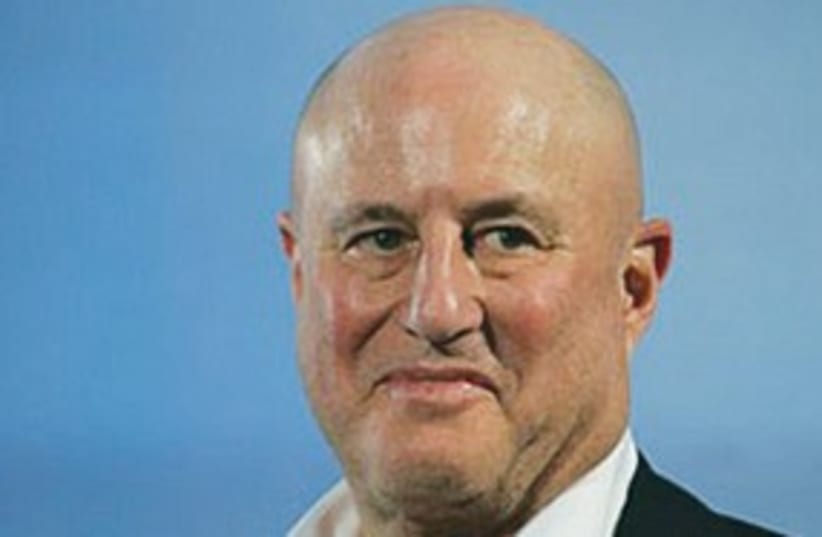
The son of a “dogmatic atheist” cantor and a schoolteacher, Queens native Carl Icahn studied philosophy at Princeton before dropping out of medical school and going on to a career in Wall Street where he earned a reputation as a ruthless corporate raider.Since the Wall Street crash of 2008, the Wall Street Journal has noted that the language used to describe Icahn has become much kinder, evolving from “corporate raider” to “shareholder activist.”Icahn made a $25 million donation to the Mount Sinai Medical Center in 2004 and said recently that while he was not contacted by Bill Gates and Warren Buffett to join their “Giving Pledge,” he planned to leave most of his assets to charitable causes.13. George Kaiser Age: 67. Net worth: $10 billion.Born in Tulsa to a family that fled from Nazi Germany, George Kaiser was ranked third on Business Week’s 2008 list of the Top 50 American philanthropists, behind Warren Buffett and Bill Gates. His focus is on early intervention in the cycle of poverty and he is also a major donor to Oklahoma’s Jewish community. Kaiser made his money as the head of the Kaiser-Francis Oil company, and as chairman of BOK Financial Corporation.Born in Aleppo, Syria, to a family with banking connections dating back to Ottoman times, Joseph Safra grew up in Beirut and moved with his family to Brazil in 1952. In the 1960s the Safra family founded Banco Safra, today the country’s 11th largest private bank. Four years ago, Safra bought his brother Moise’s 50 percent stake in the Safra group.Elder brother Edmond, who founded the Republic Bank in New York, died in a fire at his home in Monaco in 1999. The Safra family owned First International Bank of Israel until 2003. The family also owned a stake in Cellcom, which it sold to local businessman Nochi Dankner in 2005.Best known in Israel for his free daily newspaper Yisrael Hayom, now the country’s most widely read daily, Sheldon Adelson was once ranked the third-richest man in America with a fortune of $26.5 billion. However the 2008 financial crash saw his worth plunge by $24b. – making him the worst-hit American billionaire – before he recovered.The son of a Boston cab driver, Adelson made and lost his first million on the stock market, went into real estate and got his big break when he created COMDEX, a computer trade show, in 1979 just as the personal computer market was taking off. In the late 1980s Adelson moved into the hospitality market when he bought the Sands Hotel and Casino in Las Vegas. He then became the first American developer to build a casino in Macau off the coast of China. Among his philanthropic activities, Adelson, a major contributor to the Republican Party, has been a prominent donor to Birthright Israel and also donated $25 million to Yad Vashem.14. Joseph Safra Age: 71. Net worth: $10 billion.Born in Aleppo, Syria, to a family with banking connections dating back to Ottoman times, Joseph Safra grew up in Beirut and moved with his family to Brazil in 1952. In the 1960s the Safra family founded Banco Safra, today the country’s 11th largest private bank. Four years ago, Safra bought his brother Moise’s 50 percent stake in the Safra group.Elder brother Edmond, who founded the Republic Bank in New York, died in a fire at his home in Monaco in 1999. The Safra family owned First International Bank of Israel until 2003. The family also owned a stake in Cellcom, which it sold to local businessman Nochi Dankner in 2005.15. Sheldon Adelson Age: 77. Net worth: $9.3 billion.Best known in Israel for his free daily newspaper Yisrael Hayom, now the country’s most widely read daily, Sheldon Adelson was once ranked the third-richest man in America with a fortune of $26.5 billion. However the 2008 financial crash saw his worth plunge by $24b. – making him the worst-hit American billionaire – before he recovered.The son of a Boston cab driver, Adelson made and lost his first million on the stock market, went into real estate and got his big break when he created COMDEX, a computer trade show, in 1979 just as the personal computer market was taking off. In the late 1980s Adelson moved into the hospitality market when he bought the Sands Hotel and Casino in Las Vegas. He then became the first American developer to build a casino in Macau off the coast of China. Among his philanthropic activities, Adelson, a major contributor to the Republican Party, has been a prominent donor to Birthright Israel and also donated $25 million to Yad Vashem.16. James Simons Age: 71. Net worth: $8.5 billion.The son of a shoe factory owner from Newton, Massachusetts, James Simons received a PhD in mathematics from the University of California, Berkeley at the age of just 23 and went on to teach at MIT and Harvard.He then chaired the math department at Stony Brook University before leaving academia to set up a hugely successful hedge fund, Renaissance Technologies.Simons, who cracked codes for the US Department of Defense during the Vietnam War, was once dubbed “the world’s smartest billionaire” by the Financial Times. He was the highest paid hedge fund manager in the world in 2008, taking home a whopping $2.5 billion as his flagship Medallion fund returned 80 percent even as the markets crashed. One not so smart move made by Simons was encouraging Stony Brook to invest with Bernard Madoff, leaving the college with a $5.5 million loss, though he reportedly urged Stony Brook to pull out its money from Madoff as early as 2004.Simons’s personal life has been marked by tragedy. In 1996, his son Paul, 34, was killed by a car while riding a bicycle near the family home; another son, Nick , drowned at age 23 while on a trip to Bali. Simons has donated significantly to mathematics education and to various universities, and pledged tens of millions for the study of the genetic basis of autism.
17. German Khan Age: 47. Net worth: $8.2 billion.Kiev-born Khan, along with another Russian Jewish billionaire, Mikhail Fridman, was one of the founders of the Alfa Group, one of Russia’s largest conglomerates, and runs the TNK oil giant that is part-owned by the group.Khan, who lives on the outskirts of Moscow, is a major contributor to the European Jewish Fund, a non-profit group which aims to strengthen Jewish life in Europe, and a leading member of the Russian Jewish Congress.
18. Serge Dassault and family Age: 85. Net worth: $7.6 billion.Born Serge Bloch in Paris, Dassault, an entrepreneur and right-wing politician, inherited much of his wealth from his father Marcel, the founder of Dassault Aviation, which makes jet fighters (including the Mirage, which was instrumental in Israel’s devastation of Arab air forces in the Six Day War). Marcel survived Buchenwald, where he was sent by the Nazis for not giving them information on the airplane industry. The rest of the family, including Serge, was sent to Montluc and Drancy, German internment camps. Following the war, Marcel and his family converted to Catholicism and changed their name.Dassault has expanded into software, media and alternative energy.In 2004, he bought the conservative daily Le Figaro. A member of the French Senate, he relinquished his post as mayor of Corbeil- Essones, south of Paris, last June due to campaign irregularities.
19. Len Blavatnik Age: 53. Net worth: $7.5 billion.Born in Ukraine and raised in Russia, Len Blavatnik is a US citizen who lives in a $60 million complex on London’s most exclusive street, Kensington Palace Gardens.Blavatnik started Access Industries in 1986 and began investing in Russia after the collapse of communism. He joined forces with Viktor Vekselberg, a friend from the Transportation Institute, and, with Mikhail Fridman’s Alfa Group, formed AAR. The company would go on to gain control of Russian oil giant TNK.Blavatnik’s foundation funded a recent exhibition in Moscow dedicated to Jewish soldiers in the Russian army during World War II. He sits on the boards of Cambridge and Harvard, and of Tel Aviv University, to which he donated $5 million in 2008. He also funds scholarships for outstanding IDF soldiers.David (left) and Simon Reuben are a rags-to-riches story. Born in Mumbai, India, to parents of Iranian descent, the brothers came to the UK in their teens after their parents separated. Simon started out importing carpets and moved into property. David spent his early years as a metal trader and went on to co-manage a Soviet metals-trading venture with Merrill Lynch before setting up his own company, Trans-World, in 1977.Their big break came with the collapse of the Soviet Union, when they took advantage of the void to turn Trans-World into one of the largest aluminum traders in Russia. In 2,000 they liquidated their interests there and moved back into UK property. The brothers also own Global Switch, a European data-center company which they are reportedly planning to float.Through their Reuben Foundation, the brothers donate primarily in the fields of health care and education. As well as funding Europe’s largest center for pediatric cancer treatment at London’s Great Ormond Street Hospital, they have set up breast cancer centers in Haifa and Kfar Saba.20. David and Simon ReubenAges: 72, 69. Net worth: $7.5 billion.David (left) and Simon Reuben are a rags-to-riches story. Born in Mumbai, India, to parents of Iranian descent, the brothers came to the UK in their teens after their parents separated. Simon started out importing carpets and moved into property. David spent his early years as a metal trader and went on to co-manage a Soviet metals-trading venture with Merrill Lynch before setting up his own company, Trans-World, in 1977.Their big break came with the collapse of the Soviet Union, when they took advantage of the void to turn Trans-World into one of the largest aluminum traders in Russia. In 2,000 they liquidated their interests there and moved back into UK property. The brothers also own Global Switch, a European data-center company which they are reportedly planning to float.Through their Reuben Foundation, the brothers donate primarily in the fields of health care and education. As well as funding Europe’s largest center for pediatric cancer treatment at London’s Great Ormond Street Hospital, they have set up breast cancer centers in Haifa and Kfar Saba.