Crowley says "right conversation for 2 sides" after PLO chief quoted as saying willing to recognize Israel if US, Israel recognize pre-1967 lines.
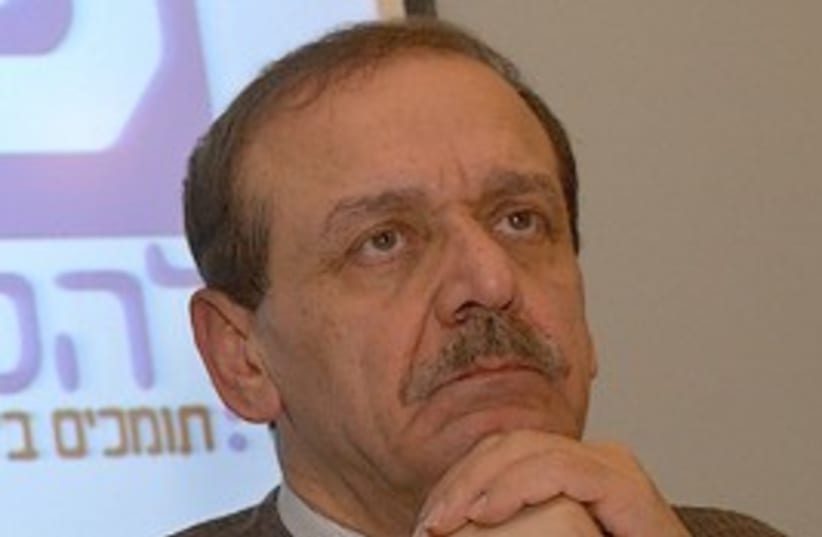
By JPOST.COM STAFFabed rabbo 298(photo credit: Ariel Jerozolimski )US State Department spokesman P.J. Crowley responded on Wednesday night to senior PLO official, Yasser Abed Rabbo's, proposal that the US administration and Israeli government recognize the pre-1967 lines as the borders of a future Palestinian state, saying that it "represents the interest in the parties in continuing this effort."Crowley responding to questions at a daily press conference said "this is exactly the right conversation that the Israelis and Palestinians need to have to be exchanging ideas on how to advance this process to a successful conclusion."RELATED:PA official criticized for willingness to recognize Israel'Both sides must take steps for negotiations to continue'Fatah official says two-state solution is over"But it also is a reminder of the limitation of making offers and counteroffers by long distance and through the media as opposed to sitting down face-to-face in a direct negotiation," Crowley warned.When asked if a map could be provided to the Palestinian Authority Crowley responded with "what they’re asking for is the essence of the negotiation – what are the borders of a future Palestinian state, and conversely, what will be the borders of the Israeli state."Crowley said it is perfectly legitimate for the Palestinian Authority to ask what the shape of a future Palestinian state would look like, but stressed the fact that "to resolve this question and to move forward, the direct negotiations have to continue."Abed Rabbo, adviser to Palestinian Authority President Mahmoud Abbas, came under attack for expressing his willingness to recognize Israel as a Jewish state.Abed Rabbo was quoted as saying on Wednesday that the Palestinians would be willing to recognize Israel in any way that it desires, if the US administration and Israeli government recognized the pre-1967 lines as the borders of a future Palestinian state..The top PLO official was responding to US State Department spokesman P.J. Crowley’s announcement that the Palestinians should respond to the Israeli demand to recognize Israel as a Jewish state in return for a renewed moratorium on settlement construction.Abed Rabbo’s remarks were interpreted by many Palestinians as recognition of Israel as a Jewish state – a position that contradicts the official PA policy.A number of Palestinians factions, including the ruling Fatah movement in the West Bank, strongly condemned Abed Rabbo and called for his dismissal.Abed Rabbo, meanwhile, denied later that he had told Haaretz that the Palestinians would be willing to recognize Israel as a Jewish state.However, he stressed that the Palestinians did not rule out the possibility, but “only if the US administration would give us a clear map showing the borders of Israel so that we could recognize it.”Abed Rabbo added that in return for meeting Israel’s demand, the Israelis and Americans should recognize a Palestinian state that would be established on all the territory in the West Bank and the Gaza Strip captured by Israel in 1967, including the eastern part of Jerusalem.“In such an event, we would have no problem recognizing Israel in any form it desires – as a Jewish or Chinese state,” he said. “The Palestinians have already recognized Israel’s existence, but until now Israel has not recognized a Palestinian state. This means that we want guarantees that the future Palestinian state would be established on all the 1967 territories.”Abed Rabbo’s statements drew sharp criticism from Palestinians across the political spectrum.Hilary Leila Krieger and Khaled Abu Toameh contributed to this report
if(catID != 151){
var cont = `Take Israel home with the new Jerusalem Post Store