UN rights body calls for an end to Syrian authorities' widespread, systematic violations of human rights, basic freedoms; UK shutters embassy citing security issues; Russia to meet Arab states on crisis.
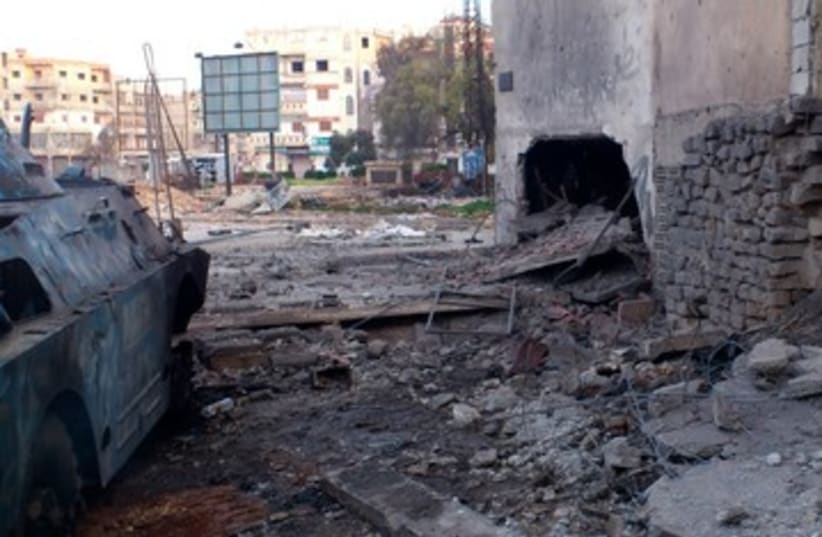
By REUTERSHoms after bombardment 390(photo credit: REUTERS)
The United Nations Human Rights Council condemned Syria on Thursday for widespread violations that may amount to crimes against humanity and called for a halt to attacks against civilians, the same day as the United Kingdom pulled its diplomats from the country.The 47-member forum, holding an urgent debate, voted by 37 states in favor, three against including China and Russia, and three abstentions, to adopt a resolution brought by Gulf countries with Western backing. Four delegations did not take part in the vote. Syria was not present.Gulf countries, backed by Turkey, the European Union and United States, presented the resolution strongly condemning "the widespread and systematic violations of human rights and fundamental freedoms by the Syrian authorities."Also Thursday, Kuwait's parliament said it would support the rebel Free Syria Army, and called on the Kuwaiti government to cut ties with Syrian President Bashar Assad.The parliament, which has limited legislative powers, also called for Assad to be prosecuted for crimes against his people.The Free Syrian Army is composed mainly of Syrian soldiers who have defected and volunteer civilians.Click for full JPost coverageThe United Kingdom announced Thursday that withdrew its diplomats from Syria and closed its embassy it for security reasons but is not breaking diplomatic ties with Damascus after months of violent political turmoil."We now judge that the deterioration of the security situation in Damascus puts our embassy staff and premises at risk, and have taken the decision to withdraw staff accordingly. Our ambassador and diplomatic staff left Syria on 29 February and will return to the UK shortly," Foreign Secretary William Hague said in a statement.A Foreign Office spokesman said Britain had not broken diplomatic ties with Syria. "The (Syrian) embassy in London will remain open so we can have a channel of communication to the Syrian regime," he said.Reengaging RussiaForeign ministers from Gulf Arab countries will meet their Russian counterpart in Riyadh next week to discuss the Syrian conflict, Al Arabiya television reported on Thursday.Kuwaiti Foreign Minister Sheikh Sabah Khaled al-Sabah told the regional news channel the meeting would take place next Wednesday.Russia and China have twice used their vetoes to block UN Security Council resolutions on Syria, where repression of initially peaceful protests against Assad has spawned an armed insurrection.The Gulf Cooperation Council - Bahrain, Oman, Kuwait, Qatar, Saudi Arabia and the United Arab Emirates - said a month ago that its members would recall their ambassadors from Syria and expel the Syrian envoys in their capitals.
if(catID != 151){
var cont = `Take Israel home with the new Jerusalem Post Store