Speaking at Herzliya conference, Stanley Fisher expresses concern over 40% haredi employment, Arab community.
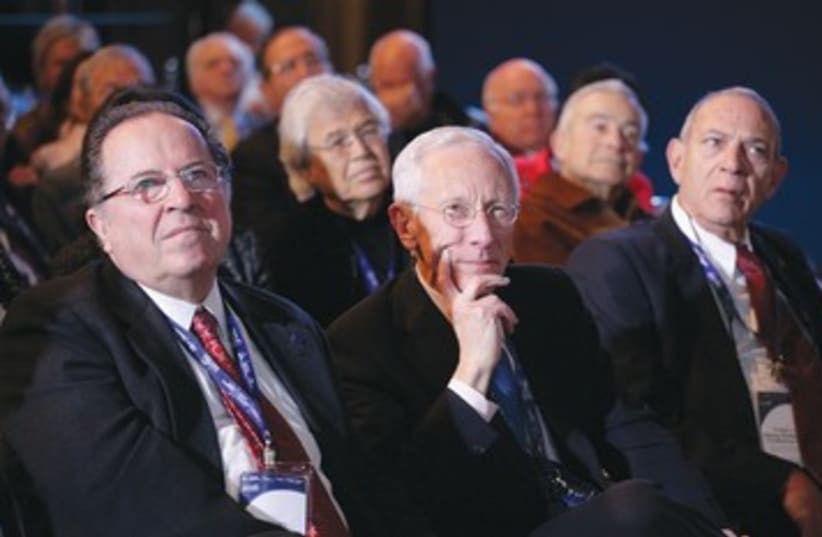
By NADAV SHEMERStanley Fisher at Herzliya conference 390(photo credit: Courtesy of Herzliya Conference)
Low haredi labor-force participation cannot be allowed to continue, Bank of Israel Governor Stanley Fischer said Wednesday at the Herzliya Conference.“I very much appreciate our religion and the religious people here,” he said, but if the low participation rate among the ultra-Orthodox continues, “it is going to be very difficult to supply our citizens with a standard of living that keeps improving.”Fischer noted that only 40 percent of haredim are employed and also expressed concern about the situation in the Arab community, where, he said, one-quarter of women work. Efforts are being made to improve the situation in both communities, he said, pointing out that about 6,000 haredim currently study in colleges, while the amount of businesses being established by Arabs is growing.Fischer also addressed the Bank of Israel’s January 23 decision to lower the benchmark interest rate from 2.75 percent to 2.5% – the third time the central bank has lowered the rate in five months, joining policy makers from Brazil to Indonesia in easing access to funding.He said the country has “plenty of room” to lower interest rates if necessary.“We will adjust the rate according to the situation in the economy,” he said. “If it turns out that we are dealing with a difficult problem, we will use the monetary tool.”In contrast to 2009, when the bank said it would gradually raise the interest rate to normal levels, Fischer said this time the bank would make no such statements and would wait to see how events pan out in Europe.Discussion “has improved” since a six-person monetary committee headed by the central-bank governor was appointed to set interest rates late last year, he said. Prior to the committee’s appointment, Fischer alone set the interest rate, acting on advice from other bank officials.Bloomberg contributed to this report.