PM rethinks nuclear power plans after Japan crisis
Fortunately, we found natural gas, notes Netanyahu; Infrastructures Ministry: There was no plan to build a plant anyway.
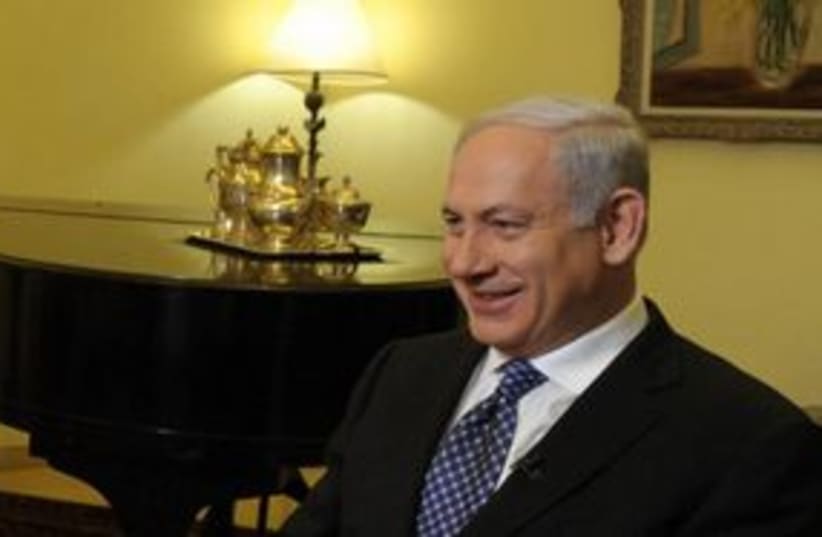
By EHUD ZION WALDOKS, HERB KEINONNetanyahu smiling 311(photo credit: Amos Ben Gershom/GPO)
Israel will not pursue civil nuclear energy in the coming years, Prime Minister Binyamin Netanyahu said Thursday – adding that the Japanese crisis has “caused me to reconsider the projects of building civil nuclear plants.”Netanyahu’s comments were made during an interview with CNN’s Piers Morgan, aired Thursday night in the US.RELATED:Netanyahu to Japanese PM: Israel stands behind youTechnical problem causes natural gas supply cut offRegarding the nuclear crisis in Japan, Netanyahu said he had been “a lot more enthusiastic” about civilian nuclear energy in the past than he was now.“In fact, you’d have to give me a very good argument to do it,” Netanyahu said of building civilian nuclear plants. “And fortunately we found natural gas.”Netanyahu said that unless solutions were found to challenges posed by the situation in Japan, “I think that leaders should reconsider the expansion of civilian nuclear energy.”Prior to Netanyahu’s comments, the National Infrastructures Ministry said there was no formal plan to build a nuclear power plant in Israel.“There’s a general idea to build one maybe 10, 15 years down the line in the Shifta Region [of the Negev],” a spokesman for the National Infrastructures Ministry said.The Israel Electric Corporation referred all queries to the ministry “since they decide whether or not power plants are built.”In general, building a nuclear power plant in Israel is not a matter of mere construction, or even establishing the requisite infrastructure.Civilian nuclear power plants must be supervised by the International Atomic Energy Agency (IAEA).Countries building civilian plants must also sign the Nuclear Non-Proliferation Treaty (NPT) as a pledge that they will not distribute nuclear weapons. In return, they are “given” the right to use nuclear energy for civilian purposes, including generating electricity or medical research.Israel is not a signatory to the NPT, and has maintained a posture of ambiguity regarding its possession of nuclear weapons – neither confirming nor denying – for decades.President Shimon Peres, who was reportedly heavily involved in the acquisition of the requisite technology in the 1950s, has continually stated that “Israel would not be the first to introduce nuclear weapons to the Middle East.”As such – and in the face of fears that Tehran may be attempting to build an atomic bomb – it is highly unlikely Israel will agree to open its doors to IAEA inspectors and allow them to roam freely around the country.Still, the two research reactors at Dimona and Sorek are currently under IAEA supervision.Some who have talked about the idea of nuclear power for Israel cite India as a precedent, saying that the country – also not a signatory to the NPT – was allowed to have both nuclear weapons and nuclear power plants, and therefore so can Israel.However, providing electricity for India’s over one billion people is not the same as providing it for Israel’s just over seven million citizens.Indeed, the chances of India’s nuclear precedent being applied to Israel are practically nil, an international expert has told The Jerusalem Post in the past.
Related TagsBennie Begin
if(catID != 151){
var cont = `Take Israel home with the new Jerusalem Post Store