Work resumes on removal of 500 fake gravestones in capital
Leader of preservation campaign: I don’t think the argument is "real or not" – we know that this is a cemetery.
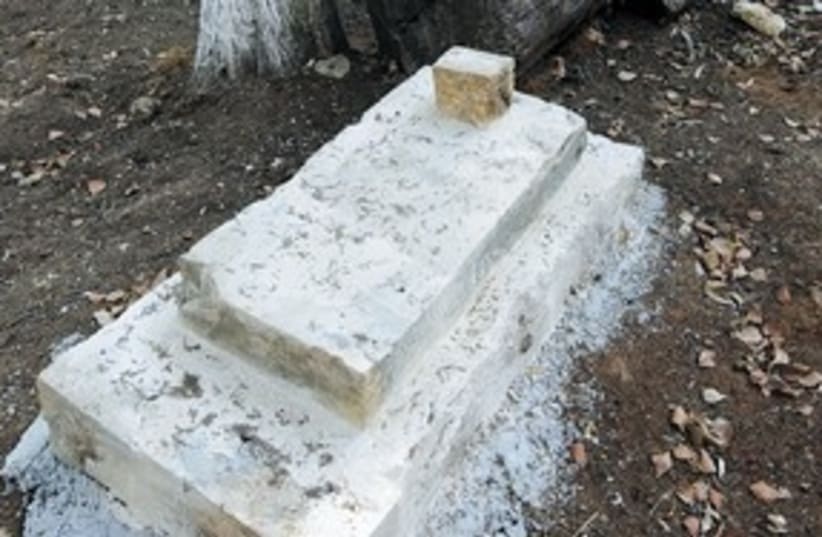
By MELANIE LIDMANFake grave stone tombstone at Mamilla 311(photo credit: Marc Israel Sellem)
After nearly a year, the Israel Lands Authority this month resumed work removing 500 fake tombstones from the Muslim Mamilla Cemetery in downtown Jerusalem, prompting furious condemnation from Muslim groups.Last August, Jerusalem municipality officials, working in conjunction with the ILA and the Israel Antiquities Authority, removed around 300 counterfeit tombstones, calling their erection “one of the largest acts of deception in recent years.”RELATED:Museum of Tolerance gets final go-ahead New Museum of Tolerance receives initial nod The Islamic Movement accused the authorities of wantonly destroying graves, and appealed to the courts to impose a stop-work order on the removal. The order was rescinded in late June, said ILA spokeswoman Ortal Tzabar.Since then, authorities have removed an additional 100 fake gravestones.The ILA accuses the head of the Islamic Movement’s northern branch, Sheikh Raed Salah, who was recently arrested in London, of personally supervising the construction of the counterfeit tombstones.The issue started in 2007, when members of the Islamic Movement appealed to the Jerusalem Municipality for a permit to renovate and clean graves in the cemetery. The request was granted, but authorities are accusing the Islamic Movement of hastily erecting new gravestones in an effort to “illegally seize state land,” the municipality said last summer.“We’re talking about fraud on a massive scale,” said Israel Scoop, head of the ILA’s supervision department, said on Wednesday, adding that it was an attempt to “create facts on the ground.”Last summer, the Jerusalem municipality said that plastic bottles, cigarette butts and sewage had been found underneath the fake tombstones. They added that workers sometimes used authentic, older pieces of stone found on the site to build new gravestones.Dr. Said Khalidi, a leader in the Campaign to Preserve the Mamilla Jerusalem Cemetery, agreed that some of the tomb renovations were hastily done and insufficient, but argued that the new gravesites still marked hallowed areas containing the remains of local Muslim families dating back 800 years.“I personally didn’t agree with the way they did the renovation, it was not done in the best way,” Khalidi said on Wednesday. “It looked deceiving – if you have an old tomb that’s renovated with new stones, it doesn’t look old,” he said.But the gravestones are not the most important aspect of the site, Khalidi argued.“It doesn’t matter what’s on top, it matters what’s beneath the ground.Beneath the ground lies the remains of people, and we must respect people and their souls and their bones,” said Khalidi, who is a consultant for the United Nations Conference on Trade and Development.“I don’t think the argument is ‘real or not?’ We know that this is a cemetery.”The cemetery is no stranger to controversy.It has figured prominently in the news following claims that the future Simon Wiesenthal Center Museum of Tolerance, which received final building permits on July 13, would be located on part of the Mamilla Cemetery.The center was embroiled in a four-year legal battle with Arab activists over the controversial site. The Supreme Court eventually ruled in favor of the State of Israel, which had given the land to the museum. The Campaign for the Preservation of the Mamilla Jerusalem Cemetery, comprising 60 families whose ancestors are buried in the cemetery, plans to continue to challenge the decision.
Related Tagsislamic movement
if(catID != 151){
var cont = `Take Israel home with the new Jerusalem Post Store