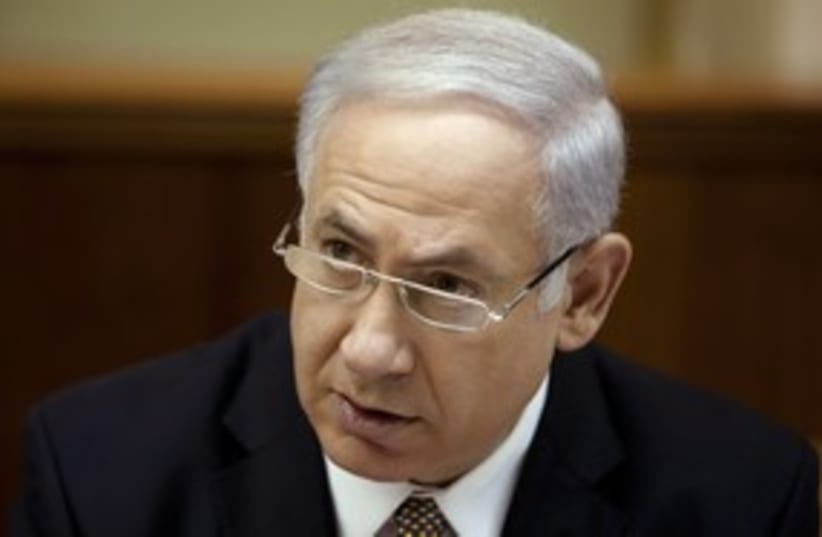
PM demands PA assist in apprehending Itamar murderers
Netanyahu describes attack in which 5 family members killed as "despicable murder"; Barak: IDF will use any means to catch culprits.
By JPOST.COM STAFFNetanyahu 311 reuters(photo credit: Reuters)
Prime Minister Binyamin Netanyahu on Saturday expressed his deep shock at the severe terror attack in Itamar which killed five family members, saying "this is a despicable murder of an entire innocent family, parents, children and an infant, while they were sleeping in their home on the Sabbath evening," the PMO said.The Prime Minister demanded from the Palestinian Authority, and from its leadership, that it assist in apprehending the murderers. "Israel will not stand by idly after such a despicable murder and will act vigorously to safeguard the lives of the citizens of Israel and punish the murderers." Netanyahu was briefed during the night on the murderous incident at Itamar and directed the IDF and security services to act in a wide-ranging and determined manner in order to apprehend the murderers.RELATED:5 family members murdered by terrorist in Itamar settlementFour killed as terrorists open fire near Kiryat ArbaRocket falls on Beersheba; FM demands UN action be takenDefense Minister Ehud Barak on Saturday strongly condemned the attack and said "this is a very serious incident and my heart goes out to the family.""The IDF will use any means possible to catch the murder culprits," Barak said.Barak held discussions with Prime Minister Binyamin Netanyahu and IDF Chief of Staff Lt.-Gen. Benny Gantz in an attempt to decide how to respond to the attack.Foreign Minister Avigdor Lieberman on Saturday instructed the Israeli delegation at the UN to submit a severe complaint following the incident.Lieberman added that the fact that the Palestinian Authority has yet to condemn the attack "says more than anything about the true nature of someone who is supposed to be partner for negotiations."Lieberman stressed that Israel expects to hear strong condemnation from democratic countries in wake of the attack.Yesha Council chairman Danny Dayan following the attack said on Saturday that the army does not provide enough protection for settlements."The emergency squad are the ones responsible for maintaining the security of the settlement, despite the fact that the IDF could and should help," Dayan said.He went on to say "Some of the security requirements of the residents have not been addressed, and these measures may have prevented the attack."OC Central Command Maj.-Gen. Avi Mizrahi also reacted to the attack and expressed his condolences following the terrorist attack in Itamar. "An entire family was killed by despicable and cowardly murderers who murdered children and parents for no reason," he said.Mizrahi hinted that security intelligence had a lead on the identity of the terrorists: "We are in the midst of pursuing the terrorists and I believe that will catch them very soon."
if(catID != 151){
var cont = `Take Israel home with the new Jerusalem Post Store