C'tee takes suggestions on fixing country's economic ills from public; Education group head Lautman: Education key to closing gaps in society.
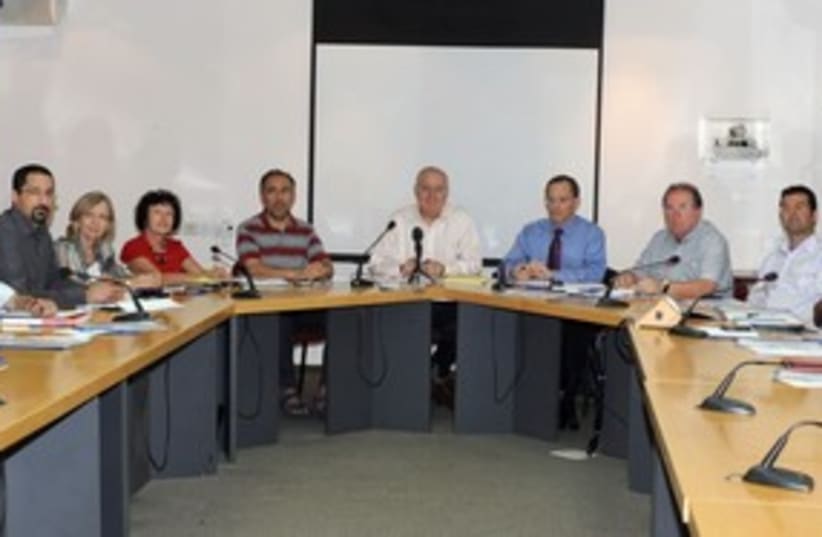
By BEN HARTMANTrajtenberg Committee 'Rothschild Team' 311 (photo credit: Moshe Milner/GPO)
The Trajtenberg committee met with members of the public for the first time in Jerusalem on Tuesday, in a roundtable discussion that was broadcast live on the Internet and continuously tweeted and talked about on Facebook by the committee.At the opening of the meeting, panel head Prof. Manuel Trajtenberg said “today we came to listen to the public and if we manage to do the right thing everyone in this room will benefit. We might hear things today that we never heard before. We believe the suggestions put forward by the public are beneficial for the formulation of the committee’s recommendations [to the government].”RELATED:Trajtenberg won’t call for bigger state budgetTrajtenberg panel to include Arab woman representativeTrajtenberg called the meeting “the opening salvo. It’s important to note that there is something important about holding this meeting, to sit next to each other, to hear each other’s voices, see each other’s body language and listen to the power of the things that are said. This is no less important than the content [of the meetings] themselves.”The meeting did not have any apparent representation from the tent city protest movement.Head of the Movement for the Advancement of Education in Israel, Dov Lautman, told the meeting that “if there is one way to answer the gaps in the Israeli society it is to invest more in education.”Lautman said such education is crucial to expanding employment opportunities in Israel, using the example of bringing hi-tech industry to the periphery.“I want to launch a company in the Galilee that will employ people in hi-tech.For this you need to know English and have an education.There are towns in Israel where the percentage of people receiving a matriculation certificate is less than 20 percent. This is embarrassing.”Nir Ginosaur, spokesperson for the organization Tmora, criticized the government’s portrayal of the national economy, saying “the statistics presented by the government to the public are warped. They tell people again and again, ‘you pampered people signing up for a mortgage,’ but today it requires 130 monthly salaries to pay for an apartment.The impact of this is that people end up taking insane mortgages.”The meetings focused mainly on hearing suggestions about how to calibrate Israel’s daily agenda to reflect the country’s most pressing needs.On Monday, Trajtenberg released a YouTube video in which he said he did not intend to recommend raising the national budget, and said any changes in Israel’s budgetary priorities will require cutting from certain areas to fund others.The committee has called on the public to instruct them on what issues are most important for them to deal with. According to the committee, so far 22% of respondents said social services, 19% dealt with the economic and social policies of Israel, 17% dealt with taxation, 13% with competition and prices in the Israeli market.Of those respondents, 85% were from private citizens, 7% from organizations, 7% from professionals and the rest from elected officials.Later in the afternoon, the committee held its third meeting.During the meeting, they discussed the growing gaps between the rich and the poor in Israel as well as what was described as feelings of abandonment by some parts of the public and feelings of bitterness about unequal shouldering of the national burden.Trajtenberg directed the committee members to work on multi-year plans to solve housing, taxation, cost of living and social services issues, as well as short term solutions that can be implemented over the coming year or two.Click for full JPost coverage
if(catID != 151){
var cont = `Take Israel home with the new Jerusalem Post Store