Information, presented to the public as classified and indistinct, shapes the public mood in one way or another.
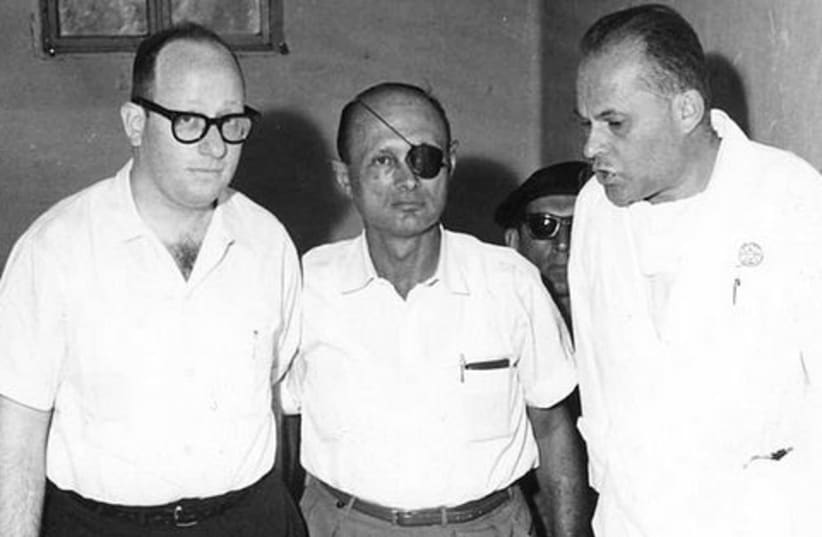
By NACHMAN SHAInachum pessin moshe dayan 521(photo credit: Shaare Tzedek Medical Center)
The official archives of the State of Israel are trickling out bits and pieces of information about the Yom Kippur War, as they do every year. Every year, as if out of some sort of masochistic pleasure, a few more drops drip onto our heads like “Chinese water torture,” reopening the wounds of October 1973 that refuse to heal.This information, presented to the public as classified and indistinct, shapes the public mood in one way or another. This time, for example, the anger is directed towards the head of the Mossad at the time, Reserves general Tsvi Zamir. We have been led to believe that if only he had tossed and turned a bit less on one particular night and had paid more attention to the telephone call he received the fate of the war would have been different. That, of course, is nonsense.Last week, an important book was published by Sifriat Ma’ariv called The Chinese Farm, by Ilan Kfir.The book describes the battles of the 14th Armored Brigade at the Suez Canal, under the command of col. Amnon Reshef. In the concluding chapter “The Battle Over the Hearts and Minds,” Kfir describes the struggle by Reshef and his comrades in the brigade to gain public recognition for their role in general, and their part in the Battle of the Chinese Farm in particular.According to Kfir, had it not been for the personal struggle of the fighters of 14th Armored Brigade, it is unlikely that the brigade’s important contribution to the war would have received public recognition, especially in comparison to the Paratrooper Brigade’s 890th Battalion.AN INCREASING number of books are being written about the Yom Kippur War, each one giving us important information that complements and adds to its predecessors, but we are still missing the full picture of the war. It was the policy of past governments, as well as the archives, to hold on to the information and not to release it to the public under the pretext of protecting state secrets.I encountered a strict and short-sighted approach while investigating certain events that took place during the Second Intifada of 2000-2005 for my doctoral dissertation. I requested simple information from these archives, for the most part unclassified and not remotely as important as that terrible war in 1973. Nonetheless, all my requests were rejected and I was forced to rely on alternative sources, mainly personal interviews.In my opinion, this is our last chance to hold a real investigation into the Yom Kippur War. The Agranat Commission made a start, that was good at the time, but undoubtedly, there were flaws that are emerging with time.The many years that have passed since then make it possible to reveal the information on the Yom Kippur War, from the situation leading up to it to the way it was conducted and its conclusion. These issues need to be re-examined in an independent investigation, free of political and personal interests.At present, many of those who held key positions at the time are still among us and it is still possible to reach them, in addition to the information locked away in the national archives, at the exclusive discretion of the officials and their political proprietors.Next year, Israel will mark the 40th anniversary of the Yom Kippur War. Now is the time to appoint a new public commission which will be able to investigate the war, to authorize the publication of all related information and submit its findings in October 2013. That would be the most fitting way to mark the 40th anniversary of the Yom Kippur War.The writer is a member of Knesset for Kadima. He is on the Committee for Foreign Relations and Security. He completed his doctorate in public diplomacy.
if(catID != 151){
var cont = `Take Israel home with the new Jerusalem Post Store