Police arrest the man for drug trafficking and Agriculture Ministry inspectors question him about the predatory fish.
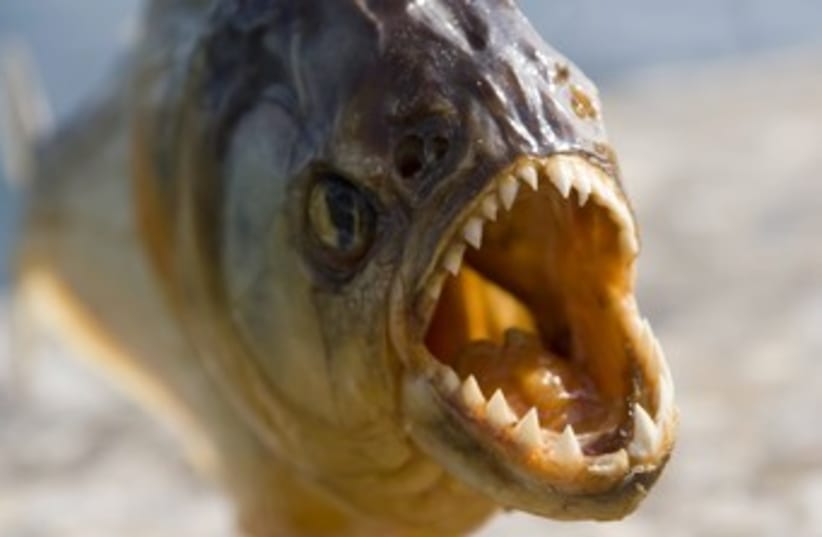
By SHARON UDASINPiranha 370(photo credit: Thinkstock/Imagebank)
During a police raid of a drug dealer’s home on Tuesday, officers discovered that the Petah Tikva man also possessed an aquarium with three large, mature piranhas, which are illegal in Israel.Police arrested the man for drug trafficking and Agriculture Ministry inspectors questioned him about the predatory fish.Possession, import, distribution and sale of piranhas are all illegal in Israel, as piranhas are a dangerous fish that reproduce quite quickly and can cause severe injuries in humans.Piranhas also pose an ecological hazard to the country’s lakes and rivers, as their proliferation can obliterate entire populations of other fish.The piranhas in the man’s aquarium were all about a year old, each approximately 20-25 cm. in length. Native to Central and South American rivers, piranhas can grow up to 30 cm.They feed on birds, worms and other fish quite brutally, according to the ministry.“In addition to the unequivocal danger posed to humans as a result of of the growth of piranhas, the introduction of a species that does not exist in Israel will severely harm the ecological balance of flora and fauna in Israel and will harm inhabits of water sources, and of course constitutes environmental damage,” said Hagai Neuberger, head of the Agriculture Ministry’s Fisheries Department.“The Agriculture Ministry will continue to enforce that the possession of these fish is prohibited.”
Related TagsAquarium
if(catID != 151){
var cont = `Take Israel home with the new Jerusalem Post Store