Israel’s energy consumption grows 4% each year; electricity shortages can be avoided, expert tells 'Post'.
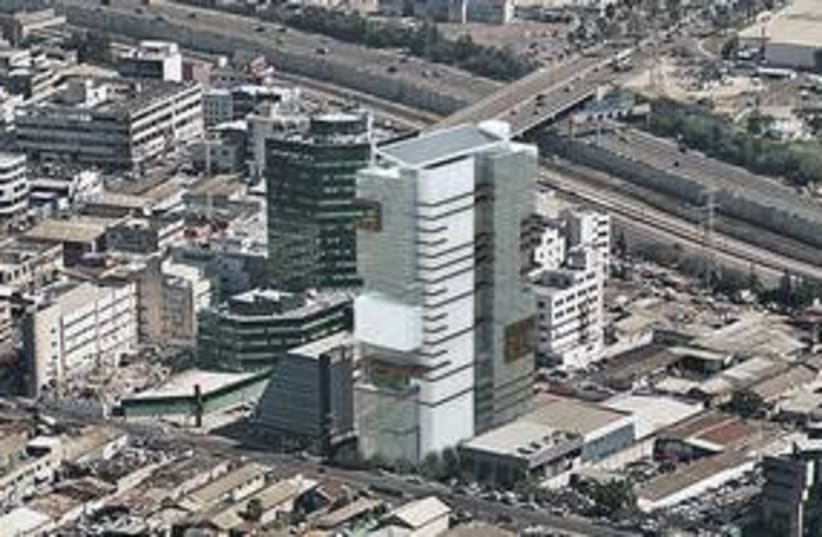
By SHARON UDASINEcoTower311(photo credit: Courtesy/Andres Lacko)
As the country faces a summer with low power reserves and increasing electrical demands, it may be strategic “if not crucial” for large institutions to conduct energy surveys and increase their efficiency.Dan Bar-Mashiah – a former economic consultant to the Energy and Water Ministry – founded the energy services company ESCO Israel six years ago. Since then, he has led more than 600 projects auditing energy systems and retrofitting buildings to achieve as high efficiency as possible, he told The Jerusalem Post in an interview in Tel Aviv last week.“The potential is huge and we hardly do anything in the macro point of view to achieve this goal,” Bar-Mashiah said. “By saving even 20 percent, all this discussion about building a new power plant, it is not necessary.”With that much more energy efficiency, which Bar-Mashiah said could be done in Israel, “all these talks about having a shortage of electricity, they wouldn’t happen.”During an ESCO Israel’s energy audit, which operates “according to the model of international ESCO,” Bar-Mashiah’s staff performs a complete retrofit of the institution’s energy appliances, including overhauls of lighting and cooling systems. Both before and after, the company measures how much energy the institution is consuming and how much money it is spending, and the client and ESCO split the financial savings, Bar-Mashiah explained.During the retrofitting process, ESCO Israel pays for the purchase and installation of new appliances, he said.“It is a long-term business,” he said, noting that contracts run between 10 and 24 years.Simply installing new appliances is not enough, however, according to Bar-Mashiah.“We put [in] an automatic control system that, for example, closes the light when there’s no one in the room and then we achieve a lot more savings,” he said.The company also installs preventative measures, such as antiheat film on windows, as in his north Tel Aviv office.“Before, you could fry an egg,” he said, pointing at his window.Despite the government’s efforts to promote conservation this summer, Bar-Mashiah said “very little [has been] done” by the authorities to promote further efficiency.One positive step the government could take would be to issue energy services company tenders, in which companies such as his own could compete for grants to conduct efficiency surveys in government buildings, he said.“Energy consumption in Israel is rising 4% each year,” Bar-Mashiah warned.One of ESCO Israel’s most recent undertakings is a Green Campus project, in which it retrofitted 200 kindergartens and eight educational campuses, changing the lights and air conditioners and thereby saving 35% to 50% of energy consumption, he said.ESCO Israel has reached the prequalification stage for a government tender to retrofit many of the country’s hospitals, in cooperation with one of the North American ESCO’s branches.Meanwhile, Ronen Azouri, founder of the EcoTower launched last year in Tel Aviv, has joined with partners from the energy sector to launch a company, EcoViz, for energy surveys and efficiency processes in buildings throughout the country. The Azouri EcoTower on Hamasger Street in Tel Aviv, is the city’s first office building compatible with international LEED Gold standards.Since completion of the EcoTower’s initial floors, the number of consultation requests from organizations and corporations in the economic and industrial sector, fielded by Azouri and his staff, has risen.At the EcoTower, the building’s greening process produced a 33% decrease in energy expenditures, as well as 70% in water savings.The Health Ministry recently conducted gray-water recycling tests at the building.The number of energy surveys conducted on a voluntary basis will continue to increase throughout the country, in light of the dramatic hikes in electricity prices, EcoViz said. Azouri’s new venture is being run in partnership with physicists and energy surveyors Jonathan Fromm and Kedem Levy.The Law on Energy Sources is expected to change by the end of 2012, setting new thresholds for institutions that must conduct energy audits of their buildings, according to EcoViz. Instead of a threshold of consumption equivalent to 2,000 tons of petroleum per year, it will fall to 700 tons only, likely increasing the number of institutions surveyed from 300 to 1,500, Azouri said.Until recently, companies saw carrying out energy surveys as a financial burden, but they now realize that undertaking such procedures will gradually save them money, he said.Unlike ESCO Israel, which pays for the analysis and retrofitting procedure upfront and then splits the savings with the client, EcoViz will be providing paid energy surveys for clients, who can then decide whether they want to continue with a retrofitting process, Azouri told the Post on Wednesday.If they do, then the clients can choose to work with EcoViz’s preferred company to revamp their buildings. The clients can also choose to perform the retrofit themselves, he explained.Azouri stressed the importance of providing clients with professional information for efficient organizational behavior. He is confident that this industry will expand rapidly, as people understand the importance of energy conservation as well as its correlation to financial savings.“We are banking on people who voluntarily can enjoy savings, because this is what we did for ourselves,” he said.
if(catID != 151){
var cont = `Take Israel home with the new Jerusalem Post Store