The Jerusalem Post
Jpost search icon google-icon iphone
  Set as Homepage
Sun, May 26, 2013   17 Sivan, 5773
newspapers magazines
 
    • Breaking News
    • Diplomacy & Politics
    • Defense
    • National
    • Mideast
    • Syria
    • Iran
    • World
    • Business
    • Sports
    • Health & Science
    • Environment
  • Video
  • Opinion
    • Columnists
    • Editorials
    • Op-Eds
    • Letters
  • Jewish World
  • Lifestyle
    • Arts & Culture
    • Food & Wine
    • Travel
  • Features
    • Insights & Features
    • Week in review
    • On the Web
    • Shalva Superheroes
    • Obama in Israel
  • Blogs
    • In the news
    • Judaism
    • From the Middle East
    • Lifestyle
    • Aliya
    • Science and Technology
  • JPost Apps
    • iPhone app
    • iPad app
    • Android app
    • Twitter
    • Facebook
    • RSS feeds
    • JPost Toolbar
    • JPost Newsletter
    • JPost Alert
  • Premium Zone
    • The Jerusalem Report
    • The Experts
    • 20 Questions
    • e-paper
    • Ivrit
    • Christian Edition
    • Dash
    • Magazine
    • Metro
    • In Jerusalem
  • French
    • Politique & Social
    • Affaires Palestiniennes
    • Diplomatie & Monde
    • Art & Culture
    • Israel
  • Green Israel
JPost Learn Hebrew  
Advertise with us  
Nefesh Guided Aliyah  
Eldan  
AFMDA  
Africa Israel Group  
Isram Group  
Kupat Ha  
JPost Twitter  
JPost Facebook  
Classifieds  


Breaking News
 
 
  • JPost.com
  • Travel
  • Around Israel
 

Sights and Insights: Last stop and a point of departure

By WAYNE STILES
LAST UPDATED: 05/23/2011 17:32
Tweet

Dr. Wayne Stiles explores the historical relevance of Tel Beersheba and how to make the most of a visit.

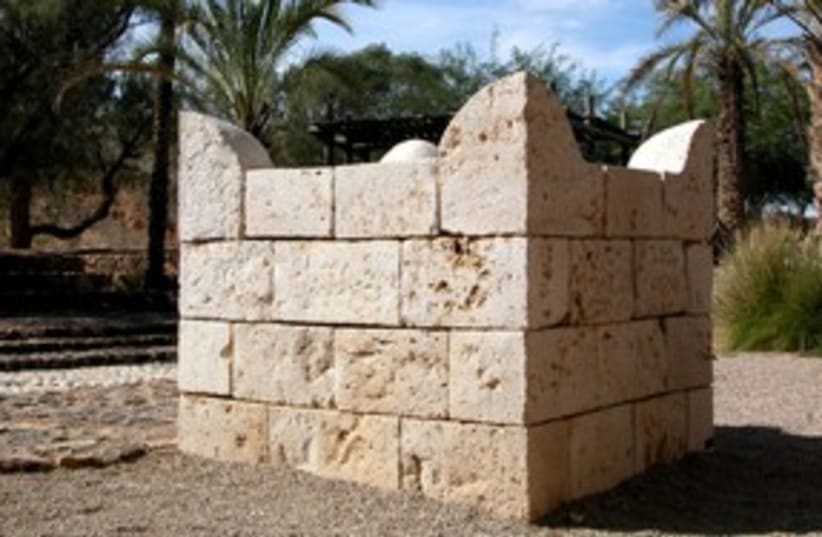
Beersheba four horned altar
Beersheba four horned altar Photo: BiblePlaces.com
Wayne Stiles is an author who has never recovered from his travels in Israel—and loves to write about them from his desk in Texas.

Beersheba. Just say the name, and images come to mind of an old, crusty patriarch leaning on his staff in the dry winds of the wilderness.

I like to imagine Abraham squinting through the head covering that shelters his wrinkled face and thirsty lips. He scans the barren Negev for thieves. Not those who would take his flocks or possessions, but for those who would steal water—the Negev’s most precious and indispensable commodity.

Photo: BiblePlaces.comBeersheba epitomizes the faith God required to live in the Holy Land. With little rainfall, the area relied on wells for water. In fact, it was because of a well that Beersheba first appeared on the pages of biblical history.

Abraham paid the price of seven ewe lambs to secure ownership of a well at Beersheba. The site takes its name from the phrase “the well of the seven” (Genesis 21:25-34). Isaac also quarreled over a well in Beersheba and named the place “the well of the oath” (Genesis 26:26-33).

Beersheba served as the last stop on the road called “The Way of the Patriarchs.” This ancient highway stretched along the watershed of the Hill Country and received its name from the patriarchs who traveled north and south along it. The road dead-ended at Beersheba.

Because the ancient site was the last stop, it remained the proverbial southern border throughout the history of biblical Israel. Repeatedly in the Scriptures, the phrase, “from Dan to Beersheba,” outlined the practical north-south borders of the nation (Judges 20:1; 2 Samuel 24:2; 1 Kings 4:25). After the kingdom split, and still throughout the returns from the Exile, Beersheba remained the southern boundary of the Kingdom of Judah and of Judea (2 Kings 23:8; 2 Chronicles 19:4; Nehemiah 11:27, 30). Even the bishop of Caesarea, Eusebius, writing his Onomasticon around AD 313, still defined Beersheba (“Bersabee”) as Judea’s southern boundary.

Following the Exile to Babylon, some of the returning Jews resettled in Beersheba (Nehemiah 11:27-30). Similarly, after modern Israel became a nation in 1948, many immigrating Jews settled in modern Beersheba (not far from the ancient site), making it the fourth-largest city in the nation.
 
Visitors to Tel Beersheba today can regain a sense of the patriarchs’ resolve by standing atop the tower that allows a birds-eye view of the ruins. Hot, dry, dusty—the area is a perfect picture of the word, “desolate.”

Photo: BiblePlaces.comBefore entering the outer gate of the tell, I passed a tamarisk tree and a well. Both of these items again bring to mind Abraham, who planted a tamarisk and dug a well at Beersheba (Genesis 21:30-33). Inside the gate and to the left is a spot with several steps. Here a large altar may have stood during the time of Josiah. Archaeologists unearthed at Beersheba a large, horned altar that someone dismantled. It is possible this destroyed sandstone altar represents the results of King Josiah’s religious reforms (2 Kings 23:8).

Meandering through the ruins, I observed remains from a typical Israelite four-room house, a pillared building used as stables, and a set of large, circular stairs leading underground to a major water system. A painted black line runs horizontally across many of the ruins, separating the original walls below the line from the reconstructions built on top of it.

As the last stop before the ancient wilderness, Beersheba became also—ironically—a point of departure for many spiritual journeys. Abraham, Hagar, Jacob, and Elijah all experienced life-changing encounters with God in association with Beersheba (Genesis 16:8; 21:17; 46:3-4; 1 Kings 19:3).

As I stood in the arid winds of Tel Beersheba, the truth seemed both overwhelming and irresistible. God used this unassuming, barren place to shape some of the most significant lives in the Bible.

How to Get There: From Jerusalem, take Route 1 west to Route 6 south. Remain on Route 6 and it merges with Route 40. Take a right on Route 60 and follow the signs to the tell. 

What to Do There: Take your camera, plenty of water, and the book of Genesis. Climb the observation tower at the tell and read Genesis 16, 21, 26, and 46.

Read Wayne’s blog and subscribe to his weekly Podcast at www.waynestiles.com.
  • Send
  • Large
  • Small
  • Print
  • Share
This article is by :
Wayne Stiles

Follow @WayneStiles
Recent stories:
  • Sites and Insights: Capernaum with a vie...
  • Sites and Insights: Where history meets ...
  • Temple Mount: The ordinary made holy
  • Sites and Insights: Hanging gardens of G...
Most Viewed in
1
Formula 1, UEFA, Maccabiah all on way to Jerusalem
2
Santa Barbara’s sunny blend of sand and culture
3
Voices of Jerusalem: The man behind the Old City
4
The Taj Mahal, a ‘teardrop on the face of eternity’
JPost Community
Tweet
Beersheba Abraham Negev Negev desert desert travel
Share this article
Tweet
Share
Send
Your comment must be approved by a moderator before being published on JPost.com. Disqus users can post comments automatically.

Comments must adhere to our Talkback policy. If you believe that a comment has breached the Talkback policy, please press the flag icon to bring it to the attention of our moderation team.
JPost Services
conferenceConference
newsletterNewsletter
iphoneMobile Apps
kotelcamKotel Cam
kolboJPost Alert
premiumPremium
JPost TV News  
Mobile Apps  
Bank Hapoalim  
Meir Panim  
Yad Ezra  
Rambam Hospital  
TourLuxe  
Zev Goldstein PLLC  
Penrose Gallery  
JPost Premium Zone  
JPost kotel Camera  
         
 
Israel Focus
JPost TV News
Coming soon to a screen near you!  
Nefesh B'Nefesh Guided Aliyah
Already living in Israel? Enjoy the Benefits of Aliyah!  
Give "Freedom" this Passover
to needy Israeli families. Donate now  
War Threatens
Protect the People of Northern Israel  
China Suppliers
 
Intelligence Squared
The international debate forum, announces it is coming to Israel  
Bank Hapoalim
Israeli's number one bank  
Jerusalem Post Lite
Lite Edition of the Jerusalem Post for English improvement  
Learn Hebrew with us
Get 10 minutes free personal coaching in Hebrew through phone or Skype  
JPost newspapers
Sign up for the JPost newspapers and receive one month free subscription  
Kosher English Magazine
English language weekly magazine - especially for religious people  
JReport Kindle Edition
Now you can get the Jerusalem Report directly to your Kindle  
JPost Premium Edition
The very best articles are available only in our Premium edition  
Lifestyle Magazine
 
 
Real Estate
Don't Look For a House!
In Israel, our website will do it for you!  
 
Travel
Eldan Rent a Car
20% off all Car Rental Reservations in Israel  
Hertz Car Rental
Special Online Discounts!  
The King David Jerusalem Hotel
One of the world's truly iconic hotels, and a Jerusalem landmark  


Sites Of Interest:

Jerusalem Hotels
KKL-JNF
Poalim Online
BreitBart.com
Our Friends
Jerusalem Attractions
Jerusalem Tours
itraveljerusalem.com

JPost sites:

Learn Hebrew
The Jerusalem Report
Our Magazines
JPost Edition Francaise
Green Israel
Christian World
Jerusalem Post Lite

Services:

JPost Mobile Apps
JPost Premium
JPost Newsletter
JPost Toolbar
JPost News Ticker
JPost RSS feeds
JPost Archives
JPost Alert
JPost Kotel Cam

JPost Conferences:

NYC Conference
Diplomatic Conference

Information:

About Us
Feedback
Staff E-mails
Copyright
Sitemap
News Partners
Advertise with Us
Statistics
Ad Specs
Terms Of Service
Jpost.com, the online edition of the Jerusalem Post Newspaper - the most read and best-selling English-language newspaper in Israel. For analysis and opinion from Israel, the Jewish World and the Middle East. Jpost.com offers expert and in-depth reporting from Israel, the Jewish World and the Middle East, including diplomacy and defense, the Palestinian-Israeli conflict, the Arab Spring, the Mideast peace process, politics in Israel, life in Jerusalem, Israel's international affairs, Iran and its nuclear program, Syria and the Syrian civil war, Lebanon, the Palestinian Authority, the West Bank and Gaza Strip, Israel's world of business and finance, and Jewish life in Israel and the Diaspora.
 
About Us | Advertise with Us | Subscribe | Premium | Newsletter | RSS | Contact Us
 
All rights reserved © The Jerusalem Post 1995 - 2012