There are many wet trip routes, starting in Beit Shean Valley and up to routes in the Golan Heights.
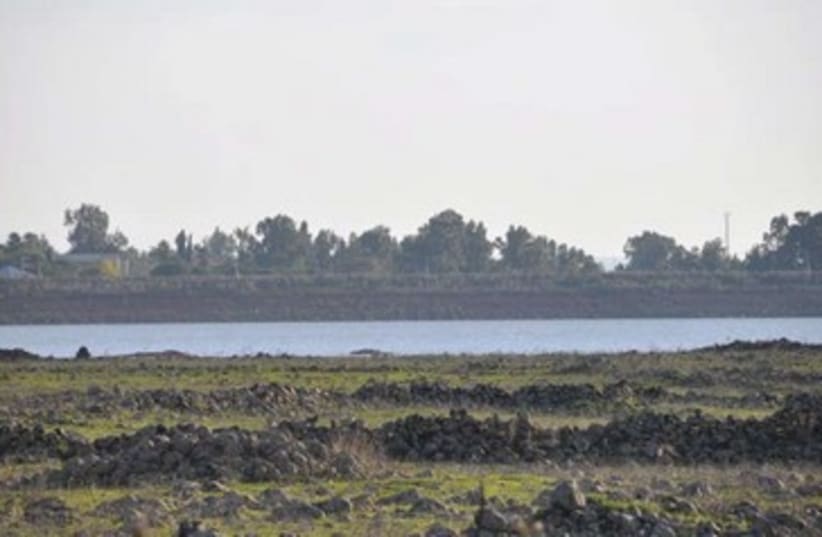
By RONIT SVIRSKY, KKL-JNFreservoir 390(photo credit: Ronit Svirsky, KKL-JNF)
Chilly, wet hiking routes are usually a hit in the summer season. Yet winter has its own sights and colors that make water no less appealing than in the summer. You don’t have to dip in: it is simply enough to gaze at the profusion of water, the myriad blue hues and the waterfowl migrating at this time of year to intensify the experience. The rains fill up the water reservoirs, which look like pastoral lakes; the springs gush in strong currents and the waterfalls storm down in torrents. There are very wet trip routes starting in the Beit Shean Valley and along the reservoir and waterfall routes in the Golan Heights.The route follows the channel of Nahal Kibbutzim in “Stream Valley” in the shade of carob and eucalyptus trees, reed plants and little wooden bridges. You can walk along the stream banks, rest in the shade of the trees or throw a picnic on the wooden tables thoughtfully placed. From Nahal Kibbutzim continue towards Reshafim Reservoir which you reach from Route 669 At the sign near the entrance to Kibbutz Reshafim, turn down a good asphalt road and drive between green agricultural fields and date palm groves, with the Gilboa towering ahead of you. Pass the signs directing you to the reservoir and continue towards Ein Moda, a well-ordered recreation area constituting one of the “triangle springs” in the area, a good place for breakfast or hot coffee. There is parking for private vehicles and for buses at the recreation site which was opened by KKL-JNF and the Southern Jordan Drainage Authority and you can enjoy its clear water, palm trees, cypresses and a ring of surrounding eucalyptus trees. If you try to figure out the species of trees planted there, you’ll discover at least one unfamiliar one: the pink Albizia or siris tree that flowers during the summer months. Other orchard trees in the recreation site are carobs and olives.From Ein Moda continue to the top of the neighboring hill, at the top of which is Reshafim Reservoir, an experience enhanced not only by the beautiful blue water of the reservoir but also by the vantage point for "spring valley" and the verdant agricultural fields. From a 360-degree panoramic view, you can see the Gilboa ridge, Ramat Tzvaim and the kibbutzim of Ha’emek, Beit Hashita and Nir David. Fishbreeding areas were created in the reservoir with special installations that inject oxygen into the water. The migrating birds are drawn to the fish and occasionally you see flocks floating on the water or landing in the middle of the reservoir.Sometimes you can glimpse flocks of pelicans or flamingos on their way from Europe to the warm lands. If you continue climbing you will see a smaller reservoir called “Shein.”Continue along Route 669, passing Kibbutz Shluchot and joining Route 90 with Beit She’an National Park on your left. Turn onto Route 90 towards Beit She’an and immediately right towards Tirat Zvi. Along the way you can see fishponds and the water of Beit She’an Reservoir glistening on the horizon. Turn left onto an inner road after about half a kilometer, and from there drive on an asphalt path until the water pump building. Turn right, go over the small bridge and continue driving until you get to Beit She’an Reservoir. The sides of the reservoir are lined with black plastic sheeting to prevent the seepage of wastewater. A water purification building stands next to the reservoir. The reservoir decreases pollution from Nahal Harod and helps turn a region of hard, calcite earth into fertile agricultural lands and olive groves for producing olive oil. Since it is on the bird migration axis, it was planned to serve as a tourist attraction as well and an observation point was added. A fence was erected with little windows in it so you can hide behind it and unobtrusively watch the birds landing on the water to seek food. The fish that were put in the reservoir to improve the quality of the water attract the birds. Benches and a shade pergola were set up for the comfort of visitors. The reservoir’s high location allows you enjoy the view of the Jordanian border, the Transjordan Highlands, the kibbutzim of Kfar Ruppin, Tirat Zvi, Sde Eliyahu, and the city of Beit She’an.Go back the way you came and turn right towards Beit She’an. Drive to the junction on Route 71 and hook up with Route 90 towards Tiberias. Follow the signs and turn towards Ganei Huga and Nahal Harod. Go over the ancient Roman bridge and continue to the Basalt Canyon recreation area. A large iron bridge is suspended over the deep canyon gorge with its strong current of spring water mixed with fishpond water. The streambed continues flowing to its junction with the Jordan River. The Basalt Canyon Recreation Area is open to the public at no charge and offers shade pergolas, picnic tables and benches. Nearby is the Ganei Huga area – a green park with swimming pools: note that there is an entrance fee.Photo: Michael KhouryThe route continues towards the Golan Heights.Drive on Route 90 towards Tiberias, passing date palm and mango orchards, bright green fields, the Naharayim site on your right, the Jordan Valley kibbutzim and the Jordanian border which stretches along the horizon. The winter rains turn the Golan into a land of brooks. The streambeds fill up, the waterfalls spray the air with their crashing force and all this is accompanied by the enormous reservoirs that fill with water.In the summer, the water is pumped to irrigate agricultural fields, and in the winter, they are replenished. The idea of collecting stream water was conceived in the wake of agricultural development in the Golan Heights. Pumping water from the Sea of Galilee and transporting it to the Golan became very expensive. Collecting the water running through the Golan Heights is possible thanks to its topographic structure and the abundance of streams flowing there.The accumulation technique is performed by erecting a dam or dirt battery that blocks the course of the water, causing it to accumulate in a large lake. When the water overflows the lake, it bypasses the dam and continues flowing in its usual channel.You can see the first reservoir with a sophisticated installation attached to it when you come up from Mevo Hama towards the southern Golan communities. You can stop for a picnic at the Mevo Hama Forest which offers a recreation area, a wading pool, playground equipment, tables and benches. Route 98 will take you to the Meitzar reservoir, a project combining wastewater recycling, water storage, and a plant producing electricity out of garbage.It is unimpressive from the outside but the idea it embodies will captivate travelers who care 1 2 3 4 5 6 7 8 10 about the environment and recycling. Besides treating wastewater, in the Golan Heights they understand that collecting the organic waste from cows and using it for recycling needs is very productive. The Meitzar project purifies wastewater for agriculture, makes fertilizer materials out of the sludge and produces gas to operate electric motors out of the organic waste.Photo: Ronit Svirsky, KKL-JNFReturn to the waterfall axis and continue on Route 98, which has large water reservoirs along its entire length. Some are on the same level as the road and mostly on the left, while others are higher. The Bnei Yisrael reservoir is the largest of those on the left side of the road. Stop and climb the hill overlooking the reservoir. There is a map of the reservoirs, waterfalls and streams in the area placed next to the road, with sheep sculptures next to it.You can stop between the Bnei Yisrael and Revaya reservoirs at the Bajuriya site, which is a lovely spot that people only know about through word of mouth. After the rains, a winter pond accumulates and stays until spring. The rains flood the area between the eucalyptus trees, so you can sit by the pond and have a picnic on its banks. The route then continues towards Revaya reservoir, Sha'abania reservoir, and Dvash reservoir. Head north and pass by the Eyet waterfall which is part of the Yehudia Nature Reserve. It is recommended that you stop and see how powerful the waterfall is after the rains. Continue from Route 98 to Route 91, pass Kibbutz Ortal, and turn right to Ha'emir Junction, which is actually named Raven Park. The name Ha'emir adhered because of the impressive villa where the Turkish governor once lived. The beautiful building, which is undergoing renovations, is surrounded by greenery and became a stone sculpting project managed by sculptor David Yasur. You can stop for another picnic in the Raven Park Recreation Area and the children can enjoy the playground equipment there.Ten things you never knew about water reservoirs: 1. Israel has some 600 reservoirs.2. 75% of the reservoirs were established by KKL-JNF for purposes of recycling, storage and irrigating agricultural fields.3. Reservoirs fill up in winter and are emptied in summer for irrigation purposes.4. Reservoirs are lined with plastic sheeting serve to store wastewater, with the sheeting preventing the wastewater from seeping into the soil.5. The first reservoirs that were established were meant to catch rainwater. In recent years, the focus has switched more to reservoirs for purifying wastewater.6. Israel is the most advanced country in the world in reusing wastewater.7. 80% of the sewage water in Israel is purified for agricultural uses.8. The Beit Yisrael reservoir in the Golan Heights collects about 7.5 million cubic meters of water annually.9. The Guy reservoirs were built to store stream water by means of a dam or dirt battery.10. In the "spring valley" area or Beit She'an Valley, there are 30 reservoirs, the largest of which collects 2.5 million cubic meters of water per year.
Related Tagshike
if(catID != 151){
var cont = `Take Israel home with the new Jerusalem Post Store