The country’s coastal cities are justifiably famous for their long, beautiful beaches, where swimmers can enjoy themselves in safety and which offer facilities for all ages.
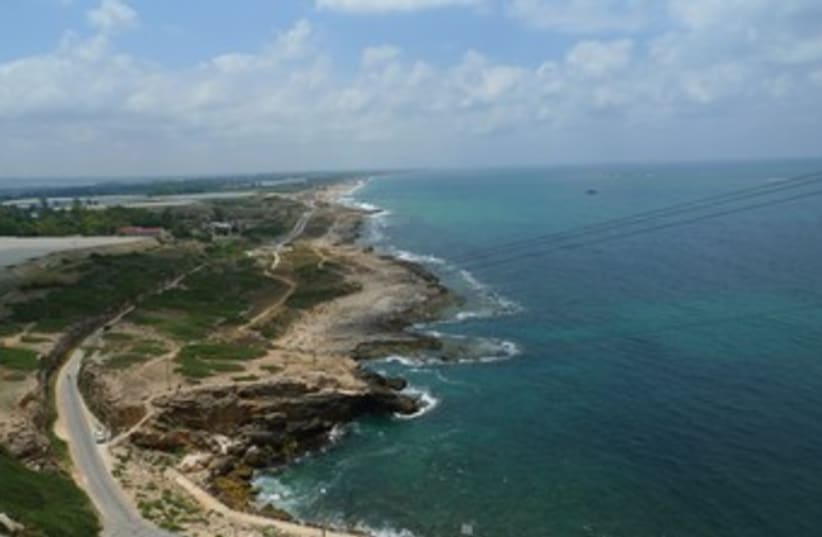
By ANN GOLDBERGThe Rosh Hanikra shoreline(photo credit: Courtesy)
But that’s not all there is to these popular seaside resorts. Many visitors don’t just want to spend all day on the beach, so it’s good to know there are plenty of other things to do.ASHKELONWhile taking a stroll along the 12-kilometer beachfront, stop and have a look at the Marina between the Delilah and Bar-Kochba beaches. More than 600 boats can be moored there, and it is often full, as it has the best facilities in the country for yachts plying the Mediterranean. It’s fun to watch the boats and fishermen, as well as the water-sports enthusiasts.If you have young children, they will no doubt try and persuade you to spend all day at Ashkeluna Water Park on the Delilah Beach. With special facilities for kids age three and up, it’s a relief for parents to know that all their children can find things to do in the same place – from small shallow pools with gentle slides for toddlers, to hair-raising kamikaze slides in the larger pools. Plenty of staff members are on hand in high season to keep lines for the slides moving and to supervise the kids. There’s also room on the lawns for families to sit together and have a picnic, if they can persuade the kids out of the water.Ashkelon’s magnificent National Park, which backs onto the southern end of the beach, is definitely worth a visit. Ashkelon is mentioned in the Bible as one of the five Philistine cities, but its heyday was during the Roman period, and one can see many columns, capitals, basilica and other ruins, as well as several ancient wells, in this expansive park.Crusader walls and fortifications from the Canaanite period, as well as Greek statues, are among the items you’ll be able to spot as you wander around, picnic or play ball with the kids. There are also overnight camping facilities.The ancient Khan in Ashkelon’s old quarter is home to the town’s History Museum, where you can see an audio-visual presentation of the town’s past.Concerts and shows take place there as well.NETANYANetanya, long popular among young vacationers and retired “Anglo-Saxons,” took an extra leap in popularity when the beach elevator was installed. The glass-walled Seaview Elevator reduced to a mere 20 seconds the 40-meter descent from the promenade and cliff tops to the inviting 13.5-km. of white beaches below. The long treks down the cliff paths are now but a memory.The promenade above the beach is a delight in itself, with art galleries, cafes, parks and children’s playgrounds along it, as well as many benches facing the sea.It’s also pleasant just to sit in the amphitheater by Ha’atzmaut Square, even when there is no entertainment, and just watch the boats, the swimmers, the surfers and paragliders and, of course, the indescribable sunset over the Mediterranean. If it’s action you’re looking for, you can take part in all the water sports instead of just watching, and there is a Karting Center as well as a bicycle park. For those smitten by the wall-climbing craze, Ha’ogen Wall Climbing Center just outside Netanya is the place, offering short walls for beginners as well as heart-stopping heights for the experienced.You’ll find two other fun activities just outside Netanya, both a little less exhausting.For chocolate-lovers, there is Sarina Chocolates in Moshav Ein Vered, where you can have hands-on fun making and tasting chocolate, learning about its origins, and seeing owner Limor Drucker’s own cocoa trees. She’s the first person to try and grow these in Israel, and she hopes one day to be able to make her own chocolate from scratch.In Kfar Hess, you can visit Uri Magen’s multicolored collection of parrots. They are very friendly and will happily pose on your shoulder for photos and let you feed them. They’ll even speak to you in Hebrew – although still with a “parrot” accent. Although very basic and low-tech, this little farm is a delight for young children, with an arts and crafts center and a petting corner with other animals and birds.Utopia Orchid Farm in nearby Kibbutz Bahan is heaven for visitors, who’ll discover not just a brilliant, multicolored selection of orchids, but also a tropical rain forest with waterfalls and bridges.There are carnivorous plants that eat anything that flies above them, attracted by their perfume; peacocks strutting around the lawns; mazes; musical fountains; and an impressive cactus garden with large cacti reminiscent of Wild West films.NAHARIYAThe country’s northernmost seaside town has always been known as a place for a quiet, calm vacation.However, it has livened up considerably over the years – though it doesn’t want to be in competition with Tel Aviv or Netanya.Founded by German immigrants fleeing from Nazi Europe in the 1930s, it is named after the Ga’aton River (nahar), which flows through the center of the town from east to west and cuts Ga’aton Boulevard in two. During a rainy winter, the river occasionally overflows its banks, but in general it flows gently into the sea. In the summer evenings, when it’s a bit cooler, it’s a pleasure to ride in a horse-drawn buggy from Ga’aton Boulevard to the beach or take the mini-train.There is a huge park in the northern area of the city, which will keep younger members of the family happy for hours. If you want something more invigorating, visit the Putsker Center and try out some fishing or diving under supervision, suitable for both children and adults. You can also take a boat ride up and down the coast. Besides that, there is a sports park for cyclists, skaters and skateboarders, with hilly terrain to test their skills.History buffs can learn more about this city’s past at Lieberman House, which is one of the oldest buildings in the town and has been converted into a museum. There’s also an art gallery in the old Water Tower, which, apart from providing water to the town in its earliest days, was a hidden underground training center for Hagana fighters.Nahariya’s Botanical and Zoological Gardens offer you two pleasures for the price of one, as you can see all the local flora and fauna, as well as animals from all over the world. Children can also enjoy getting up close to some smaller animals in the petting zoo.While you’re in the far North, visit Rosh Hanikra, where you can take a stomach-lurching two-minute ride down the chalky cliffs in the steepest cable car ride in the Middle East, and tour the grottoes carved out over the centuries by the pounding waves. The feel of the sea spray on a hot day is pure bliss, but walk carefully, as the ground is quite slippery. If you visit at night, the lighting gives a totally different, romantically eerie atmosphere.A short film shown in the old railway tunnel will help you understand how historically strategically important this site was, standing as it does at a crossroads between Africa and Egypt and through to Lebanon and Syria.Afterward you can take a stroll along the promenade or rent a family bicycle. Occasionally the site operates a 40-minute mini-train ride to Achziv and back.
Related Tagsnahariya
if(catID != 151){
var cont = `Take Israel home with the new Jerusalem Post Store