Ancient walls and echoes of battle in the kingdom of Judah
Sights and Insights: Guarding the southern edge of the Shephelah, Tel Lachish leaves no visitor disappointed.
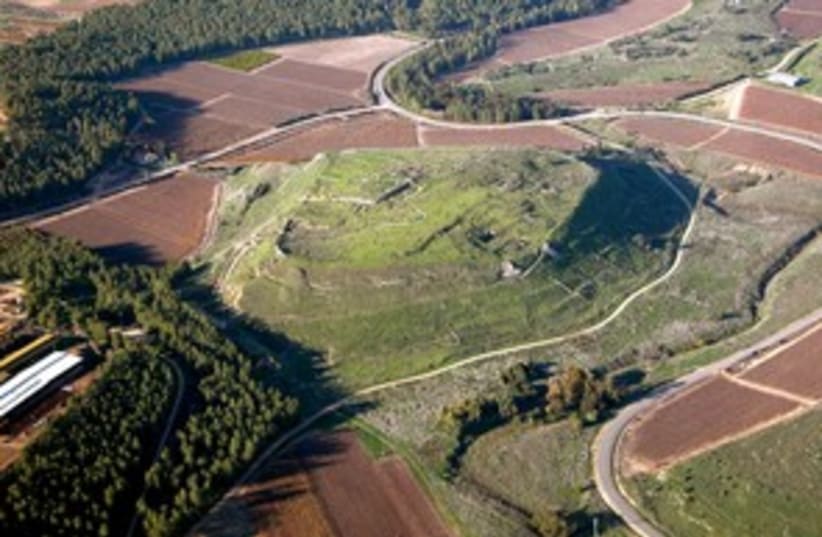
By WAYNE STILESTel Lachish 311(photo credit: BiblePlaces.com)Wayne Stiles is an author who has never recovered from his travels in Israel—and loves to write about them from his desk in Texas.Screams of war had occurred precisely where I stood. Judean and Assyrian arrows spraying at each other. Sling stones crushing armor and skulls. Assyrian battering rams methodically picking apart the city’s outer wall. Finally, Lachish fell.Of all ancient tells in the Holy Land, the Israel Antiquities Authority owns only one—Tel Lachish. It remained the most important city in the southern kingdom of Judah, except for Jerusalem.Guarding the southern edge of the Shephelah, Lachish served as both a customs outpost and as Jerusalem’s watchdog over invading Egypt. No one could access the Hill Country via Hebron without Lachish’s knowledge.Photo: BiblePlaces.comThat’s why when the Assyrian tyrant Sennacherib invaded Judah in 701 BC, he set his sights on Lachish. Having conquered the northern Shephelah, and having pushed Egypt down and out of the way, the Assyrian army faced an open door to Jerusalem. Only Lachish stood in their way.Sennacherib was so proud of his victory over Lachish that he commemorated the battle with a series of stone reliefs carved on the walls of his Nineveh palace. Portions of these reliefs are displayed today in the British Museum. They still reveal the ferocity of the battle.The godly king, Hezekiah, buckled with fear under the Assyrian threat and sent tribute to Sennacherib at Lachish (2 Kings 18:14).During the ministry of Jeremiah, Nebuchadnezzar of Babylon invaded Judah and laid siege to its most important cites—including again, Lachish. Jeremiah records that near the end of the invasion, only “Jerusalem . . . Lachish and Azekah . . . remained as fortified cities among the cities of Judah” (Jeremiah 34:7). The archaeological discovery called the “Lachish Letters” support Jeremiah’s verse.Photo: BiblePlaces.comIn 1935, archeologists digging in the guardhouse near the gate discovered eighteen ostraca (inscribed pottery shards) with ancient Hebrew inscriptions. These words included a draft letter to Jerusalem: “We are watching over the signal of Lachish . . . for Azekah is not to be seen.”Today, the Gate Area remains the best way to enter the tell. The ramp ascends slowly to the north and passes an outer and inner gate, the largest extant in Israel. Just inside the gate, an interpretive sign reveals the location of the discovery of the Lachish Letters. The mobile picks from Sennacherib’s battering rams destroyed the outer gate’s western wall (these picks can be seen on Sennacherib’s Lachish reliefs).The earthen siege ramp erected by the Assyrians still leans against the tell today and remains the only excavated siege ramp in near eastern antiquity. More than a thousand iron arrowheads were discovered there, giving silent testimony to the savagery of the battle.Photo: Wayne StilesThe ruins atop the tell include a large, flat platform—measuring 35 by 75 meters—upon which a series of buildings stood from the time of King Rehoboam in the 10th-century BC. Below the platform rest the remains of a Canaanite temple, dating from the time Joshua destroyed the city (Joshua 10:31-32). By 1200 BC, three consecutive Canaanite temples had been demolished.It was the second-most important city in the Kingdom of Judah. No visitor to Tel Lachish leaves disappointed.What to Do There:Visit the gate area, the Assyrian siege ramp, the sacred area, and the palace area. On the far side of the tell is an ancient well. While standing on the tell, face the east toward Jerusalem, find some shade, and read 2 Kings 18-19. How to Get There: From Jerusalem, take Route 1 west and turn south on Route 38. At the Nehusha Junction, turn west on Route 35, then south on Route 3415, keeping to the right as the road forks. You’ll see Tel Lachish on the left.Read Wayne’s blog and subscribe to his weekly Podcast at www.waynestiles.com.
if(catID != 151){
var cont = `Take Israel home with the new Jerusalem Post Store