Machu Picchu and the Amazon are two attractions of Peru that no traveler should miss.
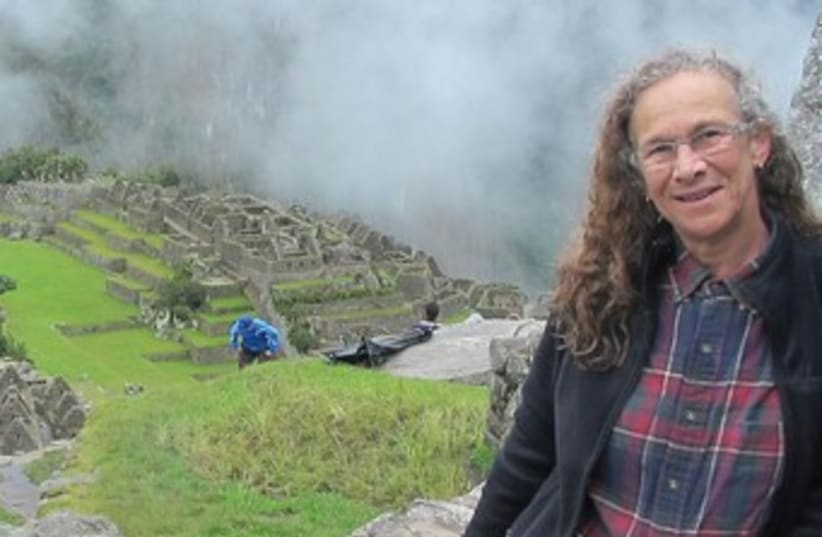
By LINDA EPSTEINLinda Epstein at Machu Picchu_370(photo credit: Linda Epstein)
MACHU PICCHU, Peru – Once you cast your eyes on the marvel of Machu Picchu and its setting, it’s immediately clear why this was chosen as one of the modern Seven Wonders of the World. Having traveled to over 90 countries, I feel safe in saying that Machu Picchu is incomparable.The combination of imposing verdant mountains, wisps of clouds hugging the waists of those jagged edges, terraced agricultural strips cascading down their sides, a deep and narrow valley with a forceful, flowing river and the expanse of what was once a proud city is hard to beat.I am not the fittest individual. I am over 60, a smoker who doesn’t exercise, so I was a tad concerned that I would not be able to enjoy this gem, but I was wrong. Getting there requires a bit of hiking, but the guide stops periodically to explain things, which allows one to rest a bit.With thousands of visitors to this fairly remote site daily, even in the off-season, the Peruvians have worked out quite an efficient system. You must book in advance due to the limited number of permitted daily entries. Your ticket is date specific, so you make the climb rain or shine. And it’s worth it, rain or shine.The largest city nearby is Cusco, worth a visit in its own right, although so many people will try to sell you something that just sitting quietly in the beautiful town square becomes impossible.Cusco, however, is useful for picking up those last-minute things you may have forgotten to bring with you (such as a rain cover for your backpack), and there are several restaurants with top-notch ceviche (marinated fish) on the menu.Alternately, you can try alpaca or guinea pig for dinner – the former worthwhile, the latter not so much.Cusco is also filled with tour operating agencies, and it’s recommended to shop around before choosing one. There are two serious questions to ask – what does the tour include, and what does it not include.I recommend seeing the Sacred Valley, taking a dip in the hot springs near Machu Picchu and spending a full day at the site itself, as well as sleeping the night before in Aguas Calientes (you should be prepared for simple rooms, albeit clean ones). The more intrepid can also walk the Inca Trail, ending at Machu Picchu.Another special part of Peru is the Amazon. Iquitos is the largest city in the world with no road access. Population estimates vary from 400,000 to 700,000, but it still feels like a small town. You can fly there, or you can arrive by boat. I decided to try both experiences, arriving from Lima by plane.As it happened, I was there for Carnaval, which in Iquitos is a water-fight. The locals make and sell balls of dyed clay to throw at each other (after they have thrown water-balloons) which burst open upon impact. It makes a terrible mess, but everyone has a lot of fun.The local market, located in the neighborhood of Belen, sells anything and everything. Feel like monkey for dinner? You’ll find it in the Belen market. Turtle eggs? No problem! Turtle penis to increase your virility? Lots of options to choose from, as well as a variety of fruit with names you’ve never of.Belen has two sections. There’s the market and there’s the floating village. Due to variations in the annual rainfall, the banks of the Amazon rise and fall with the season. Half of the neighborhood is built on solid land, but sometimes the lower floors are flooded by the river, so new footbridges are built every season to allow residents to walk between buildings at the upper level. Others build their homes on rafts to accommodate the change. Schools are built on pillars and children arrive in dugout canoes.After a day of meandering through the alleys of the market and drifting through the neighborhood by canoe, the best way to relax is at the Dawn on the Amazon Cafe, Bar and Restaurant, run by a former American from Indiana. The fare is both local and western, with an extremely comprehensive menu. Expats gather on the terrace overlooking the river for a late afternoon drink, and just watch the world go by. Serenity is complete.But if you want to really rub shoulders with the locals, you should travel the river. Boats leave daily from Iquitos downstream to Santa Rosa, carrying both cargo and passengers. Most passengers sleep in hammocks (bring your own) strung up on the two upper decks. There are a few cabins available for more privacy – bunk beds, two narrow cots per cabin.I lucked out, having arrived early at Puerto Masusa, Iquitos’ main departure stage. I was therefore given the cabin facing the bow of the boat, which meant that as we moved along there was a breeze the whole time. The other cabins can be stifling. This also afforded me the opportunity to stand in the doorway of the cabin and watch the action.And there’s lots of action. The primary trade route is the river itself, so the boat stops every hour or two to unload tables made from balsa and load everything from sacks of rice to bunches of bananas to live cattle. There are no actual docks; the stevedores carry everything by hand up and down narrow planks of wood. The cattle are cajoled on deck with ropes and some intrepid tail-twisting.Two nights and a full day later, you arrive at Santa Rosa, the Peruvian town at the tri-border area. This is the point on the Amazon where Peru meets Tabatinga, Brazil and Leticia, Colombia. You can travel among the three towns without border formalities, but before going any further, you have to officially exit whatever country you arrived through and officially enter the next.I had arrived from Peru, but until I determined my next destination, I didn’t go to the Peruvian Policia Federale, followed by Immigration, to “depart.” I simply found a guest house in Leticia (the largest of the three communities – 35,000 people) and enjoyed my stay. The guest house is owned and operated by a Colombian man who has lived in other parts of the world and understands backpackers’ needs.While there, I organized a hiking tour into the jungle. Three days and two nights with a local guide who knows the rain forest well. This is absolutely critical if you want to get the most out of the experience.The one thing NOT to take for a hike in the rain forest is hiking boots. The mud underfoot will suck your boot off in a second. Top-notch, knee-high Wellington rubber boots is the way to go. Other than that, you only need to take a change of clothes (long-sleeved shirts and long pants), a few good pairs of heavy socks, a flashlight and a toothbrush. The guide and porter bring the rest. It helps if you speak Spanish, which I do not.We were three tourists with two guides/porters. They carried the food, cooking utensils, drinking water, tent, etc. We all carried our individual small packs. One guide led the way, the Spanish-speaking German tourist was next so she could translate for us, and the second guide brought up the rear. Each guide also carries a machete.Spotting animals, birds and various camouflaged insects takes a lot of experience, and doing so while walking and trying not to trip over tree roots or walk into cobwebs is an art. There’s no real value in using mosquito repellent because you sweat so much from the exertion and the humidity that it is immediately washed away.And it’s worth every minute! Learning how they make a lean-to from leaves which stays water-resistant for five years, or arriving at a river with no way to cross so the guides simply cut down a couple of trees and build a bridge – these are sights which stay with you for a long time. Taking a shower late on the second day under a waterfall is heaven, even if the effect only lasts a short time.The sense of accomplishment is complete when you get back into a dugout canoe, paddle through tiny tributaries with lily pads the size of large tables, parrots nesting above, return to the guide’s village and hail a water taxi back to Leticia.I have now officially exited Peru and entered Brazil. In a day or so, I will board a boat headed for the large city of Manaus and the better-travelled parts of the Amazon, never officially having been to Colombia, although I was based there for 10 days.
Related Tagsperu
if(catID != 151){
var cont = `Take Israel home with the new Jerusalem Post Store