Charleston, South Carolina is not only a pearl of southern American
culture, it also boasts an historic Jewish community.
By BEN G. FRANKCharleston 370(photo credit: Ben G. Frank)
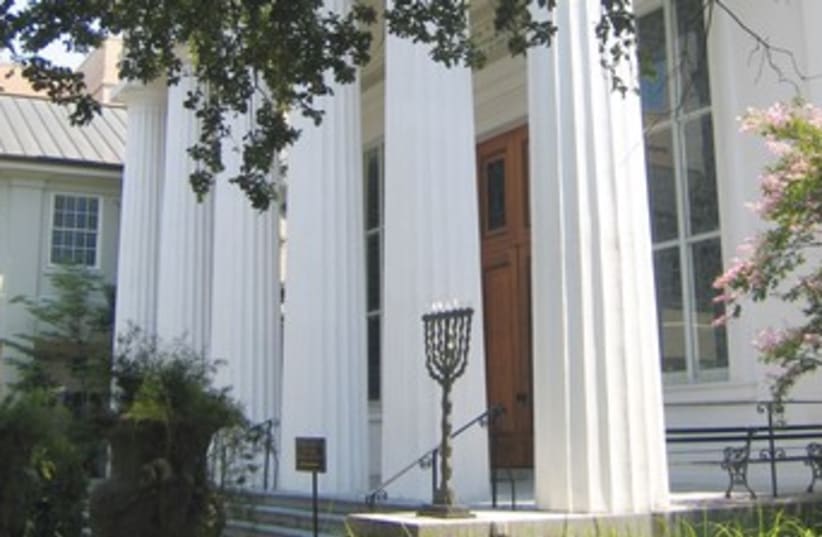
CHARLESTON – On April 12, 1861, General P.G.T. Beauregard, in command of the Confederate forces around Charleston Harbor, opened fire on the Union garrison holding Fort Sumter.At 2:30 p.m. on April 13, Major Robert Anderson, garrison commander, surrendered the fort and was evacuated the next day.Thus began the American Civil War (1861- 1865), also known as the “War Between the States,” “Brother against Brother,” “War of the Rebellion” or “War for Southern Independence.”And it all began on the Charleston, S.C. waterfront.No wonder the city is called, “the Mother City of the South,” emphasized by titles of local tours, such as “Charleston Tea Plantation and Party” and “Gone with Wind,” as well as culinary, historic home, city, boat and ever-popular carriage tours.Each day, the city of Charleston whets the appetite of thousands of visitors from the US and throughout the world who arrive in this landmark of American history, which includes Fort Sumter as well as the home of the second-oldest Jewish congregation in continuous use (since 1749), Kahal Kadosh Beth Elohim (KKBE). Today’s synagogue was dedicated in 1841 and is considered the starting point of the Reform Movement of Judaism in America.In the first decades of the 1800s.Charleston boasted “the largest cultured and wealthiest Jewish community in the US.” The synagogue today consists of two structures: the main sanctuary, which once had the bimah in the center, according to Sephardic style, but it was moved forward and the “pews” were changed so they are facing east.The second building contains a social hall, a religious school, offices, a museum and sisterhood meeting rooms. The synagogue is open for daily tours – except on Shabbat– from 10 a.m. to 12 noon and from 1 p.m. to 4 p.m. It is best to call ahead (843-723-1090) for a visit to one of the oldest Jewish cemeteries in the US, at 189 Coming Street (1762).The synagogue is designed in the Grecian Doric architectural style. Over the front door is a marble tablet bearing the inscription of the “Shema” prayer in Hebrew and English.The early Charleston Jews were mostly Sepharadim who came from England in 1695. South Carolina was one of the most tolerant states among the 13 American colonies and offered religious freedom to all.Until this day, Charleston is called “the Holy City.” More Jews arrived in the 18th century from France, Holland, Jamaica and Barbados.Jews were engaged in commerce – especially in the growing of indigo, one of the most important crops in South Carolina. Large numbers of Charleston Jews served the American Revolutionary cause.The Civil War may have started there and been a vital center of the Southern cause, but except for a brief mention during tours or on information sheets, the conflict is not the main topic of conversation.During the War Between The States, the Jews of Charleston were Southern patriots and aligned themselves with the Confederacy.Benjamin Mordecai contributed $10,000 to South Carolina’s war chest and fed thousands of widows and orphans at his own expense. Many Jews enlisted in the Confederate Army – so many that KKBE found it impossible to obtain a quorum of trustees during the war. Among KKBE’s members were the parents of Judah P. Benjamin, who some historians call “the brains of the Confederacy,” and the parents of Bernard M.Baruch, financier and statesman.With the end of the Civil War, Jews, like their neighbors, became poverty-stricken.Many left the South. So impoverished was the area that there was no noticeable recovery until the mid-20th century. After World War II, Jews once again moved back for economic and professional opportunities.Founded in 1670 and named “Charles Town” for King Charles II of England, the city became Charleston in 1783. Upon arrival, tourists immediately sense a slice of life of the “Ole South,” including foods like grits. Stop at Marion Square on Calhoun Street, where, adjacent to this huge grass rectangle, stands a castle-looking structure known as the old Citadel Military College, now an Embassy Suites hotel. The square plays host to a popular farmers’ market every Saturday morning, when the field is resplendent with booths selling arts and crafts. In an open food court, omelets are made before your eyes.An upscale and historic hotel is Charleston Place, a few minutes’ walk from KKBE. Less expensive is the Marriott Courtyard on Calhoun Street, across from Marion Square.Fronting on Marion Square alongside Calhoun Street, near the statue of Southern leader John C. Calhoun (1782 –1850), is the Holocaust Memorial. The site, which was dedicated in 1966, is easily missed because its shape is that of a flat 12-foot bronzed tallit (prayer shawl) on the ground with one of the fringes cut, as is done in Jewish burial. The memorial is surrounded by a fence to evoke the sense of the concentration camp.Saunter up and down King Street, with its architecture and boutiques that will take you back in time. If it’s art galleries you’re after, you won’t go wrong with 133 establishments in Charleston, a walking town.Visit the old homes in their unembellished Victorian, Georgian and Italian architecture that makes the city an in-tourist destination.Stop at the Palmer House in the Historic District for a beautiful view of Charleston Harbor and Fort Sumter. Since the thermometer in summer can reach 105 degrees Fahrenheit, travelers prefer to travel by airconditioned vehicles to view the nearby antebellum plantations.For 17 days and nights each spring, the world-famous Spoleto Festival USA – internationally recognized as America’s premier performing arts festival – fills Charleston’s historic theaters with opera, theater, dance, chamber music and symphony performances.The Jewish population is increasing. About 6,000 Jews reside in the Charleston area, which has a city population of about 120,000 and a metro population of 600,000. Many arrived recently as part of the movement of young American Jews working with the military as well as seniors who find Charleston a charming and less expensive area to retire, with its low taxes, cultural activities and scenic views. The more affluent end up at Kiawah Island Golf Resort.Being the oldest and largest synagogue of the community, KKBE boasts 500 households as members and holds Friday night services at 8 p.m., although on the first Friday of every month, a Shabbat dinner is held at 5:45 p.m. and services are at 7:00. And here’s a twist: unlike most American congregations, this Southern house of worship serves fried chicken. (No, they don’t dish up grits.) Kosher chicken must be ordered in advance.Saturday services are at 10 a.m.A highlight of the visit to KKBE is the Chosen Treasury Judaica Shop, open Sunday through Thursday from 10 a.m. To 4 p.m.and Sunday from 10 a..m to 3 p.m. Rabbi Stephanie Alexander says the synagogue is “rightfully proud of its place in Jewish history and, to this day, is vibrant in its practice of Judaism.” After all, it stands as the oldest Reform congregation in the US, notes Anita Moise Rosenberg, a KKBE vice president.Charlston also hosts the Conservative Emanu-El synagogue and two Orthodox synagogues: Brith Shalom Beth Israel and Congregation Dor Tikvah, which is located in the Jewish Community Center.Shannon Warner, who belongs to KKBE, says the Jewish community is united in its support of Israel and is “up on what is happening” in the Jewish state. She says that all segments of the community work together, including the scheduling of a community calendar.Chabad of Charleston and the Low Country has existed for the last five years and is situated in the suburb of Mount Pleasantt.Rabbi Yossi Refson, who is from England, says kosher meals are available at Hyman’s restaurant. This establishment offers kosher meals prepared at the Chabad House. Supermarkets also stock kosher products.The Jewish community is thought of well “because they were treated well and they treated everyone else well,” explains Refson.The writer is a journalist and the author of several Jewish travel guides. www.bengfrank.blogspot.com; twitter:@BenGFrank
if(catID != 151){
var cont = `Take Israel home with the new Jerusalem Post Store