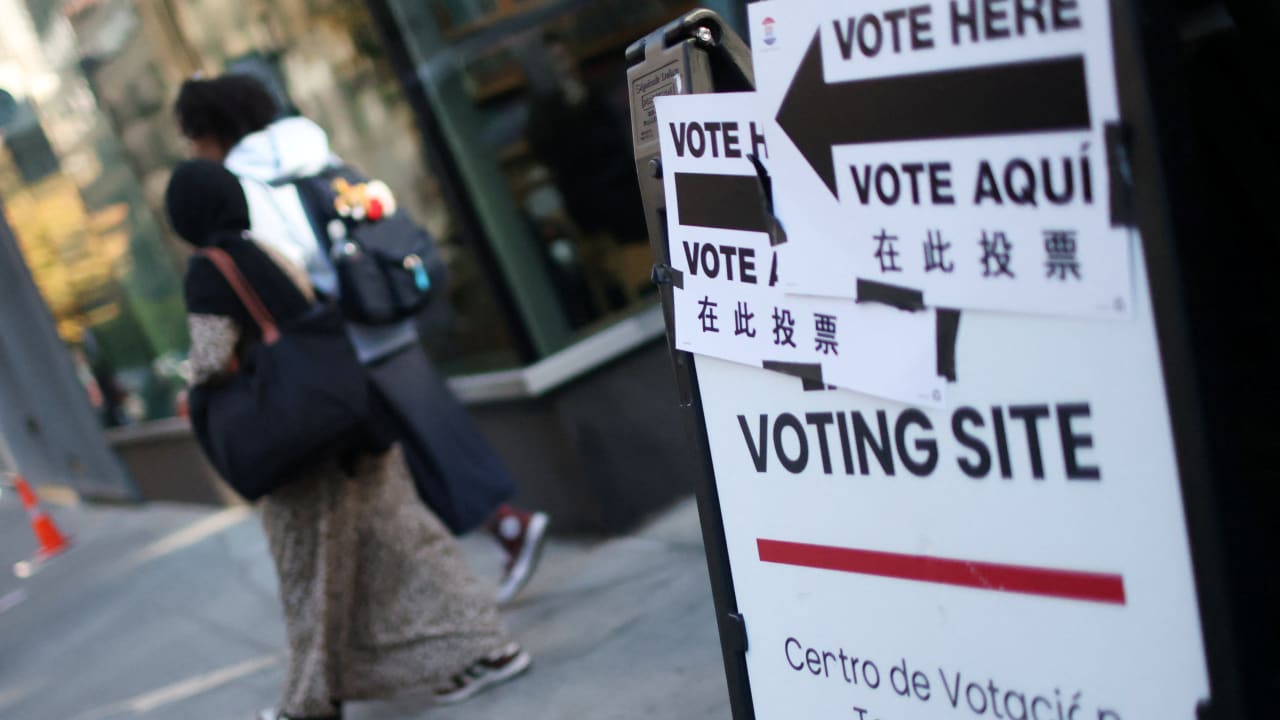
New York City municipal elections are being held on Tuesday, with the results of the mayoral race being of great concern and consequence for the city’s Jewry.
Early voting opened last Saturday and closed on Sunday ahead of the final leg of the three-way mayoral race between New York Assemblyman Zohran Mamdani, former New York Gov. Andrew Cuomo, and Guardian Angels founder Curtis Sliwa.
Mamdani has been projected to win in polls such as the October Marist University and Quinnipiac University surveys. Marist and Quinnipiac indicated last week that Mamdani was leading the candidates with 48% and 43% support, respectively. Cuomo trailed with 32% and 33%, and Sliwa with 16% and 14%. Three percent or 6% of New Yorkers were undecided.
The same polls showed that Jewish voters were consolidating behind Cuomo, with 55% or 60% of New York City Jews backing the former governor, according to Marist and Quinnipiac. The surveys projected 32% and 16% for Mamdani, and 11% and 12% for Sliwa.
Favorability ratings in the polls indicated that many Jews were not overly fond of Cuomo but were concerned about Mamdani.
Jewish community leaders have expressed concern about how the New York politician might relate with the city’s Jews, citing his long history of anti-Israel activism, rejection of Jewish self-determination, refusal to denounce violent anti-Israel slogans, and accusations of “genocide” against Israel.
A series of leading NYC rabbis came out in support of Cuomo, warning that Mamdani was a threat to the Jewish community. Park Avenue Synagogue Rabbi Elliot Cosgrove said in an October 21 sermon that Mamdani “poses a danger to the security” of the community.”
Jewish Community Relations Council of New York (JCRC NY) CEO emeritus Rabbi Michael Miller and Kehilath Jeshurun Synagogue Rabbi Chaim Steinmetz issued similar statements in the following days.
The wave of warnings about Mamdani culminated in an October 22 Jewish Majority letter eventually signed by 1,181 US rabbinical authorities, urging American Jews to vote against anti-Zionist candidates.
Concern about Mamdani has also led prominent NYC Jews to vote strategically, distancing themselves from Republican candidate Sliwa and choosing Cuomo.
Sliwa, a stalwart and former NY assemblyman, shifted his endorsement to Cuomo last Sunday, believing that the former governor was the only one who could defeat Mamdani.
Soon after, Republican councilwoman Inna Vernikov also backed Cuomo, explaining that being American and a Jew took priority over party loyalty.

Jewish New Yorkers voting for Mamdani
Nevertheless, many Jewish New Yorkers are voting for Mamdani.
Jews for Racial and Economic Justice, Jewish Voice for Peace Action, and Bend the Arc Action are issuing support and engaging in canvassing and campaigning on Mamdani’s behalf.
Moreover, several progressive rabbis issued a statement of support for Mamdani in a video last Monday. Kolot Chayeinu Rabbi Abby Stein, whose synagogue has hosted Mamdani a few times during his campaign tour, was among them.
Rabbi Emily Cohen, Malkhut Rabbi Rachel Goldenberg, and New York Jewish Clergy for Justice co-chair Rabbi Miriam Grossman said that Mamdani would fight to make the city affordable and safe for residents of all backgrounds.
A second rabbinic letter, countering the first, gathered 1,306 signatories, assuring that “Mamdani’s support for Palestinian self-determination stems not from hate, but from his deep moral convictions.”
On Sunday, dueling endorsements emerged from the hassidic Satmar Ahronim community, with three leaders backing Cuomo and another backing Mamdani.
Pro-Israel rabbis and leaders have argued that many of the Jewish New Yorkers voting for Mamdani are not doing so because of his anti-Israel history, but despite it.
Quinnipiac found that the most critical issue informing Jewish New Yorkers’ mayoral vote opinion was crime, followed by affordable housing, schooling, health care, and then inflation.
Without an endorsement either which way, Agudath Israel launched a project to push community members to vote. Several rabbis said in an October 24 letter that there was an obligation to vote as it was a “fundamental responsibility to guard the freedoms we enjoy.”
“The only hedge spurring a candidate with future political aspirations to moderate his stance is for him to know that he has a large, motivated voting constituency to contend with,” read the letter.
Agudath Israel instructed community members on how to vote, where to find polling stations, and how to submit an early vote or mail their vote.
According to Marist, just over half of NYC Jews are expected to vote in person on the day of the elections.