The Capitol riots cast a moral stain on many of US President Donald Trump's supportive policies toward the Jewish state, which had already been undermined by his initial refusal to concede the elections.
In the normative course of events, Trump would have immediately accepted his November defeat and then worked for two months to shore up his four-year legacy, including attempts to help cement them with bi-partisan support.
But Trump lost crucial time by fighting the election results, rather than focusing on maximizing his remaining moments.
This would have been particularly important with regard to his policies on Israel. The Jewish state had benefited from his go-it-alone, US cowboy attitude, which allowed him to ignore international and domestic opinion in pursuit of policies he believed were right.
In a way, it could only have been an out-of-the-box politician like Trump – willing to throw away the rule book and buck the international community when needed – who could have taken the stands he took on Israel.
Past politicians, no matter how supportive, were never able to vary far from an internationally proscribed script on Israel, particularly when it came to the Israeli-Palestinian conflict.
That worked well when Trump was in office. Had he been re-elected, the extra time could have cemented some of the actions which drew “Israel’s best friend ever in the White House” accolades while in power.
But the absence of international and bi-partisan support combined with his shortened tenure now means that there may be little international and/or domestic will to carry those policies over into a Democratic presidency.
Any right-wing Israeli government will have a hard time in the coming years pressing the Biden administration to uphold policy decisions made by a Republican Trump administration.
In light of the Capitol riots, now it will have to argue that the international policies of a president who struggled to discern how the actions of the Capitol rioters were problematic, should still be respected when it came to Israel.
As a result, gains Israel enjoyed during Trump’s four years could easily be erased. Then there are actions by his administration which in and of themselves created problems for Israel, in spite of Trump's supportive stance.
1 - The Abraham Accords
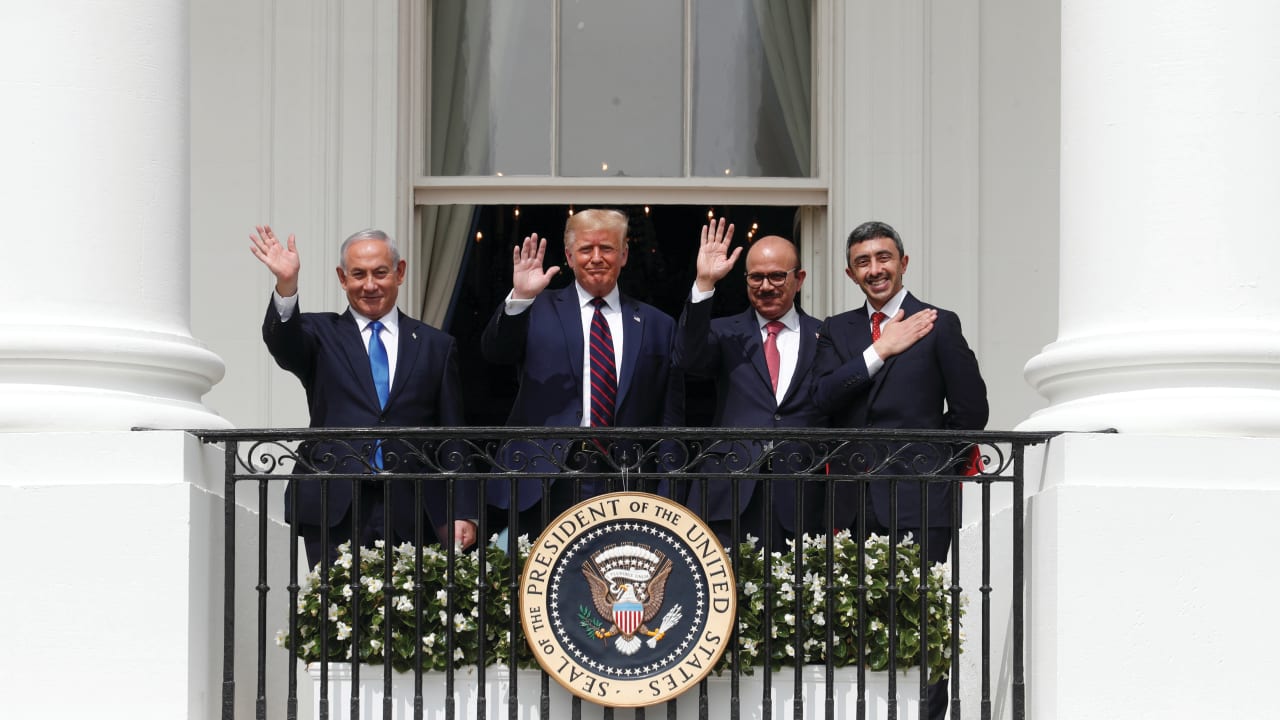
Trump was the first US President since his predecessor, Bill Clinton, under whom agreements were signed to normalize ties with Israel’s Arab neighbors. In its last months, the Trump administration brokered the Abraham Accords, under whose rubric normalization deals were reached for the first time with the United Arab Emirates, Bahrain and Sudan. Ties were also re-established with Morocco after they were severed two decades ago.
The Accords ended the 18-year freeze the 2002 Arab Peace Initiative had placed on such ties, which insisted that Israel could only have relations with its neighbors upon resolution of the Israeli-Palestinian conflict. Now, Israel is free to publicly pursue regional alliances.
2 - Iran
In 2018, Trump pulled the United States out of the Iran deal reached three years prior under the Obama administration between Tehran and six world powers. It was designed to curb Iran’s ambitions to develop a nuclear weapons program.
Israel opposed the deal, known as the Joint Comprehensive Plan of Action, because it believes that it left Iran in a position to become a nuclear power and did not address its ballistic missiles program. It also held that the removal of sanctions provided Iran with necessary cash to support regional and global terror. The US also reimposed crippling economic sanctions against Iran as part of a maximum pressure campaign.
3 - Jerusalem
The US in 2018 relocated its embassy to Jerusalem, a move that Biden is unlikely to reverse. Only Guatemala followed America’s example and moved its embassy. The Dominican Republic, Honduras, Brazil, Serbia, Kosovo and the Czech Republic have all spoken of opening embassies in Jerusalem.
This year, the US allowed American citizens born in Jerusalem to register their country of birth as Israel if they so choose, a move previously prohibited.
Trump was the first sitting US President to visit east Jerusalem, making a historic stop at one of Judaism's most sacred sites, the Western Wall. Trump, however, never officially recognized Israeli sovereignty over east Jerusalem, which had been under Jordanian control prior to the 1967 Six Day War. Israel applied Israeli law to the eastern part of the city after the war and formally annexed it in 1980. No country has acknowledged that sovereignty.
4 - Golan Heights
5 - The United Nations
Trump is the only US president under whose tenure the UN Security Council failed to approve any anti-Israel resolutions or issue any statements of condemnation.
The US is one of five permanent members of the 15-nation body, and has veto power over resolutions and unified statements. Trump used that power to block any anti-Israeli resolutions at the UNSC.
Until his tenure, former US president Barack Obama had the most positive track record at the UNSC. Obama, who was a two-term president, blocked all anti-Israel resolutions at the Security Council for seven years. It’s the longest period the UNSC has ever gone, since the creation of the state, without approving a resolution against Israel.
Obama broke his own record, when in December 2016, a month before leaving office, he instructed the US to abstain on UNSC Resolution 2334 condemning Israeli settlement activity.
During Trump’s four years in office, the US stood with Israel in every UN forum and voted against every resolution against it. Its officials spoke often about UN bias against the Jewish state. To underscore this point, the Trump administration withdrew from two of the UN bodies with a contentious history on anti-Israel votes: the UN Educational, Scientific and Cultural Organization (UNESCO) and the UN Human Rights Council (UNHRC).
6 - West Bank settlements
Trump's support for Jewish presence in the West Bank was spearheaded by his Secretary of State Mike Pompeo and the ideology behind it was named for him. It overturned past understandings of Israeli activity as illegal as expressed in the Hansell Memorandum of 1978, a State Department memo that claimed Israeli settlements violate international law, and determined instead that it was not inconsistent with international law.
This legitimization of settlement activity, often spoken of as the Pompeo doctrine, included US officials referring to the area as "Judea and Samaria" rather than the West Bank. The Trump administration envisioned Israel retaining its settlements rather than evacuating them. As such, past terms of reference such as "settlement blocs" versus "isolated settlements" were eliminated from the diplomatic lexicon, as was the idea of the pre-1967 lines as a relevant geographical term.
The doctrine stated that in its dealing with Israel, it would not distinguish between territories on either side of the Green Line in the West Bank. This included allowing Jewish product exports to the US that were produced over the pre-1967 lines in east Jerusalem or the West Bank to be labeled as made in Israel.
US Ambassador David Friedman was the first US official in this position to break past taboo on crossing over the pre-1967 line, visiting Jewish areas of east Jerusalem and the West Bank. Pompeo, in his visit to Israel, became the highest-ranking US official to visit a Jewish area in the West Bank, when he went to the Psagot Winery in the Shaar Binyamin Industrial Park.
1- Israeli-Palestinian talks
Trump was the first president since Clinton not to launch direct talks between Israel and the Palestinians. The impasse had occurred during the Obama years, when Israeli-Palestinian negotiations fell apart. Obama was not able to revive them, and neither was Trump. He unveiled his peace plan late – only in January of last year.
2 - Israel's Qualitative Military Edge
The Biden administration has already said that it would review Trump arms sales agreements to the region with an eye to ensuring that Israel's QME is maintained.
3 - Bi-partisan US support for Israel
But the manner in which those ties were handled helped erode bi-partisan support for Israel. For decades the Jewish state has maintained its close ties with the United States, by placing it above partisan politics, rather than making it a Republican or Democratic issue. Trump, however, attempted to align the two, stating that Jews who voted for the Democratic Party were "disloyal."
4 - Israel's ties with US Jews
Israel's tight relations with the administration that made US Jews feel so vulnerable, as well as Netanyahu's failure to call Trump on the matter, strained Israel's ties with one of its more significant allies within the United States, the Jewish community. American Jews had long felt that the Jewish state was important to ensuring its security both at home and abroad. During the Trump years, it seems as if the needs of Jews in Israel and those in the United States were divided rather than united, making Israel seem less relevant to US Jewry.