
Ancient funerary offerings and a multiple burial were discovered in a 1,000-year-old tomb in the El Caño archaeological site in Panama, the Panamanian Culture Ministry announced in a mid February statement.
The tomb, nicknamed “Tomb 3,” was originally found by archaeologists in 2009 after a large collection of pottery and metal was noticed at the site. However, the artifacts and multiple burial were only unearthed during the most recent excavation of the site.
Archaeologists noticed that there appeared to be a central individual of the burial, who was surrounded by several others and a collection of artifacts, including pectoral jewelry, earrings, bracelets, and ceramics bearing iconography associated with the local artistic tradition.
The tomb belonged to an individual of high status within their community, from an important lineage in the Rio Grande area, lead archaeologist Julia Mayo said in a video posted to the ministry’s X/Twitter.
“The fact that all [the burials] look alike, that there are several ajuares [goods] that are not personalised for someone specific but actually reference the lineage” back up this point, she explained.
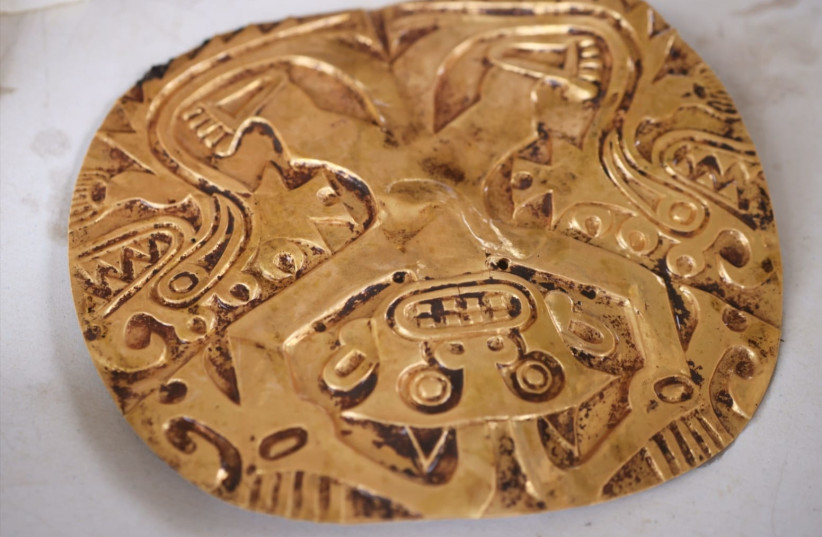
Gold does not hold value in terms of wealth or treasure to the Spanish, she noted, but rather holds a “ritual value” as they used it for its durability.
“They left a message encrypted in their iconography,” she said. “What they used is a material that can transcend time and [in order to] send the message forward in time forever.”
One of the most important pre-Hispanic cemeteries in region
Researchers have deemed El Caño as one of the most important pre-Hispanic cemeteries in the region, associated with the societies that inhabited Panama’s central provinces between the 8th and 11th centuries CE.
According to the ministry, the tomb’s discovery is a significant moment for Panamanian archaeology and the study of pre-Hispanic societies, granting a broader glimpse into the culture’s known funerary pracitices.
As well, the finds may “provide new information on social organization, political power, trade networks, and ritual practices, among other aspects.”
During a visit to the site, Panama Culture Minister María Eugenia Herrera emphasized that the ministry is “focused on developing the El Caño Museum as a research and education center for all Panamanians and visitors interested in our origins and our history.”
“We are ready to tell the world much more about our cultural wealth and to value it,” she went on. “First and foremost for all Panamanians to feel proud of our identity, thanks to all this valuable research carried out by the El Caño Foundation together with the Ministry of Culture.”