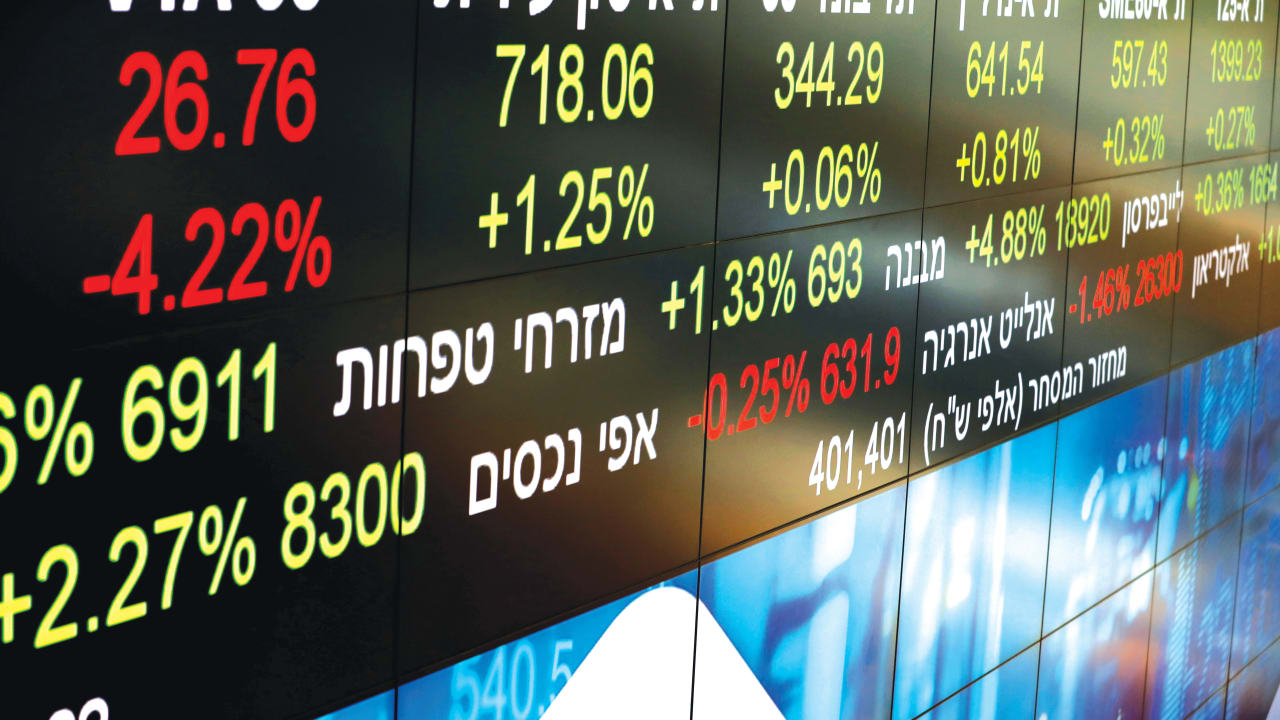
Israeli companies listed on the Tel Aviv Stock Exchange (TASE) outperform their NASDAQ listings, with the “local version” of these shares seeing higher growth in trading volume and total market value than their “US version,” according to a Wednesday report by TASE.
The report points out that one of the main reasons behind this performance difference is centered around the “home factor,” with investors opting to invest in the company's local markets rather than overseas, even if it means choosing the TASE over NASDAQ, Yuval Tsuk, an economist working at TASE’s research unit, explained.
This is evident in the numbers: TASE stocks saw a 68% increase in trading volume, while the same shares on the NASDAQ averaged a 55% increase, according to TASE data.
This can also apply to local investors, who prefer investing in the local market over a foreign one, mainly because of conversion costs and more convenient trading hours.
In 2025, dual-listed companies accounted for 22% of the TASE's total market cap, totaling $114 billion. Among the highest-valued were Teva, Elbit Systems, and Tower, which had a combined market cap of $76 billion.
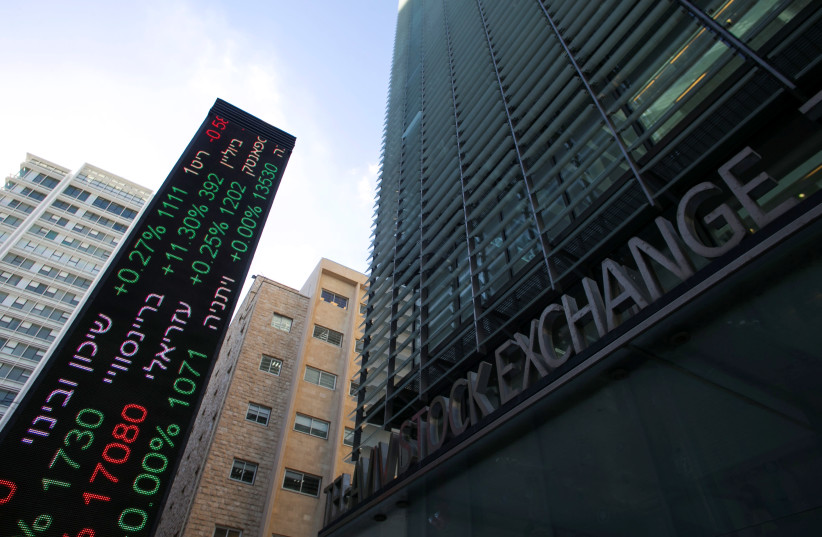
This margin became even higher in February, when Palo Alto Networks ($115 billion) announced it would list on the Tel Aviv Stock Exchange (TASE) as part of its acquisition of the Israeli cybersecurity platform CyberArk.
The report also noted that ten dual-listed companies achieved share yields exceeding the TA-125 index's 51% yield, indicating they outperformed the Israeli market as a whole.
The leading companies from this list were Lineage Cell Therapeutics with an annual yield of 175.8%, Enlight Energy with an annual yield of 129.6%, and Kenon Holding with an annual yield of 101.2%.
TASE’s new trading week brings Wall Street capital to Israel
A factor that didn’t affect the 2025 metrics but could apply to the first month of 2026 is the trading-day shift the TASE implemented since January.
The market shifted from a Sunday-to-Thursday schedule, aligned with the traditional Israeli workweek, to a Monday-to-Friday schedule, which aligns with most international markets.
With this, TASE managed to attract international investors, especially on Fridays, with that day seeing a doubling of foreign investor involvement compared with Sunday’s metrics in 2025.
”Furthermore, higher trading activity was recorded on Fridays across the entire Israeli equity market relative to the average Sunday trading volumes in 2025,” Tsuk explained in the analysis.