
The insane food prices in Israel have received a variety of colorful descriptions over the years, but it seems that the metaphor heard yesterday during the discussion in the Knesset Economic Affairs Committee, regarding the lack of impact of the falling dollar exchange rate on food and pharma prices, not only uses motifs drawn from our reality over the past two and a half years, it undoubtedly beats them all.
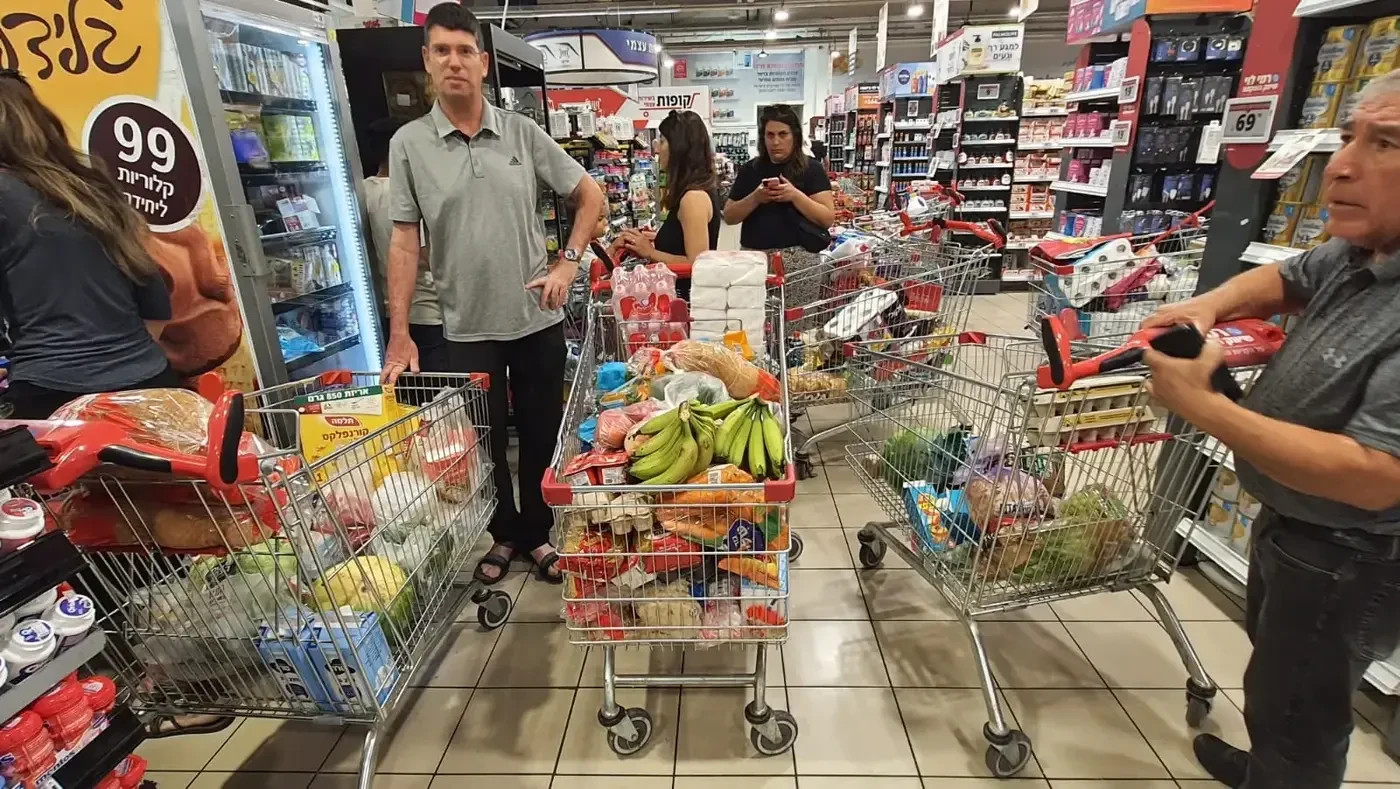
"They go up like missiles and come down like feathers," defined Ami Zadik, Director of the Budgetary Control Department at the Knesset Research and Information Center. In a single sentence, he managed to describe what every Israeli consumer has been feeling for years next to the supermarket shelves: Prices skyrocket at a dizzying speed, but when there is a reason to lower them, they decrease slowly, if at all.
The problem is that this time it is not just a feeling. The data presented by the Knesset Research and Information Center show that while the shekel is strengthening, global raw material prices are falling, and many countries are enjoying reductions in food prices, in Israel the trend is completely different.
According to the report, between August 2025 and April 2026, the real food price index in Israel rose by 0.2%, while in the European Union a decrease of 1.1% was recorded during the same period. This gap joins a longer trend: Between January 2022 and October 2025, the global food commodity price index dropped by 3.6%, but in Israel, the consumer food price index jumped by 18.8%.
The data are particularly striking against the backdrop of the unusual strengthening of the shekel. According to the review, between January 2025 and May 2026, the shekel strengthened by 19.8% against the dollar and by 9.4% against the euro. In the month of June, the average dollar exchange rate stood at only NIS 2.91, the lowest level since October 1993. The euro was also trading at historic lows, with an average rate of NIS 3.33, the lowest since the launch of the European currency.
Seemingly, this is news that was supposed to roll directly into the shopping cart. However, in practice, during the same period in which the shekel strengthened powerfully, the food price index in Israel actually rose by 2.6%, while fruit and vegetable prices jumped by 8.1%.
The central question that arose in the discussion was how to make the price reductions reach the consumer. MK Moshe Passal argued that the public is no longer looking for explanations but for solutions, and demanded that the Ministry of Finance, the Ministry of Economy, and the Competition Authority present an orderly work plan to increase competition in the food market.
One of the proposals that arose was addressing the high concentration in the sector. Lobby 99 representative, Boaz Ackerman, noted that in 30 out of 38 food categories in Israel, just three companies hold more than 70% of the market. According to him, while global coffee prices fell by 22%, sugar by 12%, and cocoa by 60%, coffee and chocolate prices in Israel actually became more expensive. He called for reducing the power of exclusive importers, separating distribution networks from major suppliers, and taking steps that would increase competition.
The Ministry of Finance presented other lines of action. The Budget Department representative, Ron Shenkman, said that the ministry is working to remove import barriers in the agricultural field and to promote a reform that will ease the import of kosher products. The Ministry of Economy pointed to the "What is good for Europe" reform as an example of a move that led to increased competition in other sectors, and announced that they will continue to work to remove barriers in the food market as well.
The Competition Authority presented the enforcement actions taken in recent years, including fines of hundreds of millions of shekels on food suppliers and blocking mergers that were considered harmful to competition. However, the Authority clarified that they are carefully examining proposals for structural separation in the sector, out of concern of harming small suppliers who rely on existing distribution networks.
On the other hand, representatives of manufacturers and trade argued that it is impossible to place all the responsibility on importers and manufacturers. According to them, manufacturers are coping with a 62% jump in electricity prices, a 53% increase in water prices, a 27% rise in National Insurance payments, and a 10% increase in the minimum wage. They claim that all of these erode a large part of the savings generated by the strengthening of the shekel.
At the end of the discussion, no new government plan was presented that would lead to an immediate price reduction, but the Economic Affairs Committee demanded that the Ministry of Finance, the Ministry of Economy, and the Competition Authority present concrete steps to increase competition and remove barriers. Until that happens, the dollar will continue to fall, but the reductions will continue to arrive at supermarket shelves at the same speed a feather falls.