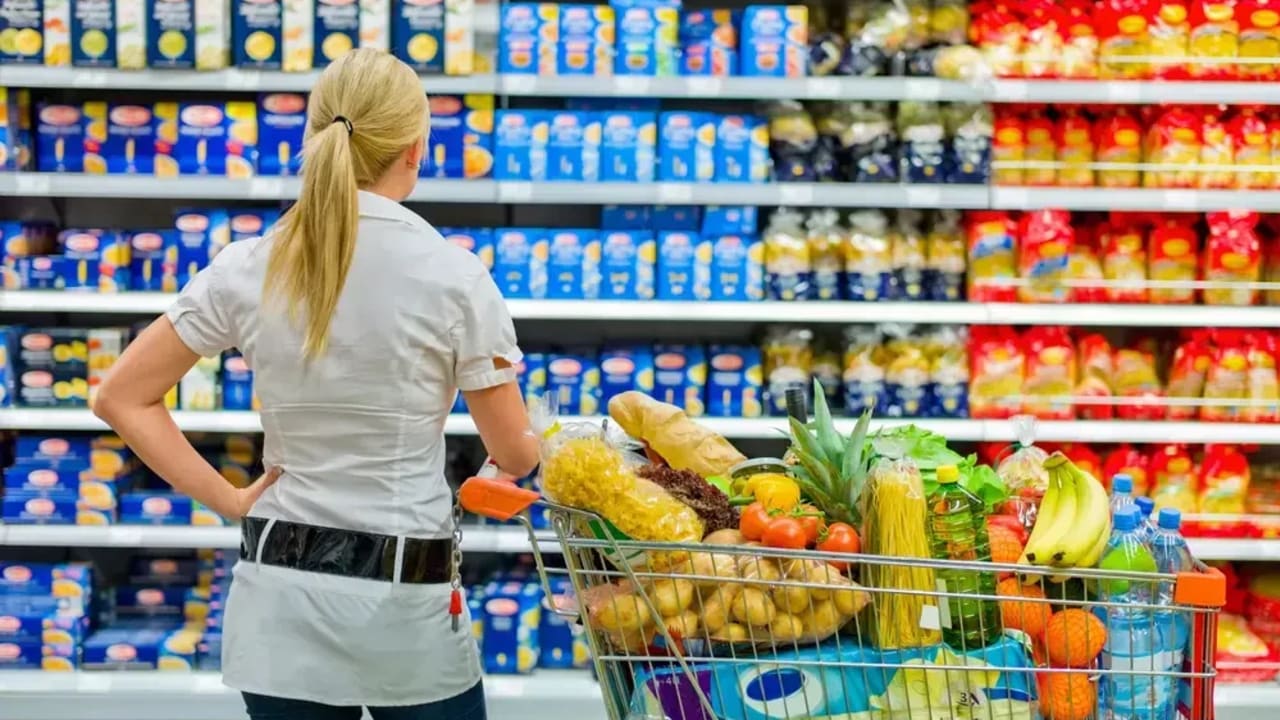
The counting of votes is not yet over, and the composition of the next government is still unknown. But there is one election campaign whose outcome is known in advance: The one conducted every day between the supermarket shelves and in the family budget. In this one there is no Right and Left, religious and secular, Jews and Arabs. Everyone pays the same high prices, and everyone's purchasing power erodes at the same pace.
Concern exists, political power is lacking
A Gallup poll published on the eve of the elections found that 56% of Israelis view security issues as the country's main problem, compared to only 10% who pointed to the economy. An Israel Democracy Institute poll from September presents a more complex picture: Among Jews, foreign affairs and security (39%) and the economy and the cost of living (38%) were almost equal voting considerations.
The gap between the polls teaches one thing: Israelis are worried about prices, but the concern does not turn into a focused and continuous political demand. We know how to take to the streets, mobilize, and fight for our positions. When it comes to the right to buy food and consumer goods at a fair price, the struggle loses its power. The cost of living did not fail in public opinion. It failed in the ability to turn a shared hardship into a force that obliges decision-makers to act.
Food giants are already preparing the next bill
On October 27 and 28, while Israel was counting votes, Coca-Cola, Nestle, Procter & Gamble, Reckitt, and Unilever signaled that the costs of raw materials, energy, and transportation threaten their profitability, and that they are considering further price increases in 2027. Unilever was the most explicit of all: It expects the pace of price increases in 2027 to exceed the 2026 average. This comes after a third quarter with 5.2% underlying sales growth, including a 2.9% increase in volume and a 2.3% price effect. The company sells more, grows, and at the same time prepares investors for a round of price hikes.
Procter & Gamble expects a $1.4 billion hit to profit due to rising costs, and Reckitt warns of similar pressures. Nestle already understands that the ability to raise prices has a limit, and that a further price increase could alienate consumers. Some of the pressures have a real basis, chief among them the effects of the war with Iran on energy and shipping markets. But those same companies already raised prices during the coronavirus period, after the outbreak of the war in Ukraine, and in the global wave of inflation. Experience shows that the shelf price does not update at the same speed in both directions: When costs go up, the price hike letters arrive immediately. When they drop, the relief is directed toward profitability, marketing, or promotions, and not necessarily to the price.
Variety on the shelf, concentration behind it
Facing a packed shelf, the consumer feels they enjoy a huge selection. In practice, behind a significant portion of the options stand very few companies. Their power was built over decades of advertising, distribution, and consumer loyalty, and it translates into pricing power: A consumer used to a specific brand will continue to buy it even when a much cheaper alternative stands beside it. Even this power has a limit. In Europe and the United States, consumers are switching to private labels and discounted alternatives, and Lindt even admitted that it misjudged the consumer response to price increases. When enough consumers change behavior, even the largest corporation is forced to reconsider.
In Israel, the picture is more complex. According to a document submitted by Israel to the OECD, the top ten suppliers account for 51% of food sector sales (2022 data). When so few suppliers and importers hold such a large share of the shelf, competition between retail chains is limited in advance, and switching supermarkets is not enough if the basket remains identical. This is not a claim of price fixing, but an indication of a market structure that gives large suppliers commercial power over the chains and over the consumer.
Israel is expensive to begin with
The most significant datum is not the rate of inflation, but the starting point. According to the OECD economic survey for 2025, Israel is among the five countries with the highest price level in the organization, and its food and housing prices are among the highest, even relative to GDP per capita.
In September 2026, the Consumer Price Index dropped by 0.5%, and the food index excluding fruits and vegetables dropped by 0.4%. Annual inflation stands at 1.6%. But moderate inflation does not lower prices, it only slows down the rate of increase. A single month's drop does not fix years of cumulative price hikes, and the consumer continues to pay the prices determined in previous waves. When those same brands are sold in Europe for cheaper, the familiar explanations immediately arise: Kashrut, logistics, taxation, a small market, and import barriers. Some of them are correct. But an explanation is not an exemption from examination, and not every global price hike has to reach the Israeli shelf at the exact same rate.
When the shekel strengthens, who gets the discount?
In the second quarter of 2026, the shekel strengthened by about 5.9% against the dollar, by about 6.6% against the euro, and by about 6.1% against the basket of currencies of trade partners, according to the Bank of Israel. This is a change that is supposed to lower the shekel cost of imported products and raw materials. The price reduction is not automatic. Importers operate under long-term contracts and hedge exchange rates, a significant portion of costs (wages, storage, rent, and distribution) is denominated in shekels, and the shekel also weakened in other periods. Still, when the currency weakens, it is immediately presented as a reason for a price hike. When it strengthens, the public is entitled to know where the savings went.
A simple example: A product purchased for €10 costs the importer NIS 40 at an exchange rate of NIS 4 to the euro, and NIS 37 at a rate of NIS 3.70. A savings of 7.5% in the purchase component. The price to the consumer does not have to drop by the exact same rate, but the complete absence of any discount requires an explanation.
Corporate profitability is not the consumer's problem
When a corporation announces that its profitability is "under pressure," one must ask what was actually said. Is it losing money? Does the production cost exceed revenue? Or is it highly profitable, and struggling to meet the profitability targets it presented to investors? These are three completely different realities. A commercial company has every right to maximize profits. A consumer has every right to examine whether the price is reasonable and refuse to fund any profitability goal. A price increase by Unilever in a specific market does not necessitate the exact same rate in Israel: Factories, supply contracts, product mix, and exposure to energy and currency differ from market to market.
Therefore, before investor announcements turn into price hike letters to retail chains, there must be a demand for an examination of the pricing on its merits: What changed in procurement costs, exchange rates, and transportation, which components actually became cheaper, and what is the profitability of the local importer. The public does not need to fund a price hike that has not been proven necessary, just because the brand is familiar and loved. Responsibility does not lie solely on the consumer. Not every family can compare prices per unit of measurement or track weight changes in packages. A truly competitive market requires the government, regulators, and the Competition Authority to open the market to imports, lower entry barriers, and increase transparency.
The next government's test
The incoming government will meet a market where the price level is high, competition is limited, and international corporations are planning a round of price hikes. The cost of living cannot remain on the margins of coalition agreements or boil down to a promise to lower a shopping basket. It requires continuous policy, not a campaign. There is no reason to pit national security against economic security. A family that fails to make ends meet, a young couple that cannot buy an apartment, and a pensioner choosing between basic needs do not live in security. A state can, and must, address both.
This week, the Israeli public proved that it knows how to show up at the ballot box and fight for the country's future. Now, that same determination is required against the cost of living. Not an automatic objection to every increase, but a refusal to accept it as self-evident, especially when prices are high anyway, the shekel has strengthened, and the corporations themselves admit that consumers are struggling to absorb more. The vote in the ballot box is a choice made once every few years. The price at the register is a choice the market forces upon us almost every day. If we continue to acquiesce to every price hike, the cost of living may not cross the electoral threshold, but it will remain the largest party in the family budget.