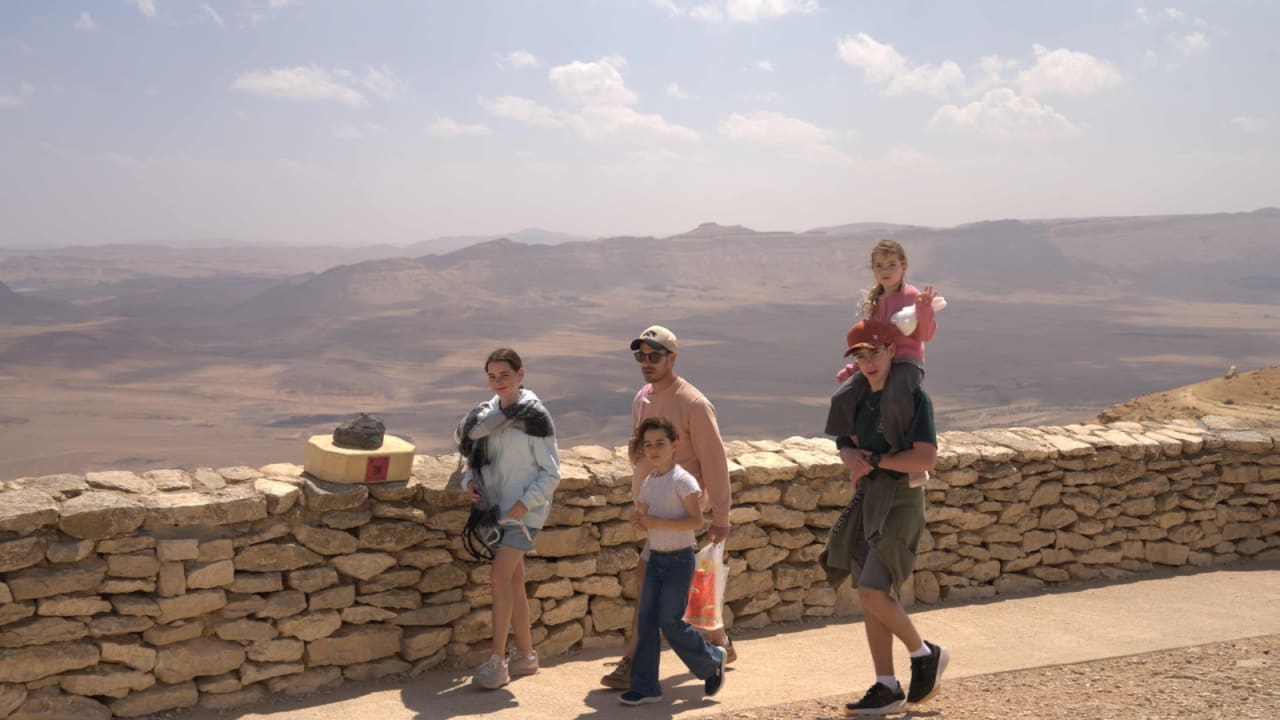
When a young couple of teachers aged 29, parents to a baby girl, were looking for a place to build their home, they discovered the benefits of living far from traffic jams and urban stress. "We were living in Beersheba and thought about moving to Eilat to enjoy teaching grants, but we couldn't find available positions there. Then we heard that the state had applied the same special grants to Mitzpe Ramon as well," they share.
"We both found jobs immediately. We moved into a threeroom groundfloor house with a yard for a rental price of just NIS 2,200 a month. Each of us is eligible for teaching grants worth tens of thousands of shekels a year, depending on the commitment period. We signed a fouryear commitment, and this move simply allows us to save up and buy our own apartment here. Our daughter is growing up in open spaces and in a warm, welcoming community that is second to none. The distance from family in the center is real and felt, but the quality of life, safety, and daily tranquility are worth everything."
The couple's story illustrates the balance Mitzpe Ramon seeks to offer new residents: Accessible housing, solid employment prospect, a closeknit community, and a high quality of life in an extraordinary desert setting. Perched at an elevation of nearly 900 meters, the town benefits from crisp mountain air and cool summer nights. Capitalizing on these natural advantages, the local council is pushing forward a comprehensive development master plan designed to significantly expand housing and local economic growth.
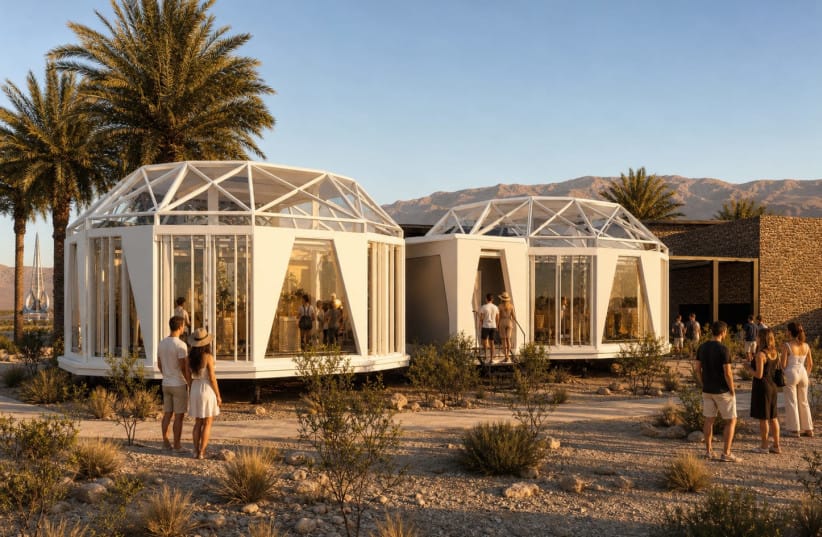
Around 3,000 new housing units: Accelerated development across all aspects of life
A strategic development agreement exceeding NIS 800 million, signed between the Construction and Housing Ministry and the local council, aims to support the town’s expansion from 6,000 to approximately 10,000 residents by the end of the decade through the construction of nearly 3,000 new housing units. The funding breakdown allocates roughly NIS 720 million for core infrastructure, NIS 110 million for public and educational facilities, and NIS 30 million for urban renewal in the historic town center.
The flagship project driving this growth is the new "Ma'of" neighborhood. Set to feature around 2,000 housing units, the area will also incorporate 7,600 sq.m. of commercial space alongside more than 21,000 sq.m. designated for offices and industrial employment. Planned construction remains strictly lowrise, capping out at four stories. In tandem, the Gamal and Noga neighborhoods are expanding with selfbuilt custom villas some fetching prices around NIS 4 million offering singlestory living right on the crater’s edge.
While an average fourroom apartment in central Israel regularly surpasses the NIS 4.5 million mark, new fourroom units in Mitzpe Ramon are listed between NIS 1.3 million and NIS 1.6 million (350,000$–430,000$). Beyond private purchase and affordable rentals, eligible local residents benefit from an 18% income tax credit, subject to legal caps and criteria.

From Mars to the crater: The ‘Space City’ vision and advanced employment
To overcome the distance from major metropolitan employment centers, the council is spearheading the "Space City of Israel" initiative, backed by an intended government investment of NIS 100 million. The unique terrain of the Ramon Crater provides an ideal environment for Mars Analog missions, robotics testing, space vehicle trials, and deeptech validation under extreme environmental conditions.
Led by a prominent Israeli space tech venture in partnership with the local council, the project’s cornerstone is an advanced research campus featuring testing laboratories, a mission control center, and an innovation accelerator for startups specializing in satellite tech, artificial intelligence, and space agriculture. Funding for the initial laboratory facility has already been secured, with ground breaking anticipated in the coming months.
The initiative aims to draw global technology firms, scientists, and engineers, creating hundreds of highskilled local jobs. The initiative integrates seamlessly with Tel Aviv University’s nearby observatory and the region's official standing as an International Dark Sky Reserve. Concurrently, the Ramon Hub entrepreneurship space operates at full capacity for freelancers and remote workers, with a second facility currently in development. This enables top professionals to build modern careers without leaving the desert behind.
The town's development is also supported by philanthropic organizations, contributing to community infrastructure, parks, and public facilities
Hotels, wineries, and a growing culinary scene
Tourism continues to serve as a vital economic engine, drawing an estimated two million visitors to the region annually according to council projections. Anchored by premier boutique hotels, the town features a growing ecosystem of boutique lodges, guesthouses, and glamping sites. Four additional luxury hotels are currently in the pipeline, with two already through advanced licensing stages.
Alongside accommodation, a culinary and lifestyle district is rapidly emerging, filled with independent cafes, eateries, and artisanal ventures. Construction and development are actively underway on local wineries, joining the creative quarter of the Spice Route Quarter and local astrotourism offerings.
Yet council leaders emphasize that Mitzpe Ramon aims to be far more than a weekend getaway. Beyond tourist traffic, the overarching goal is attracting permanent residents seeking a grounded, highquality family life. While relocating requires adjusting to a slower lifestyle and distance from central medical and commercial facilities, it offers a vibrant community network. The local school system spans forest kindergartens, state, democratic, and religious institutions, complemented by four specialized arts centers (dance, circus, music, and theater), the annual MitzpeRamon Intimidbar Festival , and the active youth center.
Mitzpe Ramon 2030: Growing without losing its desert identity
"These overlapping initiatives reflect a unified longterm strategy: Transforming Mitzpe Ramon into a fully selfsustaining ecosystem that balances housing, employment, hightier education, and ecotourism. The goal is clear: expanding civic infrastructure and strategic economic choice while guarding the lowrise urban fabric, serene desert vistas, and tightknit community character.
"The story of Mitzpe Ramon is the story of BenGurion's vision in the 21st century," say council officials. "Anyone who wants to be part of the Negev's story, vision, and the future of the State of Israel is invited to come to Mitzpe Ramon and take part in its growth."
For more information on housing, integration, and development prospects in Mitzpe Ramon, visit the English information portal
This article was written in collaboration with the Mitzpe Ramon Local Council and the Ministry of Construction and Housing