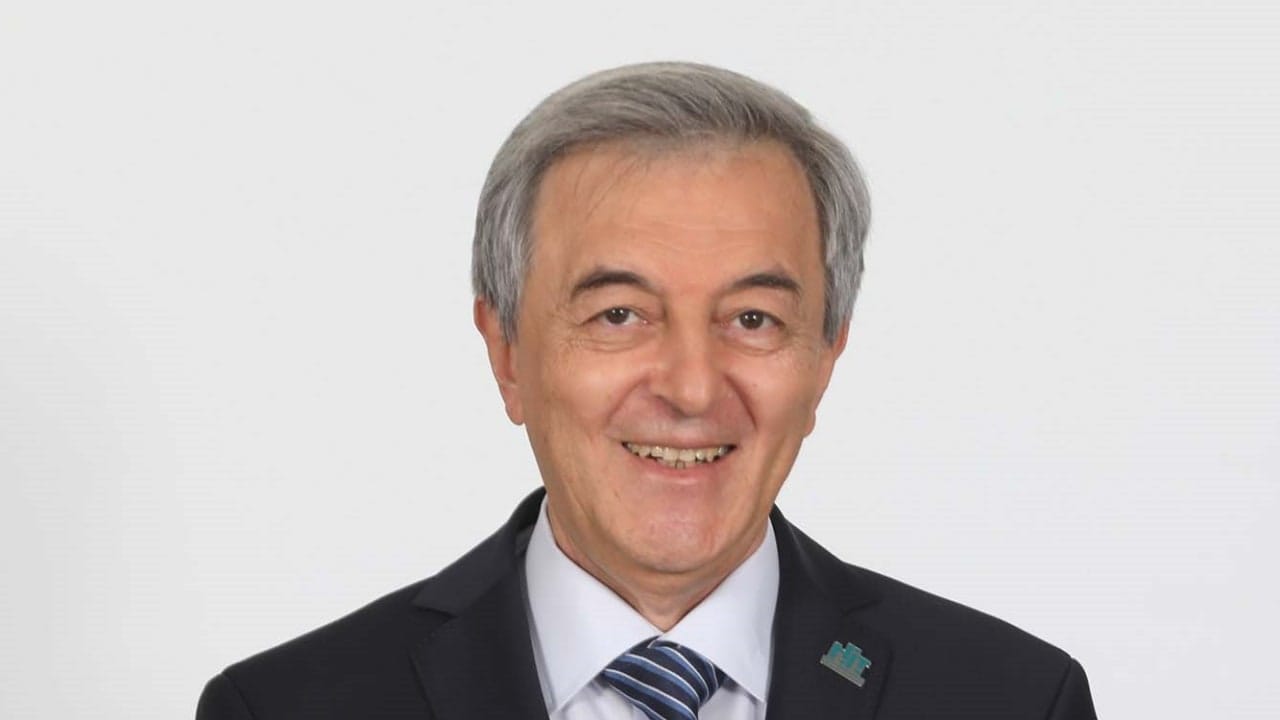
Technology, education, and national resilience will be at the center of Prof. Eduard Yakubov’s message when he takes part in the upcoming Jerusalem Post New York Conference. As president of Holon Institute of Technology (HIT), Prof. Yakubov is expected to bring to the conference a perspective shaped not only by academia, but by the reality Israel has faced over the past year, from war and technological transformation to rising antisemitism and the growing need for international cooperation.
Founded in 1969, HIT has built its reputation around STEM education and applied innovation, training engineers, designers, technologists, and digital health specialists across fields ranging from electrical engineering and industrial management to digital medicine and design. But for Prof. Yakubov, the institution’s mission has always been larger than preparing students for careers. “We do this because we believe our role, our main mission, is to strengthen the State of Israel, society, the economy, industry, and the defense systems,” he said. “That is our contribution, and we are proud of it.”
That contribution became particularly visible during the recent war. More than 2,000 of HIT’s roughly 6,000 students served in reserve duty, permanent military service, or defense-related roles, while many alumni already hold key positions across Israel’s leading industries. “We are especially proud of the contribution of our graduates to advancing leading industries."
One of the themes Prof. Yakubov raises is the need to anticipate the next technological challenge before it arrives. “The war taught us that together with our partners in the military industries and in high-tech, we need to think about the next step,” he said. That next step, in his view, lies in developing systems that are more precise, more efficient, faster, and also much cheaper, with one overarching objective: reducing risk to human life. “The new systems need to be autonomous, based on massive use of AI and robots. The main idea is that none of our soldiers should risk their lives in enemy territory. After the war, they should contribute to the development of our society.”
Prof. Yakubov also addresses the challenge of the rising antisemitism and polarization worldwide, issues he believes require not only political responses but also academic and intellectual engagement. HIT is currently establishing a new center focused on geopolitics and geostrategy, bringing together researchers and partners from Israel and abroad. “Our war is not a war between Judaism and Islam,” Yakubov said. “It is not a religious war. It is a war against extremists.”
He argues that institutions of higher education should help build bridges rather than deepen divides. “We need to know how to open a dialogue and together advance modern values for the benefit of the future generations”. That philosophy extends to his vision for Israeli higher education more broadly. Prof. Yakubov believes Israel should do more to attract international students so they can experience the country firsthand. “The formula should be that we increasingly invite young people from abroad to study in Israel,” he said. “To understand the Zionist, democratic state, and how we can build a better and more stable future together.”
Written in collaboration with HIT