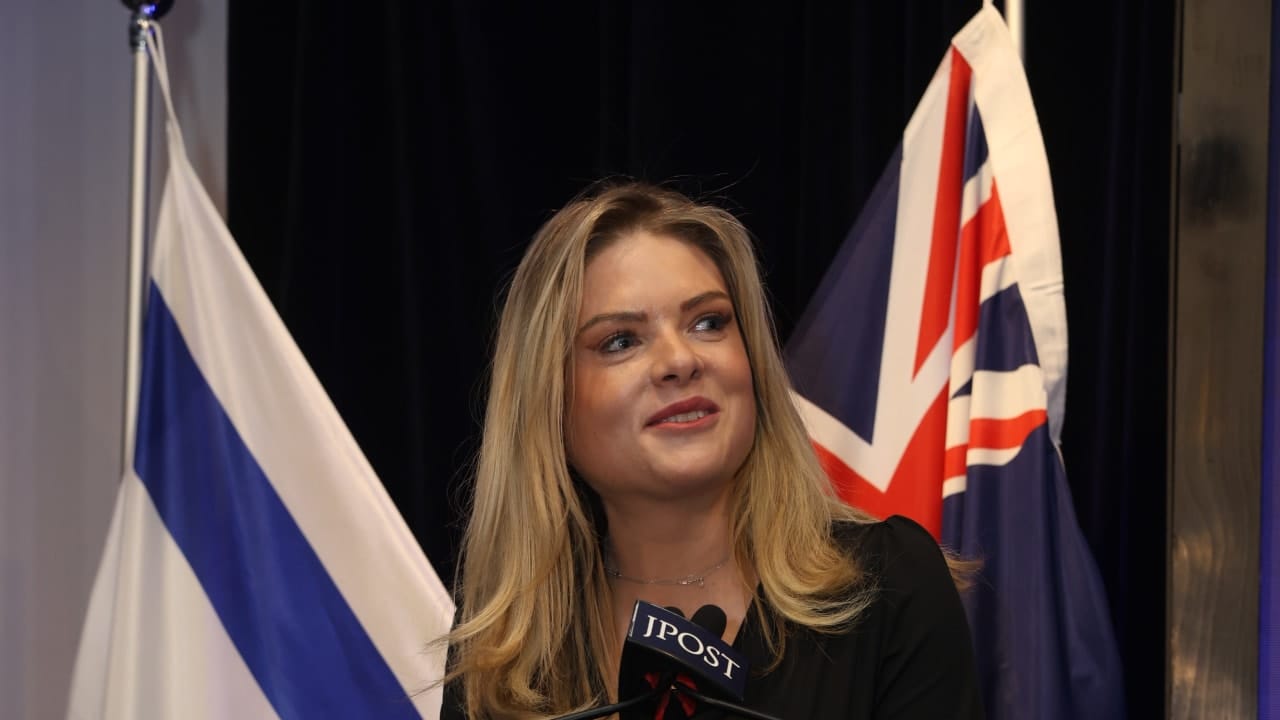
From the failure of bystanders during the Holocaust to the silence that followed October 7, broadcaster Erin Molan and mindset coach Sarah Grynberg said the cost of remaining silent in the face of hatred has never been clearer. Speaking at The Jerusalem Post Australia Summit, the two called on Australians to confront antisemitism, arguing that individual voices, personal stories and moral courage can help change minds.
Grynberg focused on the power of personal stories to challenge preconceived ideas and bring people closer to a community they may know little about.
"Each of us has a responsibility to ask where our influence lies and how we are using it," she said.
Reflecting on interviews for her podcast, A Life of Greatness, Grynberg described her conversation with Michael and Valentina Bratman, whose daughter Matilda was murdered in the Bondi massacre. It was the couple's first podcast interview, during which they shared memories of their daughter and the devastating loss their family had suffered.
"As they remembered her, they cried. We all cried," Grynberg said, adding that listeners could connect with the grief of a mother and father regardless of their faith or background.
"This is what storytelling can do. It can bring someone close enough to care," she said, adding that sharing personal stories can challenge the ignorance in which prejudice grows.
While emphasising that Jewish people should never have to explain or showcase their traditions in order to deserve safety and acceptance, she argued that sharing personal stories can help combat ignorance and build greater understanding.
Quoting the late Rabbi Jonathan Sacks, Grynberg reminded the audience that "there is no life without a task, no person without a talent," urging people to use their influence to make a difference.
"This is what I want our influence to be for: a future in which Jewish families can pass on their traditions without also having to pass on their fears," she said.
Courage to act
Molan delivered a more direct challenge, arguing that confronting antisemitism requires people to distinguish between right and wrong and have the courage to act and speak up against hatred.
Drawing on the example of her late father, former Australian Army major general and senator Jim Molan, she recalled being taught to do what was right, even when it was hard.
As a child learning about the Holocaust, Molan said she was particularly struck by the number of people who stood by and did nothing.
"I never thought I would be tested. Not for a second," she said. "You think of that as something that could never happen again. Never again. How wrong we were."
Molan described her shock at seeing people celebrating the October 7 massacre outside the Sydney Opera House, saying she had been equally surprised by the response from Australia's political establishment.
"If you had told me that my country would remain silent in the aftermath, I would have said, 'No chance.' But they did. Not everyone. Not all of them, but so many," she said.
She argued that the threat extended beyond the Jewish community and Israel.
"This is not a Jewish problem. This is not an Israeli problem. If my little girl is not safe, if your children aren't safe, no one is."
For Molan, speaking out was never a calculated decision.
"It was never a choice to speak up," she said. "For me, it was very simple and very obvious: good versus evil."
Molan recalled receiving an email from a Western Australian miner who had watched one of her videos and reconsidered where his values aligned.
"My morals and my values have not changed, but the side I now realize they align with has," he told her.
"That's what you can all do," Molan said. "It's one conversation."
Despite acknowledging the personal and professional costs she has faced, Molan said the purpose and relationships she has gained have far outweighed any losses. She praised the Jewish community for its resilience and pledged her ongoing support.
"The sense of purpose standing on the right side of history can be very, very lonely," she said. "But there is nowhere else in the world that I would rather be.”