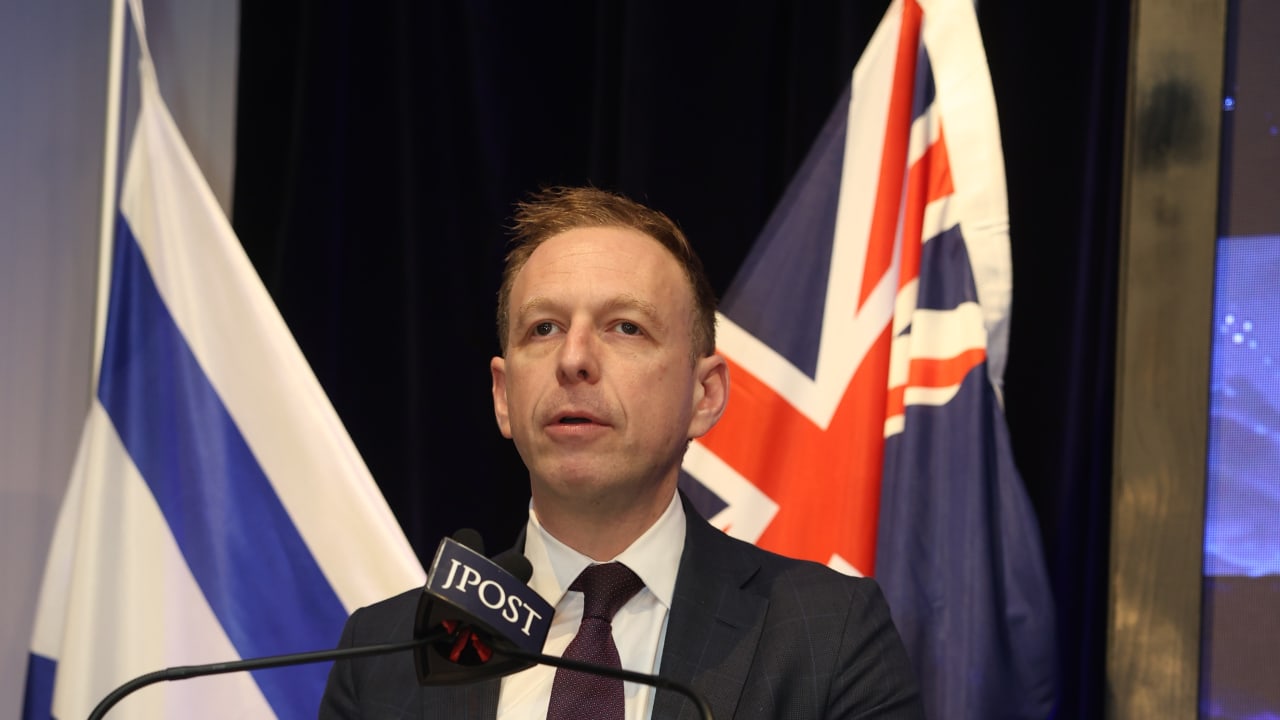
Jeremy Leibler, Partner at Arnold Bloch Leibler and President of the Zionist Federation of Australia, told attendees at the Jerusalem Post Australia Summit that the Australian government must take responsibility for confronting antisemitism, while the Jewish community should invest in a confident, positive identity that extends beyond trauma and security.
Leibler argued for a nuanced assessment of the Albanese government. He credited the government for its significant security funding, legal reforms including anti-doxing measures, the establishment of the Royal Commission on Antisemitism and Social Cohesion after the terrorist attack at Bondi Beach, and the invitation it extended to President Isaac Herzog.
At the same time, he said that the government failed to recognize the connection between public incitement after October 7 and subsequent violence, culminating in the Bondi attack. He particularly criticized the failure to recognize antisemitism expressed through the demonization of Israel and its impact on Jewish Australians.
Leibler presented President Herzog’s visit in February as an example of how Australia can disagree with Israeli government policies while respecting Israel’s legitimacy and maintaining the bilateral relationship. He strongly disagreed with Australia’s recognition of Palestine in the circumstances he described.
Regarding the Royal Commission, he cautioned that no inquiry can eradicate antisemitism. He noted that the Jewish community has felt “gaslit” over the past three years, when its warnings about antisemitism were disregarded. “All of these experiences and the lived experiences in the Royal Commission really demonstrated how impacted the Jewish community was. I hope that the findings demonstrate what has happened in this country, because if we can't identify it, if we can't call it out, we will not be able to fix it.
“It [antisemitism] is not a problem we've created, and therefore it's not a problem that we need to fix. And so I am overall optimistic that the Royal Commission will continue to have some very meaningful change, but ultimately there is no substitute for leadership.”
Leibler identified three sources of potential change: institutional action prompted by scrutiny, findings that acknowledge and explain the community’s experiences, and the implementation of recommendations. He stated that tackling antisemitism is a national responsibility and that leadership must set clear standards for acceptable conduct and rhetoric.
Leibler urged communal investment in the positive substance of Jewish life and Israel’s achievements, rather than focusing exclusively on the tragedies of October 7 and Bondi Beach. “We need to create an environment, and we need to ensure that this generation of Jewish people, of younger people growing up, are not defined by the trauma of the 7th of October or by the trauma of Bondi, but instead are inspired by all of the positive things that are part of their Jewish identity.”
Written in collaboration with ABL