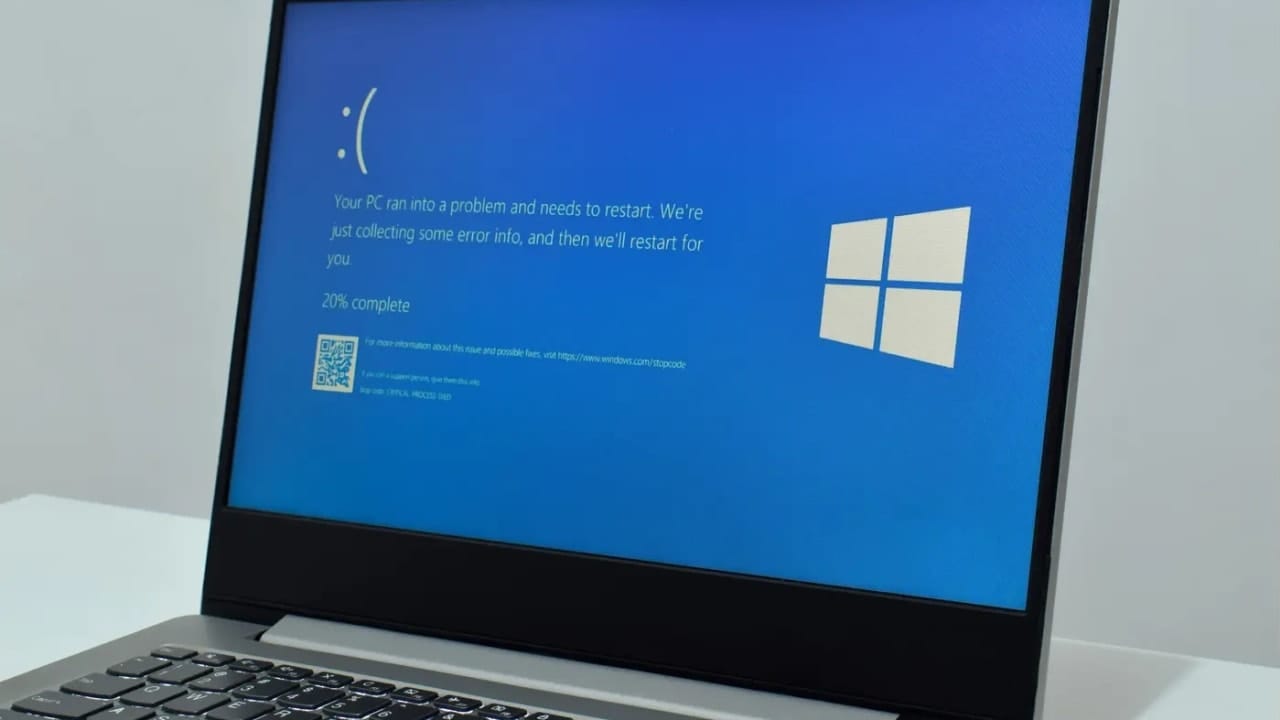
One of the most familiar and hated symbols of the Windows operating system – the "Blue Screen of Death" (BSOD) – is expected to disappear soon after nearly four decades of existence. Microsoft announced that as part of a new update to Windows 11, it will replace the recognizable blue color with a black screen, as part of an effort to present information more clearly to users and system administrators. This is not merely a cosmetic change: Both the design and the information presented on the new screen are being adapted to be easier to understand and to provide more immediate insights about system crashes.
Instead of the sad face, the QR code, and the classic design, the new screen will present a minimalist black design – more similar to Windows update screens. However, the main innovation lies in the inclusion of an error code and information about the driver that caused it, so IT administrators will no longer have to reconstruct "crash dumps" and use advanced tools like WinDbg to understand what caused the problem.

David Weston, Vice President of OS Security at Microsoft, explained that the move is intended “to provide clarity, understand the root of the issue faster, and enable quick fixes.” According to him, the change offers better distinction between failures originating from the operating system and those related to external components.
The new design is expected to launch in an update toward the end of this coming summer, along with an additional feature called Quick Machine Recovery, which allows recovery of systems that fail to boot. These two changes are part of Microsoft’s broader effort to improve system resilience, following last year’s CrowdStrike security incident that caused millions of computers to get stuck on the death screen upon reboot.