A faint rustle caused me to lift my eyes, a pair of curious eyes fixed on me. In front of me stood a young and beautiful sika deer, gazing at me in wonder. When I looked around, I discovered he was not alone; dozens of deer roamed freely in the courtyard of Todai-ji Temple in Nara. In Japan, deer are not merely wild animals; they are considered messengers of the gods. Legend tells that one of the gods arrived in Nara riding a white deer, and today, about 1,500 of them inhabit the park, connecting the secular world to the sacred.
Thus began my journey in Japan – A journey that started in the pastoral atmosphere of Nara, on the central island of Honshu, and ended in the neon lights of Tokyo. This is a story about an amazing country that manages to maintain a delicate balance between breathtaking technological progress and deep cultural roots.
Between Technology and Tradition
About 122 million people currently live in Japan, but there has been a steady decline in the number of residents since 2008. Most of the population – About 92% – Lives in urban areas, with Tokyo being the most populated metropolis in the world (over 37 million people). Japan’s economy ranks fourth in the world, and it is a powerhouse in the fields of automotive manufacturing, electronics, and robotics.
It was astonishing to me how modern Japan manages to maintain a balance between rapid technological advancement and its deep cultural roots. Alongside the fast shinkansen trains, you will still find traditional tea ceremonies and ancient crafts passed down from generation to generation. The large cities, such as Tokyo and Osaka, are centers of innovation, fashion, and culinary arts, but the villages and small towns preserve their traditional beauty. One could say this is part of Japan’s magic – Its ability to be both a technological leader and a guardian of tradition.

Gold, Stones, and Torii Gates
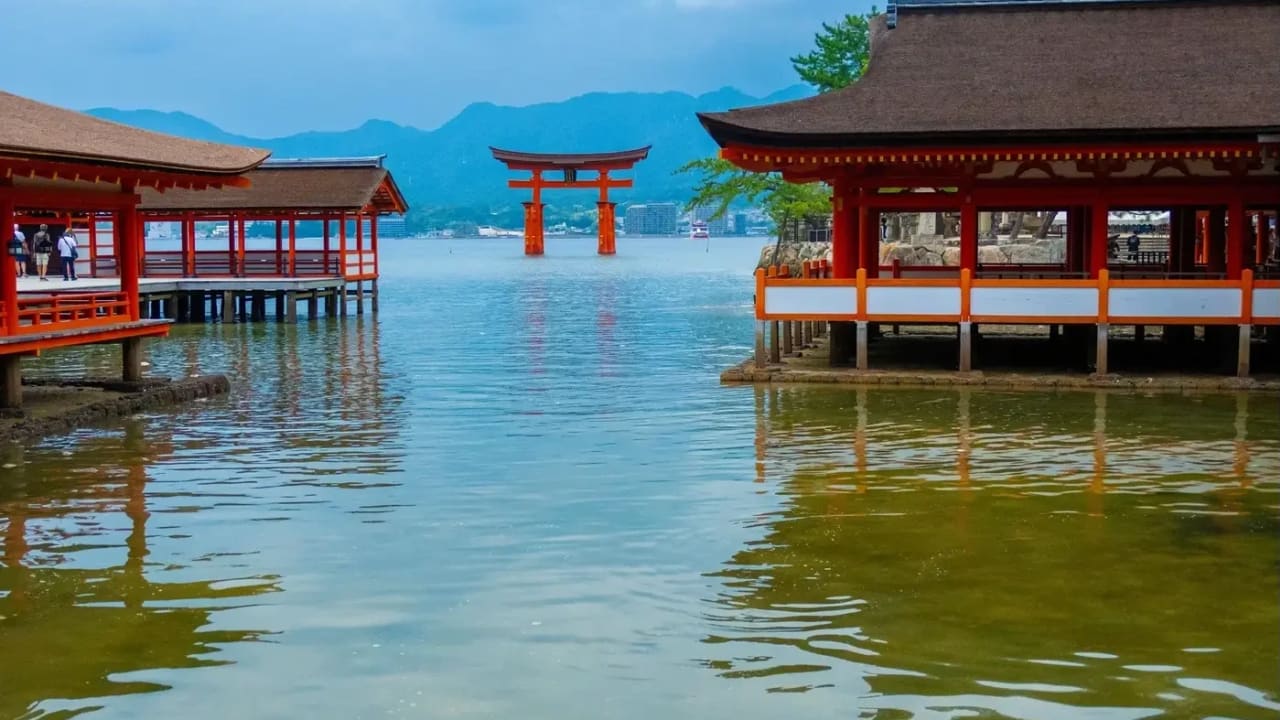
In Nara, the ancient capital, I encountered the “Daibutsuden” – The Great Buddha Hall, where a gigantic bronze Buddha statue stands 15 meters tall, with an ear alone measuring 2.5 meters in length! A visit there reveals the religious complexity: The “Tera” (Buddhist temple) and the “Jinja” (Shinto shrine). The combination between them is natural for the Japanese – They will marry in a colorful Shinto ceremony and be buried in a restrained Buddhist ceremony.

Kyoto – The Beating Heart of Japanese Tradition
Our next stop on the trip was Kyoto – The beating heart of Japanese tradition – A city where time sometimes seems to stand still among thousands of temples and ancient wooden houses. Unlike futuristic Tokyo, Kyoto offers a glimpse into old Japan: From Zen monasteries cultivating meticulously designed rock gardens to geisha girls (geiko) walking quietly through the picturesque alleys of the Gion district. In Kyoto, tradition is not “presented to tourists” but simply exists. It is a place where aesthetics is a religion in every sense, and the harmony between nature and architecture is expressed in every corner.
But Kyoto is also a vibrant cultural center that is not afraid to renew itself. Minimalist restaurants, and daily life taking place alongside sites that are hundreds of years old. In markets such as Nishiki, the flavors tell a story of the region: Silken tofu, colorful pickles, and traditional sweets that connect to a culture of precision and patience. At the end of the day, when the evening light breaks over the bridges and rooftops, Kyoto reminded me why it continues to captivate – Not only because it is “beautiful,” but because it offers a different way of looking at beauty, at culture, and at a life that emphasizes the small details.
For the Israeli traveler, Kyoto is not only a tourist destination, but a spiritual and sensory experience that invites you to slow down, observe the small details, and discover the “Wabi-Sabi” – The beauty in imperfection and in the passage of time. In Kyoto, the beating heart of tradition, I visited Kinkaku-ji, the “Golden Temple,” entirely coated in pure gold leaf reflected in the lake.
“The Empty Space in the House Is What Allows One to Live in It”
A famous Japanese sentence inspired by the “Tao Te Ching,” which holds great meaning in Japanese culture, says: “The walls and doors create the house, but the empty space within it is what allows one to live in it.”
Ryoan-ji Temple, which includes 15 stones positioned in a small field of white gravel, presents the essence of Zen – A place where the “nothing” is no less important than the “something.”
No less amazing was the temple in Fushimi Inari, where I walked through thousands of red torii gates forming an endless tunnel.
I was also exposed to the political side at Nijo-jo Castle. Here lived the shogun – The military ruler who governed the country while the emperor served as a symbolic figure. The castle, built in 1603, was also the place where the last shogun declared the restoration of power to the emperor and ended feudalism in Japan in 1867. I walked on the “nightingale floors” that creak like the sound of a bird – An ancient warning mechanism against assassins. This is the Japan of the samurai, who lived by the code of Bushido: Honor, loyalty, integrity. The central palace is known for its magnificent gold decorations and traditional wall paintings of the Kano school.

Queen of Hiroshima: The Place Where Time Stopped
I was tense ahead of the visit to Hiroshima, the place where on August 6, 1945, at 8:15 in the morning, time stood still with the dropping of the bomb. The Peace Museum is a harrowing experience, commemorating the terrible disaster in which 80,000 people were killed with the dropping of the bomb and another 65,000 people who died afterward from radiation illnesses. Yet within the pain, symbols of hope grew. One of the most moving among them is the story of the girl Sadako Sasaki, who developed leukemia due to the radiation. Sadako believed that if she folded 1,000 origami cranes she would recover. She died in 1956 in the hospital before completing the task, but became a global symbol; to this day, origami studies are part of the curriculum in Japan, and millions of cranes are sent to the city from all over the world as a symbol of peace.
Alongside the cranes stands the famous ginkgo tree, which survived the explosion and sprouted green leaves the following spring. I stood before the “Dome” – The only structure left as testimony – And felt how the city transformed from a militaristic fortress into a beacon of pacifism. Even there, Shukkei-en Garden reminds that nature and beauty will always triumph over destruction.

Sleeping Inside a Postcard: Samurai Houses and Thatched Roofs
The return in time reached its peak in Kanazawa. In the Higashi-Chayagai district we walked among ancient wooden teahouses, and in the Nagamachi district we encountered the samurai houses with tatami mats and paper doors.
A surprise on the trip awaited me in the Gassho-zukuri villages in Ainokura – There we strolled among houses with steep thatched roofs that look as if they came out of fairy tales. The stay in a traditional house where we removed our shoes, wore a traditional kimono, immersed ourselves in an onsen (Japanese bathhouse), and slept on a futon, was a one-of-a-kind experience.
Nature in Japan
The Japanese see nature as part of life. In Japan, nature is not scenery but a member of the household: It is sacred, useful, and aesthetic at the same time – From Shinto shrines among the cedars to a cracked tea cup that tells a story. There is a deep respect for the cycles of nature and for the beauty found in simple things, and this truly permeates many areas of their lives.
In Japan there is also a great love for gardens, and they truly see them as art. They do not seek to “conquer” nature but to frame it – Asymmetry, winding paths, gravel/tuff as a symbol of water, and plenty of water that is an important part of the gardens in the form of ponds, streams, and small waterfalls that add an element of tranquility and reflection. Many of the traditional Japanese gardens are like living works that are carefully maintained – And they invest not a few resources and manpower in this.
In the bamboo grove at Hokoku-ji I understood that bamboo symbolizes resilience – It bends in the wind but does not break.
The Secret of Flavor and the Pulse of Tomorrow
It is impossible to understand Japan without tasting it. At the Daio Wasabi Farm I discovered the real root growing in clear waters, and in markets such as Tsukiji and Nishiki the senses blended between fresh fish and matcha desserts. The highlight moment was the okonomiyaki in Hiroshima – “Soul food” built in layers on a sizzling griddle.
Tokyo: Japan’s Technological Brain
The last stop was the capital, Tokyo. The capital of global technology. No visit to the city is complete without standing at Shibuya Crossing, the busiest in the world. When the light changes, a human surge floods the road in exemplary “organized chaos.” Beside the giant screens stands the statue of Hachiko, the loyal dog, reminding that even in the most futuristic city, the values of loyalty are preserved. Tokyo is a city of contrasts: Young people in bold “Harajuku” dress alongside the culture of “Omotenashi” – The most courteous service in the world.
If Kyoto is the soul of Japan, Tokyo is its technological brain. The city is not only a vast metropolis, but a living laboratory of progress where the future is already here. It begins with the small details – The intelligent toilets with heated seats and soothing melodies – And continues to the “Shinkansen” trains, high-speed trains that cover distances at speeds of hundreds of kilometers per hour with precision measured in seconds.
The highlight of this innovation is found in areas such as Odaiba – An artificial island that looks as if it was taken from a science fiction film where museums of technology and digital art were established, giant LED screens providing a multi-sensory experience. Robotics and gadgets have become a way of life in Japan due to their ability to take cold technology and turn it into an inseparable part of hospitality and human comfort (. It is this that makes Tokyo a city without competitors in the world.
But beneath the surface, Japan faces challenges: Young people who focus on career over family and pressure for achievement that sometimes leads to social complexities, reflected in places such as “Aokigahara Forest” (the suicide forest). This is the price of a society in which dedication is a supreme value.
Just before I boarded the flight back home – When I stood on Mount Washu and looked out over the Inland Sea, I understood that Japan teaches us about respect for time and nature, about the search for beauty and aesthetics in simple things, and about the ability to rise from ruins. Japan remains a place where the past and the future dance in perfect harmony.
Ortal Tzabar is a nature and environmental photographer. Visit her website