
As an investor in Israeli hi-tech who is based in Miami and Tel Aviv, my concern over the past two years of war has now turned to cautious optimism in the wake of the ceasefire in Gaza and the unfolding post-Oct. 7 era.
Current economic signals, as well as the lessons of history, suggest that we may now be standing at the threshold of a transformative period for investment in Israel's innovation economy that echoes the unexpected aftermath of the 1967 Six-Day War. The immediate costs of war are undeniable, and, as a society, it may take years to overcome the trauma of Oct. 7. Yet the investment outlook for 2026 and beyond is positive for many reasons.
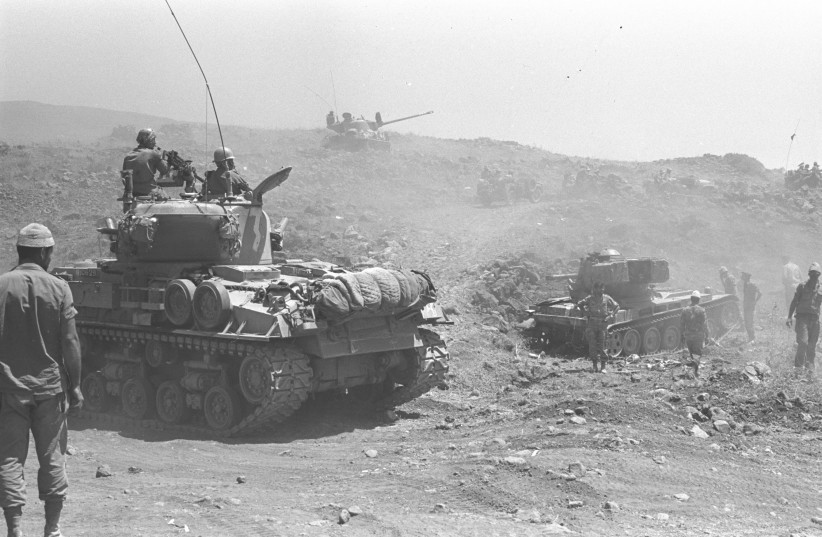
The parallels with 1967 are striking. The Six-Day War took place during a severe recession, yet GDP grew at a remarkable rate, at times as high as 16% annually, in the years that followed.
The conflict created an immediate surge in domestic demand that, combined with increased employment, pulled the economy out of its slump. More importantly, the war's long-term consequences proved even more significant: the French arms embargo that followed forced Israel to develop its own military industrial base, which later became the foundation of the country's hi-tech sector.
Business is booming
Today, we're witnessing similar economic dynamics. Looking ahead to 2026, Israel’s gross domestic product is expected to expand by 4.3%, more than twice the average for 34 developed countries.
The shekel is trading at its strongest rate against the dollar in over three years, making it the best-performing currency among the 31 most-traded currencies. At the same time, Israeli stocks have risen almost three times as much as the global equity market since October 2023.
Israeli tech start-ups attracted at least $16 billion in investment in 2025, up from $12 billion in 2024 and $10 billion in 2023. The post-war tech investment outlook for Israel is strong, not only compared to before the war but also to other countries.
In 2025, non-Israeli companies agreed to spend at least $60 billion to acquire over 85 Israeli companies, making Israel the leading country in research and development (R&D) as a percentage of sales, according to the Bloomberg World Index.
Similar to 1967, today all of these metrics stem in part from growing consumer demand and needs-driven innovation. Additionally, geopolitical shifts, including signals of greater stability in the Middle East, are contributing to the outlook for growth.
The US-brokered ceasefire between Israel and Gaza could lead to the demilitarization of Hamas and rebuilding of Gaza if President Donald Trump’s 20-point peace plan is implemented. Iran, which has long sponsored terror proxies in the region, suffered a serious setback to its nuclear ambitions in the 12-Day War with Israel and the US in June; the Assad regime, long a source of instability and a crucial ally of Iran, was toppled in Syria. Perhaps most significantly, Saudi Arabia has indicated that it could be ready to join the Abraham Accords, which are also likely to include additional countries.
This time around, the foundation of Israel’s economy is more solid than it was in 1967, making the potential for growth amid these geopolitical changes even greater.
Israel's hi-tech industry has matured into a resilient economic pillar that moderates the impact of conflict on GDP and employment. Israeli tech has developed a sophisticated venture capital ecosystem and deep relationships with global tech giants, and is positioning the country as a critical player in the infrastructure that will define the next generation of technology: telecommunications and AI core infrastructure.
The telecommunications sector has proven its strategic value under fire. Israel's Iron Dome missile defense system relies on a sophisticated telecommunications infrastructure that enables rapid data transfer, precise coordination, and swift decision-making. Communications technology is not only a military asset, but it's also a competitive advantage that global players are recognizing.
On the defense-tech side, in December, Israel completed the largest defense export deal in its history, handing over its Arrow 3 long-range missile defense system to the German Air Force as part of a $4.6 billion sale.
On the civilian side, US defense firm Kratos announced in November that it would acquire Israeli satellite communications company Orbit Technologies for $356 million. While the technology has advanced enormously, the momentum is similar to that experienced in the late 1960s and 70s by Israeli firms like Elron Ventures, which entrepreneur Uzziah Galili founded to build a portfolio of defense and tech companies, including Elscint, the first Israeli firm to list on the Nasdaq.
As today’s private sector continues to grow, Israel’s government is making deliberate investments in AI and data infrastructure that position the country as a destination for long-term investment. The government launched an initiative this year to fund high-quality, accessible data repositories for certain sectors, among them defense.
Israel is already emerging as a global AI leader, not just as a source of AI applications but also as a provider of the critical infrastructure, both telecommunications and data management, enabling AI deployment at scale.
I believe in the resilience of the Israeli people, and in the powerful combination of innovation and perseverance. The post-war period won't be easy, but for investors willing to take the long view and understand Israel’s tenacity and technological prowess, the opportunity is clear.
Just as the aftermath of 1967 planted the seeds for Israel's emergence as the Start-Up Nation, this moment may catalyze the next evolution of its innovation economy.
The writer is the co-founder and managing partner at Arieli Group.