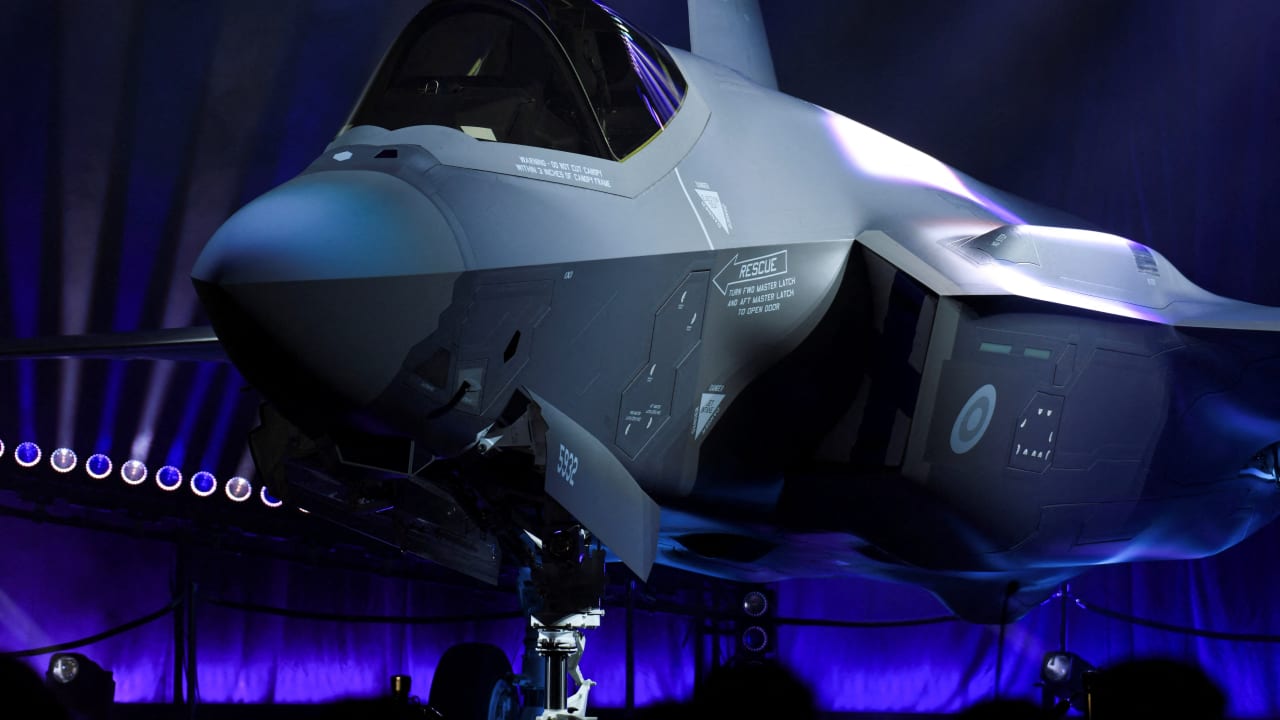
Lockheed Martin announced on Tuesday that it recently successfully flight-tested an artificial intelligence-enhanced Combat Identification (Combat ID) capability that was integrated into the F-35’s information fusion system.
The demonstration, known as Project Overwatch, marks the first time a tactical AI model has been used in flight to generate an independent Combat ID on the pilot’s display and could represent a revolution in targeting, though at this stage, the pilot will still review the summary and be entirely responsible for the final decision.
Sources were not sure about how long it would take to adapt the new AI technology from one test flight into being operational and installed on America’s F-35 fleet, but sometimes such major jumps in technology and operations can take three years or even more.
According to Lockheed Martin, the latest test flight “builds on work across the company to innovate with intent to meet the warfighter’s real-time needs in an evolving threat environment. In practice, that means accelerating capability at scale with speed.
“Using innovative methods, Lockheed Martin has deployed real-time, over-the-air software updates to the Aegis multi-mission combat system” to be deployed by US Navy ships in the Red Sea to enable rapid countermeasures against advanced drone and missile threats, using AI for defensive measures.

Lockheed Martin builds AI machine model
During the Project Overwatch test flight, conducted at Nellis Air Force Base in Nevada, Lockheed Martin’s built and trained AI machine learning model “resolved ID ambiguities among emitters, improving situational awareness and reducing pilot decision-making latency.”
In other words, the AI helped pilots prioritize combat threat IDs and targets much faster than they would on their own, leading the pilots to make better and faster decisions about how to confront or target enemy forces.
Next, engineers used “an automated tool to label new emitters, retrain the AI model to learn the new emitter class within minutes, and reload the updated model for the next flight, all in the same mission planning cycle.”
Normally, it would take days or longer for a pilot to debrief his superiors and for those superiors to incorporate new data from the pilot’s flight into future mission planning parameters.
According to Lockheed Martin, “Embedding this advanced AI into the F-35’s mission system helps pilots understand threats faster so they can make decisions more quickly because operators don’t have time to synthesize data in combat. Lockheed Martin will continue to improve upon this capability, expanding the AI model’s training to further enhance reliability and accuracy.”
“This is a demonstration of 6th-Gen technology brought to a 5th-Gen platform,” said Jake Wertz, vice president of F‑35 Combat Systems at Lockheed Martin Aeronautics.
“Equally important is our ability to reprogram the AI model on the ground and have those updates available for the next sortie – an essential step toward maintaining a tactical edge in a rapidly evolving threat environment. These capabilities embody Lockheed Martin’s 21st-century strategy, which advances every product line by integrating next‑generation performance, continual software modernization, and AI‑driven decision making to keep our customers ahead of emerging challenges.”
There has been an ongoing debate for more than a decade about potentially integrating AI into combat decision-making and what the right balance is between human decision-makers and artificial intelligence programs when it comes to war.
Israel has been integrating AI into its target-bank decisions since at least 2019, with major enhancements and adjustments since then, including during the Israel-Hamas War, but sources have told The Jerusalem Post that final decision-making authority still resides with Israeli defense officials.
All of that said, little has been publicized to date about how and when human decision-makers veto recommendations from AI programs.