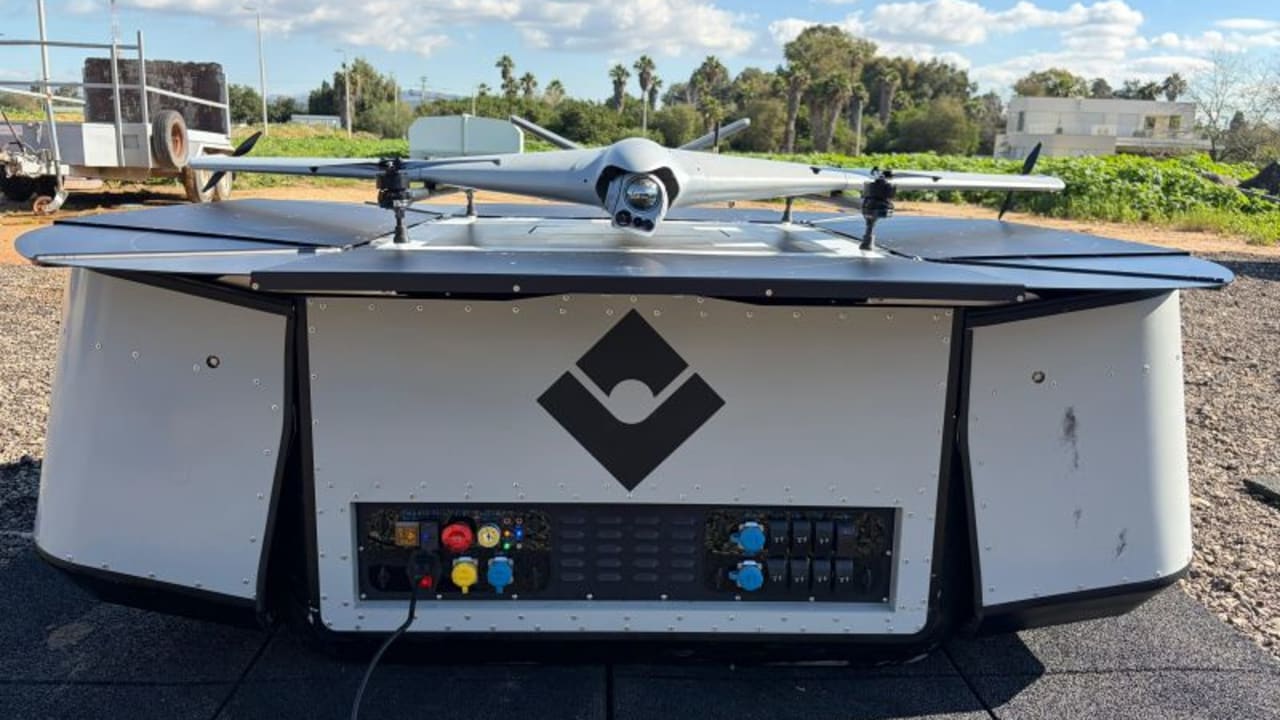
Israeli defense-tech start-up Kela Technology has been named one of five winners of the Defense Innovation Unit’s (DIU) Drone Dominance Program Lethality Challenge.
The Lethality Challenge addresses the critical need for cost-effective, mass-producible, and easily integrated lethal payloads for small drones.
Other winners included Bravo Ordnance, Kraken Kinetics, Mountain Horse Solutions, and defense giant Northrop Grumman. The DIU announced that the winners are to receive a cash prize of $10,000 and be presented to all Gauntlet II applicants as a part of a preferred munitions solutions list.
In December, the Department of War (DoW) announced that the Drone Dominance program would purchase $1 billion worth of small lethal drones over the next two years.
With hundreds of drone companies in the United States, the program is designed to test whether the ecosystem can manufacture low-cost systems at scale and quickly enough to meet the demand of the US military.

The gauntlet
The challenge is one in a series of open competitions designed to expand manufacturing capacity and drive costs down. Each phase of the programs begins with a Gauntlet challenge and ends with the delivery of small unmanned aerial systems (sUAS) from the winners, which are then flown and evaluated on their abilities to complete various scenarios.
Kela took part in the second such challenge. Although Israeli drone start-up Xtend was one of 26 companies participating in the first Gauntlet, it did not rank in the top 11 and therefore was not selected for follow-on production contracts.
Nevertheless, companies that were not selected during the challenges can still qualify for later rounds, since additional phases test differing characteristics.
“The Gauntlet I leaderboard is not a statement about the best drones in the industry or even the best drones in America. It is a snapshot of how the invited vendors performed against the mission vignettes designed by the warfighters. We are not buying drones based on paper requirements. We are buying drones based on how they performed in the missions,” the DIU explained.
Qualifiers for Phase II had to supply 120 one-way attack drones, at least 30 training munitions and 10 lethal munitions along with 20 night-vision systems. The platforms are required to comply with NDAA specifications and must not include Chinese batteries or motors. The ability to meet production deadlines is a hard pass/fail test.
The missions in the second phase involved locating and engaging multiple targets in rapid succession – both stationary and mobile – in unscripted and dynamic operations. The challenge consisted of two side-by-side missions, one at extended ranges of up to 20 kilometers and one in close-quarter environments, such as inside buildings, trenches, bunkers, and tunnels. The platform needs to be able to operate in “dirty” electro-magnetic spectrum environments and be resilient to radio frequency (RF) jamming and global navigation satellite system (GNSS) denial. It must also be capable of delivering a lethal payload.
Rapid-response capabilities
Kela’s systems are engineered to be flexible, mobile, and operable by a single soldier, an approach shaped by the lessons of October 7, which underscored the need for rapid-response capabilities and seamless integration with advanced sensors.
The company’s platforms are designed to incorporate both civilian and military technologies without dependence on a single manufacturer or the need to replace existing infrastructure.
In a recent interview with Defense & Tech by The Jerusalem Post, Hamutal Meridor, co-founder and president of Kela, said that the company’s software is built on open architecture and open platforms, enabling collaboration that directly empowers soldiers.
And the solution is simple. “If you have an iPhone, you can operate Kela.”