
JPost: The Genesis Prize Foundation recently announced 26 grant recipients under the $3 million program in honor of Gal Gadot. How will the funds be put to work?
Genesis Prize grants come from the laureate’s $1 million award. This year an additional $500,000 contribution brought the initial pool to $1.5 million, and working with the Jewish Funders Network we launched a matching program that required each organization to secure matching contributions of its own. That doubled the total to $3 million.
One hundred fifty organizations applied; 26 were selected. The common thread is that each grant “helps the helpers” — the people who care for others: mental health professionals, social workers, educators, emergency responders and community caregivers. The funding pays for professional training, clinical supervision, new technologies and programs that build the capacity of these helpers to keep doing their work.
JPost: What stands out in the list of grantees is its breadth — different kinds of helpers, serving diverse communities across Israel, taking different approaches to healing. Was that diversity intentional?
Very much so. It was a central consideration, alongside the merit and likely impact of each proposal.
We wanted to reach a broad cross-section of Israeli society and support every kind of helper — mental health professionals, educators, emergency responders, social workers, community workers and family caregivers.
We wanted geographic reach: national programs alongside regional projects in the north, the south and the center, including underserved communities.

We wanted to reach different populations — bereaved families, veterans and reservists, children, people with disabilities, and communities that face barriers to care.
And we wanted to fund different methods: conventional professional support alongside community-based assistance, sports, technology and other new approaches.
In short, we deliberately chose to address many dimensions of recovery rather than concentrate the resources in any one place.
JPost: Can you give a few examples of what these organizations are doing on the ground?
There are many inspiring examples; I will name three.
Or LaMishpachot trains bereaved parents to become mentors to newly bereaved families. With training and professional supervision, they turn their own experience into support for others.
Itach Ma’aki works in underserved Bedouin communities, where women serving as school counselors, youth workers and community organizers are trained to recognize trauma, assist others and manage the emotional demands of their own work.
The Shahaf Foundation provides training, supervision and peer support to municipal social workers who are helping families cope with loss, displacement and the return home.
The 26 organizations serve different communities and confront different challenges, but they share one principle: help the people who help others.
JPost: Some grantees are using unconventional approaches — artificial intelligence, surfing, sports. How do these fit into the broader recovery effort?
We wanted to support both the traditional and the innovative, and some of the innovative work is ingenious. Clear Sky uses Hebrew-language AI to help therapists transcribe sessions and prepare clinical summaries, cutting administrative work and freeing time for patients. It is a compelling example of Israel’s world-class technology being turned to the country’s own mental health needs.
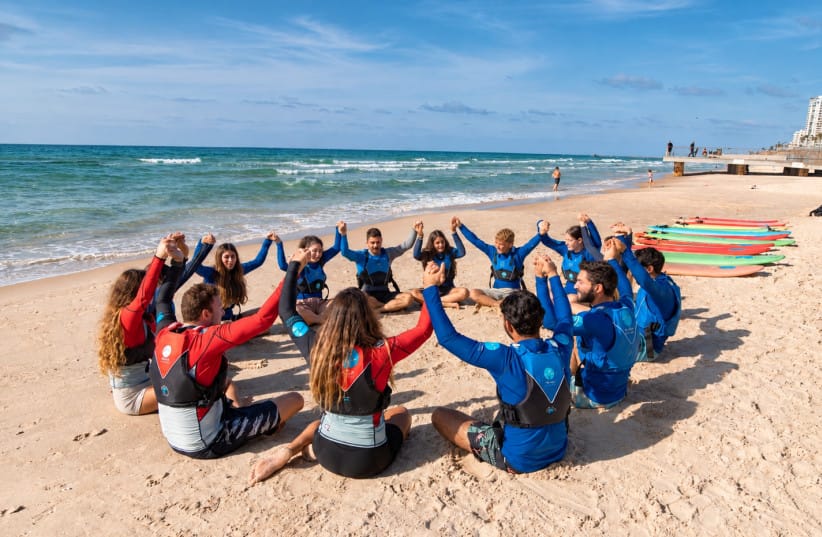
HaGal Sheli offers surf therapy to people recovering from trauma, including professionals and first responders. Its center is at Zikim Beach, where 17 people were murdered on October 7. Reclaiming that beach as a place of healing and ordinary life carries enormous symbolic weight.
The Ariel Center combines sports with guided discussion and professional support, opening a path to recovery for people who would never walk into a therapist’s office.
Different people respond to different approaches. Not all healing happens in a clinic, and technology can make a real difference.
JPost: Three million dollars is a substantial sum, but against the scale of what Israel faces, isn’t it a drop in the bucket?
The scale is enormous, which is exactly why every serious investment matters. Together with Gal, we set out to shine a light on the need to help the helpers, and we were encouraged to see other donors join.
The Foundation has always taken a methodical, disciplined approach to philanthropy. What matters is not only the amount but whether the money builds lasting capability. When we train professionals, the skills stay with them. When we support new tools, those tools keep delivering long after the grant is spent. When we strengthen an organization’s capacity, it improves and expands its work.
And there is a multiplier: the benefit flows from each professional we train to the many people that professional serves.
So the goal is not simply to finance immediate interventions. It is to strengthen the country’s capacity to remain resilient. Israel’s resilience depends on more than military strength. It depends on civilian institutions, communities and professionals able to function under extraordinary pressure.
JPost: How will you know, a year or two from now, whether this has made a lasting difference?
The test is whether the investments keep paying off after the grant period ends. Are the trained professionals still applying what they learned? Have the organizations maintained or expanded their services? Are the new technologies extending their reach? Have new donor relationships sustained the work?
If the answers are yes, the initiative will have contributed to the vision of a strong and resilient Israel — the vision Gal Gadot shares with us, and with many others around the world.
JPost: When will you announce the 2027 laureate, and who, in your view, would be the right choice for this difficult moment?
Nominations process for the 2027 Genesis Prize laureate started in September and in early November we opened public nominations; anyone can submit a nomination until November 30 online at https://www.genesisprize.org/forms/2027-nominations?utm_source=26_article&utm_medium=press. Nominees must be living Jewish individuals with international recognition in their fields, demonstrated pride in their Jewish heritage, commitment to the Jewish people and Israel, and accomplishments that can inspire future generations. The laureate will be announced in December or January.
We want to draw on the collective wisdom of Jews around the world. This is a challenging time for Israel and for global Jewry — and yet adversity must not become the only story we tell about Jewish life. Look at what Jews are achieving around the world, their contributions to humanity, commitment to Jewish values, determination to make a difference. Those are stories worth telling, especially now.
We have extraordinary achievements, courage and leadership to recognize.
Gal Gadot has shown what a laureate can do with this platform. The next laureate will bring his or her own vision and priorities and will remind us of our shared identity and what we hold in common. That is something to look forward to.
Written in collaboration with Genesis Prize Foundation