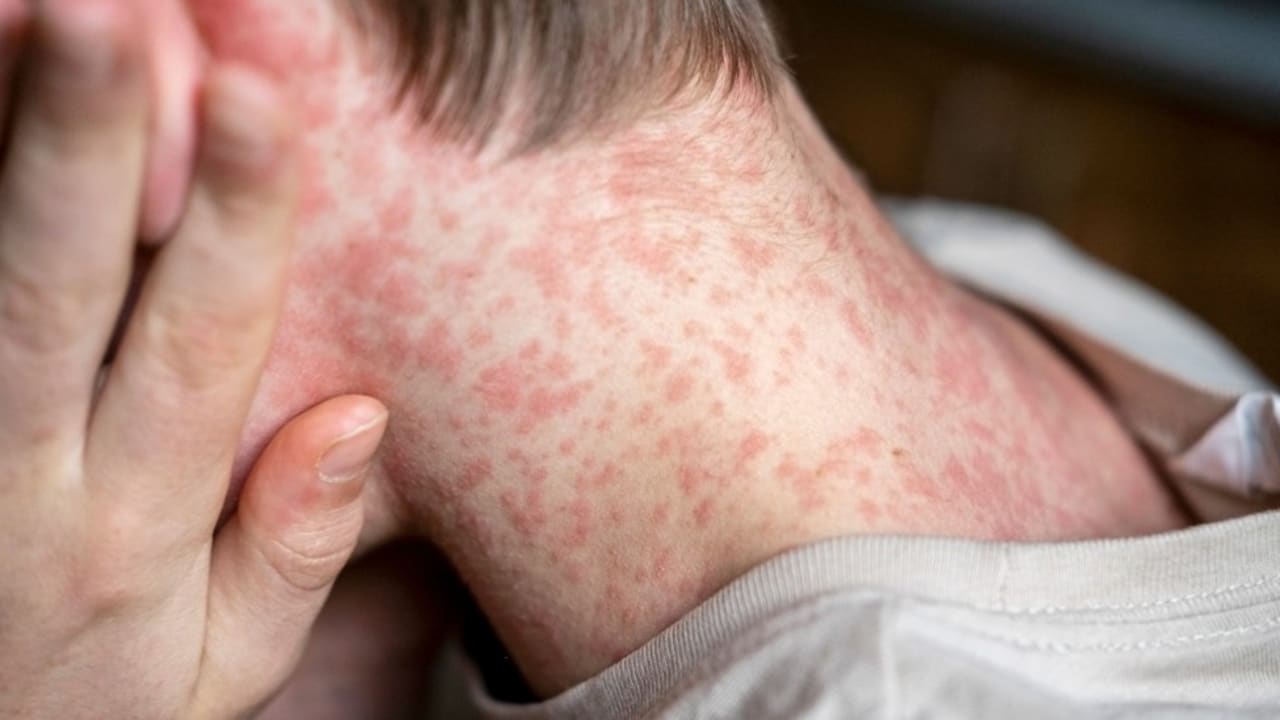
Following the death of a 17-year-old unvaccinated boy in Israel’s ongoing measles outbreak, the Health Ministry stressed the importance of vaccinations and seeking treatment in a statement on Tuesday.
The teenage boy, who had underlying health conditions, was hospitalized and diagnosed with measles two and a half weeks ago, dying in the night between Sunday and Monday, the Health Ministry said.
In total, 17 deaths from measles have been recorded since April 2025, with most of the fatalities occurring in unvaccinated but otherwise healthy children and infants.
The outbreak, largely concentrated within the country’s ultra-Orthodox communities, is almost completely preventable through vaccination, something that the Health Ministry emphasized in the statement.
Ministry recommends all children be vaccinated
According to the ministry, all children should be vaccinated against measles at the ages of one and six, and children in high-risk areas should receive their second dose at one and a half years old. Additionally, the Health Ministry recommends additional vaccines for infants traveling to places with outbreaks.

“Those who are not vaccinated,” the ministry warns, “as well as parents of infants who received one vaccine dose at 6-11 months, [should ]avoid attending large gatherings in outbreak areas due to the risk of infection.”
From time to time, Israeli children and infants, mostly from ultra-Orthodox families, are hospitalized with diseases and infections largely preventable by vaccines. Such cases include children with whooping cough, meningitis, measles, and more.
Skepticism among ultra-Orthodox community
Ultra-Orthodox communities in Israel have seemingly gained a reputation for skirting Health Ministry guidelines in the past.
During the COVID-19 pandemic, some ultra-Orthodox religious leaders instructed their followers not to vaccinate against the deadly virus, and large gatherings such as weddings were held despite bans, often becoming “superspreader” events.
In turn, the ultra-Orthodox community was massively overrepresented in COVID-19 infections.
Despite some communal opposition, many top-level ultra-Orthodox rabbis maintain the importance of vaccination to their communities, and have urged their followers to comply with public health guidelines.