A huge concentration of deep-water sharks and shark eggs were discovered near Tel Aviv by researchers from several Israeli research institutions in deep sea brine pools, presenting major implications for understanding both climate change and the deep sea.
The study was conducted as part of a long-term research collaboration in the Eastern Mediterranean Sea between the University of Haifa’s Leon H. Charney School of Marine Sciences, the Israel Oceanographic and Limnological Research, Ben-Gurion University of the Negev, and the Inter-University Institute of Marine Research in Eilat.
But the discovery of these deep sea brine pools, habitat hotspots and a massive amount of deep water sharks and a shark nursery was not something the researchers anticipated, with leading researcher Dr. Yizhaq Makovsky of the University of Haifa noting that the Eastern Mediterranean "was thought of as an ocean desert."
The reason for this isn't widely understood, though researchers do theorize it could be for a number of reasons, such as being attracted to the warm waters near Hadera's power plant or the lack of danger from fishing.
But the sheer size of the nursery changes things. As the researchers noticed, the nursery isn't anything new, and existed for a long time up until now. It is even thought that it could be the largest mating site in the region for these sharks.
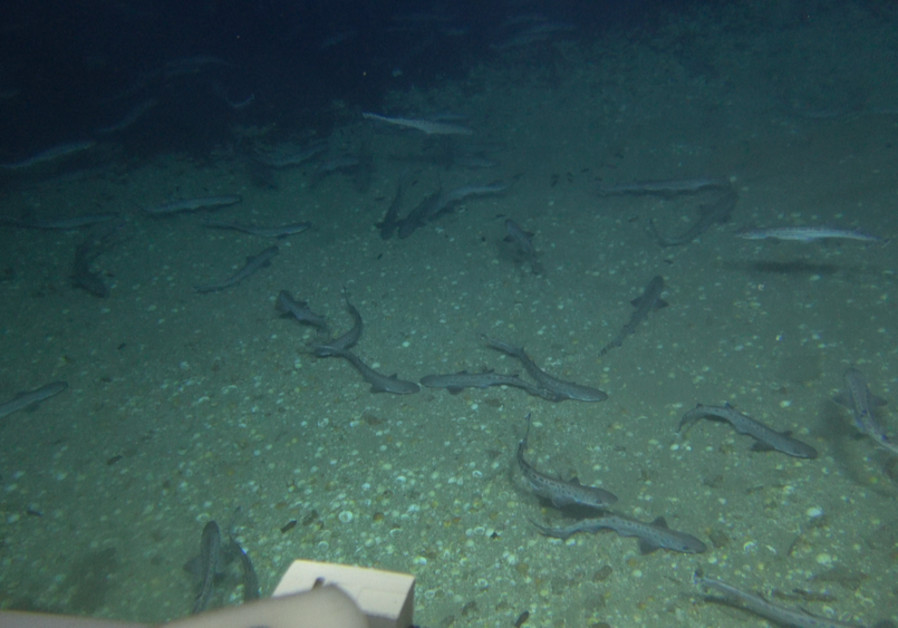
“This was happening under our noses for thousands of years, right next to Tel Aviv, one of the largest cities in Israel,” Makovsky said in a statement. “It was hiding in plain sight, which highlights how little we know about the deep sea – not just off the coast of Israel, but around the world. This is a global challenge.”
However, the research isn't just interesting for those fascinated by the massive marine predators and their breeding habits, as it could pave the way for a better understanding of the deep sea and the effects of climate change.
“The Eastern Mediterranean Sea can be regarded as an early-warning system for what we can expect from marine environments across the world," Makovsky explained.
"Therefore, we believe that our discovery of a previously unknown deep-sea hotspot of life could provide crucial information for the sustainability and resilience of the marine ecosystem not only in the Eastern Mediterranean, but also globally in other oceans.”
The global temperature will reach or exceed 1.5 degrees C of warming over the next 20 years, the report said. There is a 40% chance of reaching such a degree of warming within the next five years, according to the World Meteorological Organization.
Concerning the Mediterranean region, there has been an observed increase in droughts, the report said. There will be an increase in aridity and fire-causing weather conditions if average global temperatures warm by 2 degrees C or more, it predicted. Changes such as extreme temperatures, droughts, fire weather and higher sea levels are expected in the region by around 2050.
"Israel, as a country that has been dealing with difficult climate challenges, has much expertise and experience in the matter of climate innovation," said Foreign Ministry Director-General Alon Ushpiz.
"The knowledge and experience Israel has can help other countries around the world in the area of water technology and seawater purification, sustainable agriculture that can withstand drought and climate change, sustainable energy and energy preservation, development of animal protein substitutes, reforestation, and another area that will help us all face the challenges in front of us."