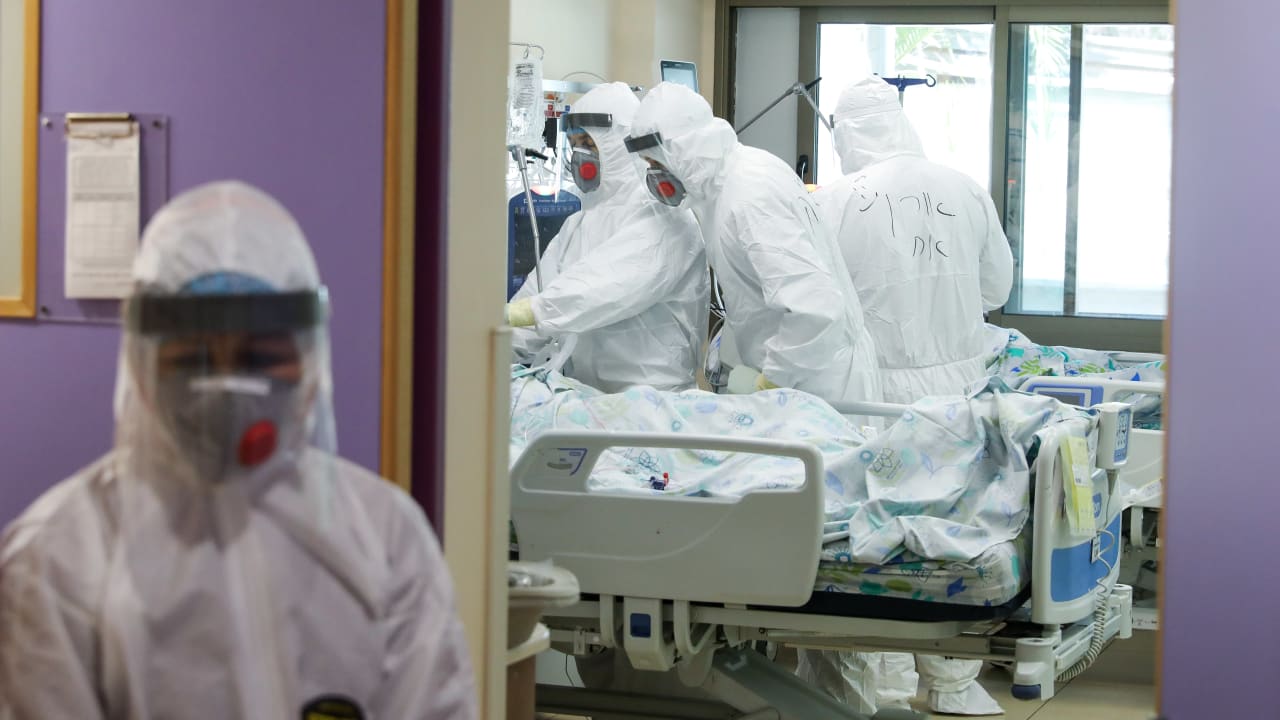
As Israel reported a record number of new daily cases of the novel coronavirus on Tuesday, public health officials warned that the UK variant of the virus is complicating efforts to control infection rates and outbreaks.
In an interview with KAN Reshet Bet radio, Public Health Services head Dr. Sharon Alroy-Preis explained that the British variant seems to be having a significant impact on the high infection rates, especially in the haredi (ultra-Orthodox) community.
"We're seeing very significant and rapid infections and it's really a race between this and the vaccine," said Alroy-Preis, adding that they could see clearly that the variant was spreading more quickly than the original version.
Alroy-Preis presented a couple of cases that showed that the British variant is more infectious, including one person who returned from the UK who infected 20-30 people, creating a rapid chain of infections that resulted in over 700 confirmed infections.
Health officials believe that 15%-20% of current cases in Israel involve the British variant. Additionally, while household members would not all be infected with the original virus, with the UK variant all the members of a household are infected within 48 hours.
Alroy-Preis explained that the situation is "not simple," but that there are signs that the vaccination is starting to have an impact on lowering infection rates and she hopes the lockdown and vaccinations will start to have more of a significant effect.
As of press time, four variants of the coronavirus had been reported around the world in addition to the original version: the UK variant, the South African variant, the Brazilian variant and a new variant discovered in Germany in the past week.
Alroy-Preis called on Israelis to make sure to get the second dose of the vaccine, as 4% of Israelis have not returned to receive the second dose. While some of these people were unable to come because they were in quarantine, it is unclear why some of the others did not come.
The public health services head stated that people may not be coming for the second dose because they're "shocked by all sorts of publications, all sorts of irresponsible statements in the news and so on" on the vaccines and the side effects.
Many people with severe allergies have received the vaccine without any issues, but there have been dozens of people out of the over two million who have been vaccinated in Israel who have experienced allergic reactions. Alroy-Preis advised those who experience allergic reactions to remain at the vaccination clinics for supervision for at least 30 minutes.
Regarding controversy and lack of clarity concerning government policies for those leaving and entering the country, Alroy-Preis stressed that the most important thing is that those returning to the country follow quarantine regulations and that all travelers should be required to undergo a test before boarding a flight. She advised that air traffic in and out of the country should be decreased as much as possible to avoid infected patients and variants of the virus from entering the country.