A leaked internal BBC email has revealed new editorial guidance for staff covering the humanitarian situation in Gaza, The Spectator reported on Monday.
The memo, titled Covering the Food Crisis in Gaza, outlines language and framing instructions regarding ongoing aid distribution and food shortages in the Gaza Strip.
The email, reportedly sent last Friday by a senior executive editor, instructs staff to state that "the argument over how much aid has crossed into Gaza is irrelevant" and asserts that the current distribution system "doesn't work." The guidance also characterizes the Gaza Humanitarian Foundation (GHF), an aid initiative created with US and Israeli involvement, as ineffective.
The BBC has not commented publicly on the memo.

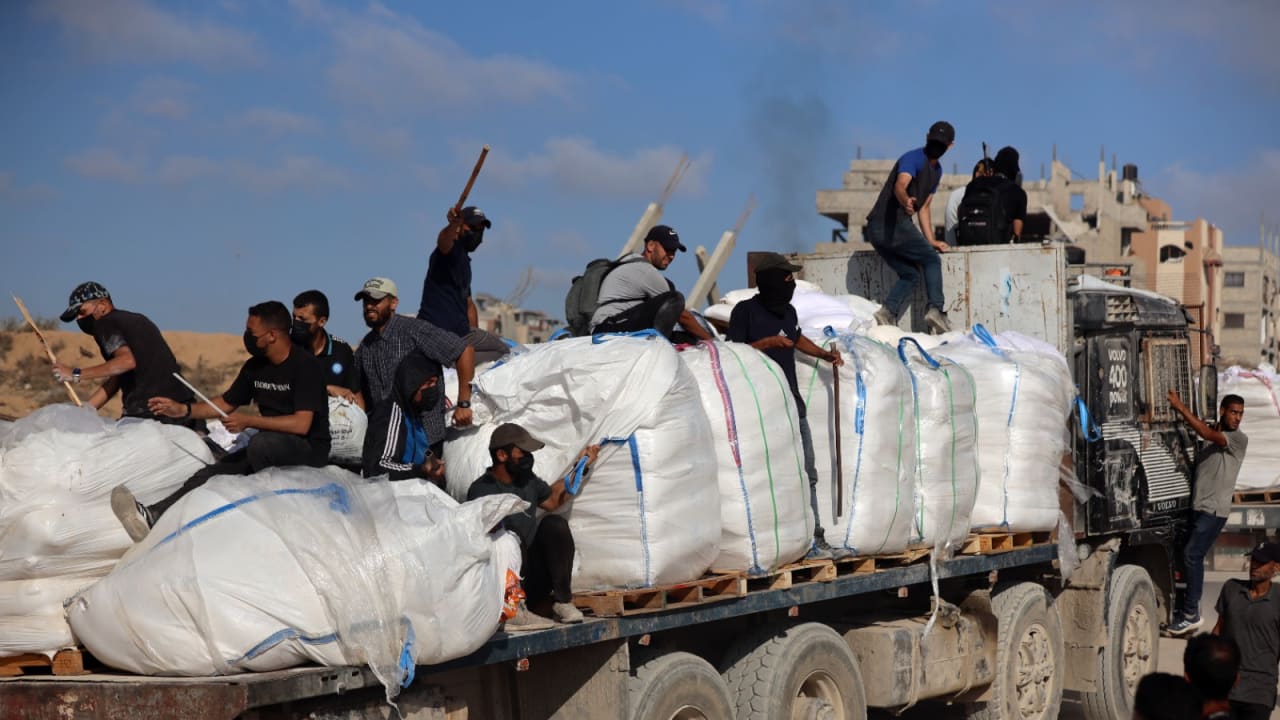
However, Israeli authorities and independent sources have reported incidents involving looted aid convoys, as well as efforts by Hamas to block access to civilians.
The IDF on Tuesday released footage of Hamas stealing humanitarian aid that had entered the Gaza Strip, following a report by The New York Times that quoted anonymous IDF officials saying that there was no evidence to suggest that Hamas routinely stole humanitarian aid.
Disputed assessments of the food crisis
The email instructs BBC staff to refer to "mounting evidence" of starvation and fatalities near aid distribution centers.
The memo reportedly compares the current GHF-led aid distribution model unfavorably to the previous United Nations system. According to GHF sources, the current model incorporates military oversight, GPS tracking, and on-site security and medical staff. It has reported a zero diversion rate for aid.
Similarly, earlier this week, The New York Times amended its article that detailed starvation in Gaza on Tuesday to include that a child featured in the story and its front page, Mohammed Zakaria al-Mutawaq, had a preexisting medical condition that impacts his appearance.
The amendment came after the Israeli Consulate General in New York made the request, and after the photo of Mutawaq with his brother spread across social media. The consulate informed the NYT of Mutawaq’s medical condition, according to Israeli media, citing Israeli sources.
The state of Israel shared an additional photo of Mutawaq, showing the child's condition in comparison to his mother and brother, highlighting how his preexisting conditions contributed to his physical condition.
"BBC, CNN, Daily Express, and The New York Times spread a misleading story using a picture of a sick, disabled child to promote a narrative of mass starvation in Gaza, playing into the hands of Hamas's propaganda war," Israel accused.
According to Israel's Foreign Ministry, Mutawaq suffers from cerebral palsy, along with additional genetic disorders, and has claimed that international media chose to use his photo “to promote a narrative of mass starvation in Gaza, playing into the hands of Hamas’ propaganda war.”