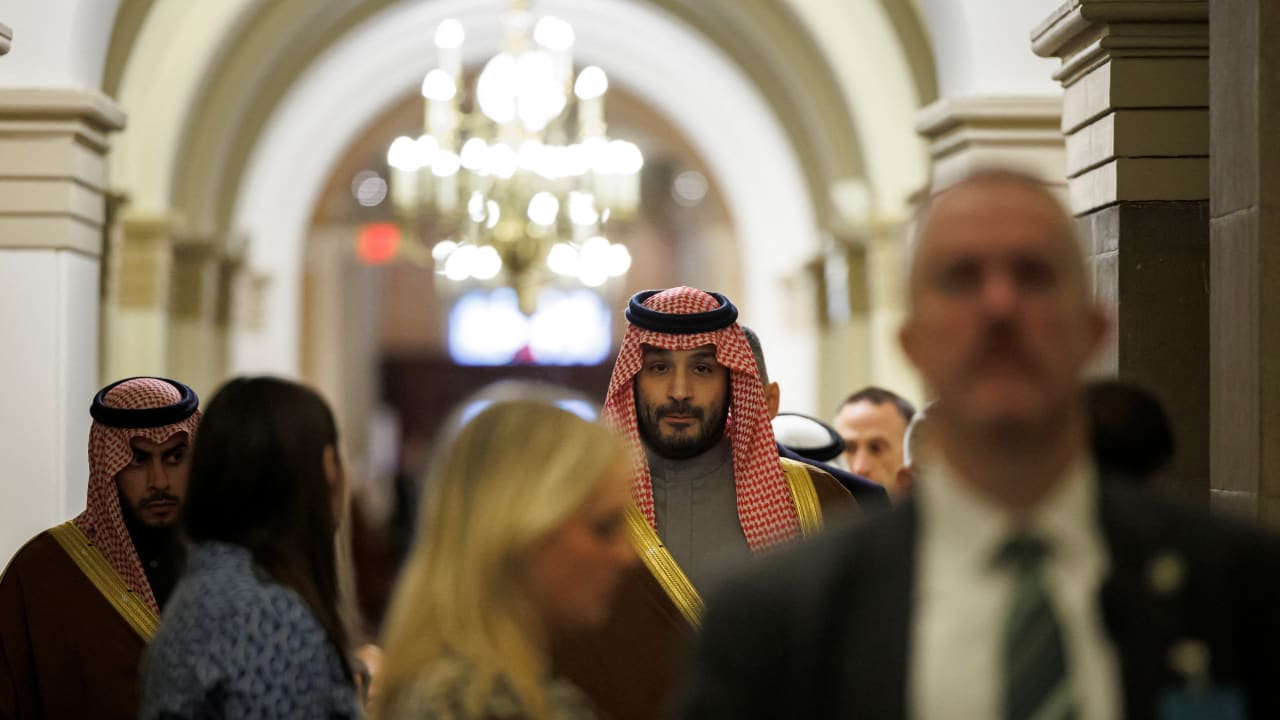
Saudi Arabia is going to join a group of 20 major non-Nato allies of the United States. The announcement was made during Saudi Crown Prince Mohammed bin Salman’s visit to Washington, where he met with US President Donald Trump.
“President Donald Trump said on Tuesday that the US and Saudi Arabia have entered into a security agreement that will ease weapons transfers and elevate the relationship between the two countries. Under the agreement, Saudi Arabia would be designated a “major non-NATO ally,” Politico noted.
This is important. The US has a number of allies around the world.
When one adds the Major Non-NATO Allies (MNNA) to the NATO allies, there are around 50 countries. Many of these are in Europe, but the MNNA status also includes several countries in Latin America, Africa, and Asia.
Which countries are part of MNNA?
Let’s take a quick look at these countries. The status began to be conferred on countries in the 1980s, and each US president has added one or more countries to the list. Back in the 1980s, the Reagan administration added Australia, Egypt, Israel, Japan, and South Korea.

Australia was a clear choice because it is a member of the Five Eyes network of US allies, which includes the UK, Canada, and New Zealand. New Zealand became an MNNA in 1996. Egypt and Israel were added following the peace agreement between the countries. Japan and South Korea are key parts of the US alliance system in the Pacific and Asia.
The MNNA expansion continued after the Cold War. Recall that during the Cold War, the US had various alliance systems, such as the Baghdad Pact, in the Middle East. The members of the US alliance systems have changed over the years. Jordan joined the list of MNNAs under the Clinton Administration.
A key friend of the West, Jordan was historically very close to the UK. Argentina joined, and then under the Bush administration after 9/11, several other countries joined, including Bahrain, Kuwait, Morocco, and Pakistan. These countries were key to the Global War on Terror, although one should wonder about Pakistan because it is where Osama bin Laden was found and it works closely with China.
Other Asian countries also joined, such as Thailand and the Philippines, as well as Latin American countries such as Brazil and Colombia. Neither Brazil nor Colombia is particularly friendly to the US these days.
In the Middle East the addition of Saudi Arabia will follow the addition of Qatar and Tunisia over the last decade. Tunisia has seen some backsliding on democracy since the Arab Spring. Qatar and Saudi Arabia are key pillars of the US alliance system in the Gulf: Qatar is home to a US base, and Saudi Arabia has been a friend of the US since the 1940s.
Some in the US critique both countries. For instance, some will be critical of Doha for hosting Hamas. Some will be critical of Riyadh on human rights issues. No country is perfect. The fact is that the US has had opportunities to add the UAE to the list. The UAE and Bahrain are in the Abraham Accords. Only Bahrain is an MNNA. Both the UAE and Bahrain host US bases. Kuwait is also a host of US troops and in the MNNA program.
Saudi Arabia’s joining this group of countries is an important step for Riyadh-Washington relations.