
The Ebola outbreak in Congo has not yet stabilized and is still expanding, with transmission fuelled by population movement, a World Health Organization official said on Tuesday.
The Democratic Republic of Congo has confirmed 1,561 cases, including 506 deaths, in the worst-ever outbreak of the rare Bundibugyo species of Ebola for which there is no proven treatment or cure.
"It is still in the expansion phase, unfortunately. We would like to say it is stabilizing, but frankly we cannot say it yet," Dr Anne Ancia, WHO representative in the country, told reporters by video link from Bunia, at the epicenter of the epidemic.
She said that major challenges remained, such as the near saturation of some Ebola treatment centers, with occupancy levels around 90%.
Another difficulty is that workers falling ill in the mining town of Mongbwalu are not seeking treatment locally but instead travel, spreading the disease to new regions, she said.
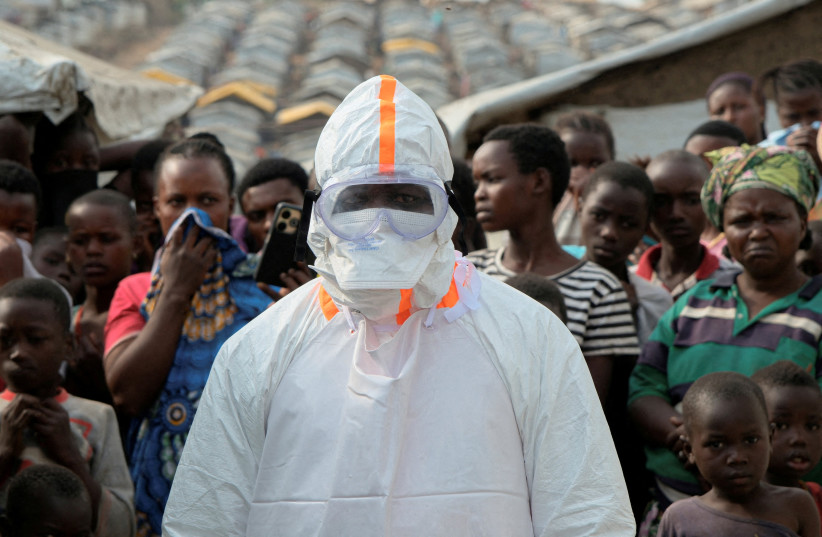
"Population movements, persistent insecurity and the fragility of the health system continue to complicate efforts to bring the outbreak under control," she said.
Congo bans gatherings in three provinces amid outbreak
Last week, the Congo government banned public gatherings in four provinces, including the capital, Kinshasa, as the country battles with the Ebola outbreak.
The ban comes ahead of a planned protest in Kinshasa on July 8 against constitutional reform, with opposition figures calling it "politically motivated."
The order, issued on June 27 by the interior minister, covers Kinshasa, Tshopo, Haut-Uele and Bas-Uele provinces, none of which has recorded cases so far.
It cited proximity to affected provinces as a key transmission risk, and required authorities in the four provinces to monitor anyone presenting symptoms and submit daily surveillance reports.