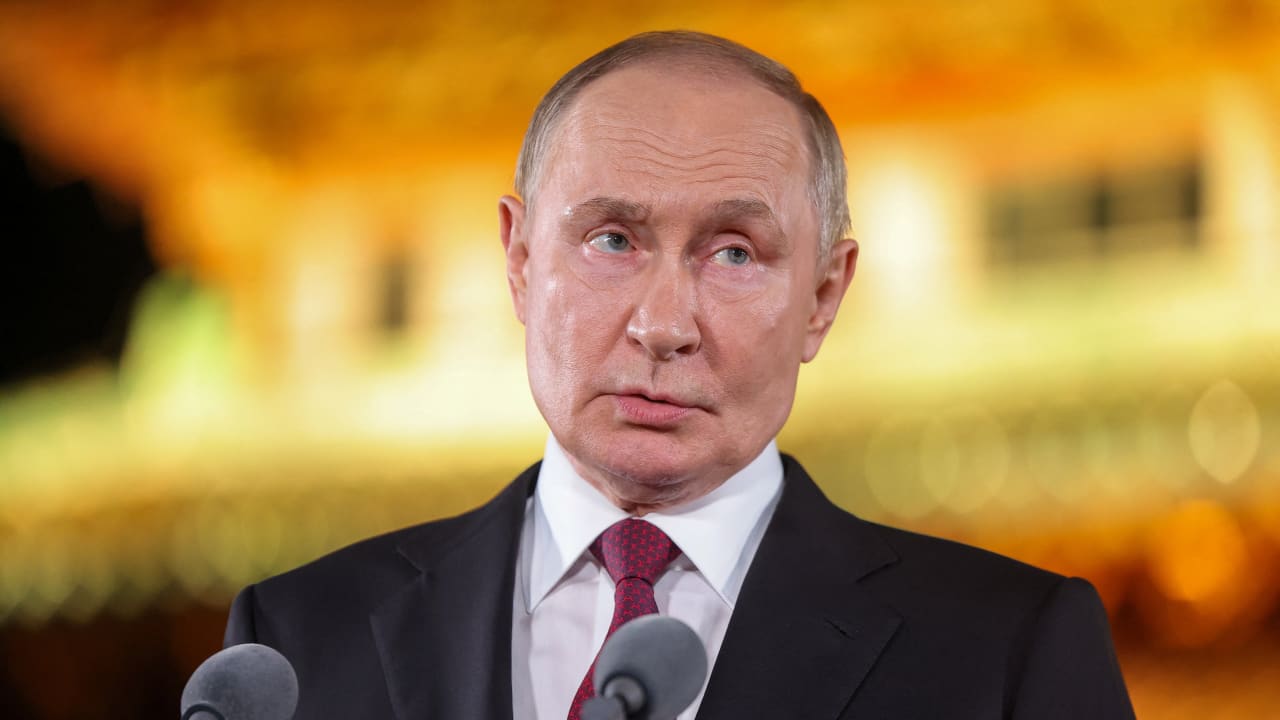
Russian authorities must consolidate the Russian language and identity in parts of Ukraine incorporated into the country since Moscow's 2022 invasion, according to a document signed by President Vladimir Putin and published on Tuesday.
The document, entitled "Strategy of Russia's national policy in the period to 2036," appeared as a presidential decree. It calls for measures to ensure that 95 percent of the country's population identifies as Russian by 2036.
Long links between Russia and Ukraine, from even before the Soviet era, mean that some Ukrainians have traditionally been sympathetic to Russia, and most speak both languages. But since the invasion, any such sympathy has vanished, and surveys show that the use of Russian has declined sharply.
Ukrainian President Volodymyr Zelensky said on Tuesday that Kyiv was ready to advance a US-backed plan to end Europe's deadliest and most devastating conflict since World War Two. But Ukraine is wary that it may be forced to accept a deal largely on Russian terms, including territorial concessions.
Putin launched the invasion of Ukraine in February 2022, saying the aim was to "demilitarize and denazify" it and free Russian-speakers in the east from what the Kremlin called blatant discrimination.

Russia pushes 'unity of historical territories' strategy
Within six months, the Donetsk, Luhansk, Kherson, and Zaporizhzhia regions were incorporated into Russia, though Moscow does not have full military control over them.
The document, to come into force in January, said securing control over eastern regions "created conditions for restoring the unity of the historical territories of the Russian state."
It was vital, the document said, "to adopt additional measures to strengthen overall Russian civic identity," to entrench the use of Russian and to act against "efforts by unfriendly foreign states to destabilize inter-ethnic and inter-confessional relations and create a split in society."
"The results of implementing this strategy will be assessed by monitoring the achievement of the following target indicators by 2036: the level of overall Russian civic identity (civic self-awareness) – no less than 95 percent," the decree said.
Putin has long cast doubt on Ukraine's historical identity as distinct from Russia.
And in addition to objections to NATO's eastward expansion since the 1990s, he has made the defense of Russian-speakers and reunification with areas seen as historically Russian as a key plank of Moscow's "special military operation" in Ukraine.
Ukrainian has been the sole state language in Ukraine since the collapse of Soviet rule in 1991 and the advent of independence. Still, authorities in Kyiv deny any notion that Russian-speakers have been subject to discrimination.
Russia alleges that neo-Nazi ideology has permeated Ukrainian public life since a 2014 public uprising forced the Russia-friendly president of the time to flee the country.