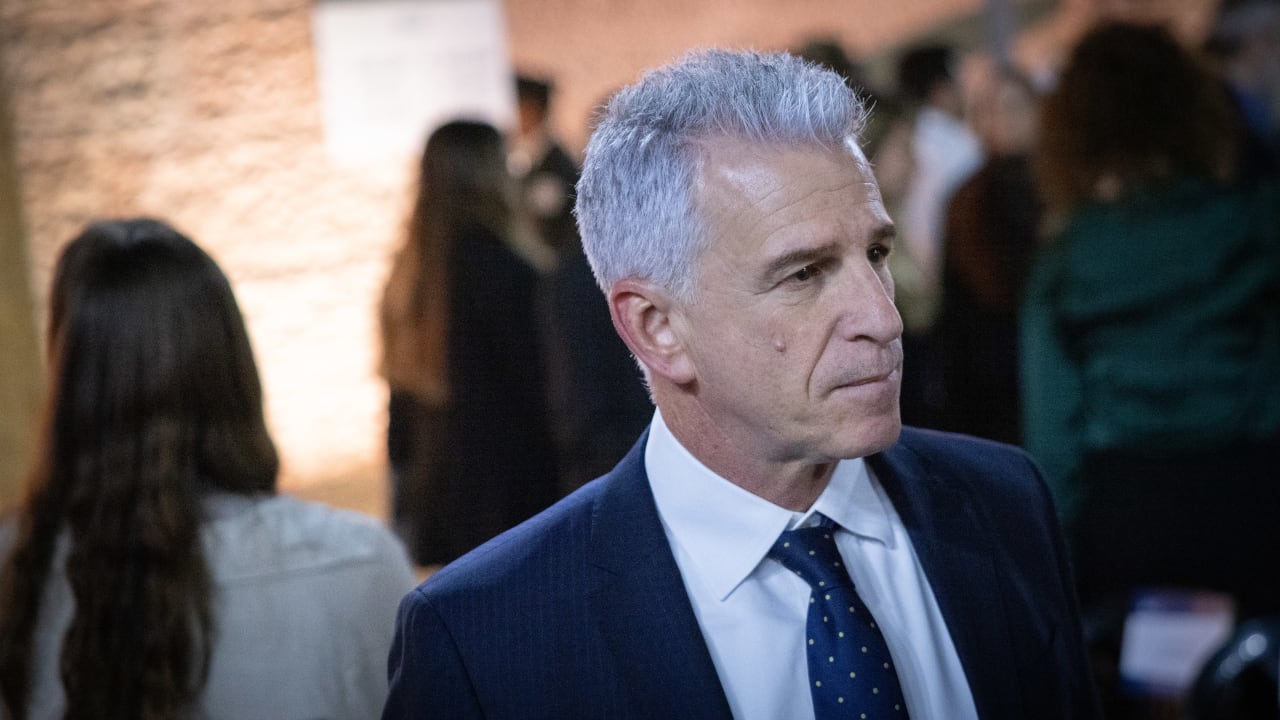
The former IDF intelligence chief, Maj.-Gen. (ret.) Aharon Haliva, defense minister, Yoav Gallant, IDF chief of staff, Maj.-Gen. Herzi Halevi, Shin Bet (Israel Security Agency) director Ronen Bar, and numerous other senior IDF officials have all been fired or have resigned since Hamas’s October 7 massacre.
The only remaining top defense establishment official since that day is Mossad director David Barnea. (Obviously, there is also Prime Minister Benjamin Netanyahu, but that is a whole separate story.)
The Jerusalem Post has learned that this fact, and several other disputes between the IDF and the Mossad, have transformed some lifelong friends from the rival agencies into harsh public critics of each other.
Some senior IDF intelligence and Gaza Southern Command officials started to resign in the spring of 2024, including Haliva, while Gallant held on until late 2024, and Halevi and Bar until early and mid-2025.
None of these officials completed their relevant terms, some serving for less than two years.

Barnea has now been in office for over four years, since June 2021, and there have already been discussions about extending his term beyond the standard five-year one, which is set to conclude in June 2026.
Why has he been treated differently?
This partly concerns official, set differences regarding responsibility for different security fronts. Another aspect has to do with inherent politics. The maneuvering skill of these defense figures among the political echelon is also part of the picture.
Regarding security responsibilities, the Mossad is not responsible for Gaza; the IDF and Shin Bet are.
From this perspective, the IDF and the Shin Bet (along with Netanyahu and the political echelon, though they are not part of this article) are responsible for the October 7 failure to stop Hamas’s invasion.
The Mossad, for instance, is responsible for the long-term and covert war against Iran’s nuclear program and some of its other strategic capabilities.
It is also accountable for spycraft issues in Lebanon (recall the beeper sabotage explosions operation), Syria (aspects of sabotage and intelligence collection), and elements of Israel’s negotiations with Qatar.
Fighting global terrorism in general, as well as other Israeli international security issues, is also among the Mossad’s duties.
That means that Barnea has been able to take credit for victories regarding Iran, Hezbollah, Syria, under Bashar al-Assad’s regime, and two hostage deals with Hamas and Qatar, while avoiding blame for issues concerning Gaza.
The IDF and Gallant received credit for beating Iran, Hezbollah, the Assad regime’s military capabilities (though Gallant was fired just before this), and Hamas militarily after October 7. Nevertheless, anyone who served in office at the time of the massacre was tainted by it.
Likewise, the Shin Bet could take credit for several wins in Gaza post-October 7, as well as for fighting West Bank terrorism, but it also has been unable to erase the blemish of October 7.
In politics, the above division of security responsibilities pitted Netanyahu against Halevi and the IDF, Bar and the Shin Bet, and Gallant.
They were convenient scapegoats to escape his own responsibility.
There was no real way or need to blame Barnea.
Halevi, Bar, and Gallant also fought Netanyahu on the matter of exemptions for haredim (ultra-Orthodox) from the IDF. Furthermore, all three attempted to get him to end the war sooner in order to free the hostages held by Hamas quickly.
Barnea could have leaned into this fight, but chose not to.
The Post has learned that Barnea’s view is that Hamas was so obstructionist in its nature that it is not clear that there could have been an earlier deal to get back more hostages sooner.
In contrast, Halevi, Bar, and Gallant have all publicly accused Netanyahu of delaying an agreement to continue the war for his own political reasons.
Netanyahu also removed Barnea from the front lines of the hostage negotiations from February of this year until more recently, possibly knowing that the Mossad chief, at some point, might have pressed harder for a deal, even beyond the terms the prime minister may have authorized.
And yet, by Netanyahu removing him from the front lines of that negotiation and by Barnea remaining publicly silent about that move, the Mossad chief may have dodged another bullet that could have sunk his continuation in office.
In private, Barnea is also careful to praise a variety of Netanyahu’s decisions, including holding off from attacking Hezbollah in October 2023, then unleashing a full assault on it in September 2024.
Alternatively, the Post understands that Gallant and Halevi view Netanyahu as having made a significant strategic error when he delayed the larger war with Hezbollah by a year.
All of this has increased hostility between Barnea and the Mossad vs Halevi and the IDF.
It doesn’t stop here
The Post has learned that Halevi and the IDF feel that the Mossad tried to take too much credit for Iran’s and Hezbollah’s recent defeat.
According to the IDF’s telling, per what the Post has become privy to, the Mossad played an essential role in both wars, although it played a much smaller part compared to the IDF.
The military says that it bombed nearly all of the targets in Iran, including almost all of the most strategic ones.
It credits the Mossad for collecting the intelligence about where the bombs should be dropped. Still, the IDF and the Defense Ministry have publicized that Israel’s satellites, handled mainly by the IDF, were the ones to take tens of millions of photos of the Islamic Republic during the war.
Also, IDF intelligence had its own meetings dating back to November 2024 to design the attacks on Iran. So, the army is saying that the Mossad did not do all of the pre-attack planning and setting of the battlefield.
And once the war really kicked off, the IDF says it was doing nearly all of the work on both offense and defense, given that Israeli air supremacy in Iran led to much of the real-time intelligence collection.
Moreover, while Halevi and the IDF do credit the Mossad for planning the beeper sabotage against Hezbollah, the Post has learned that the military is of the opinion that it handled around half of the budget and development process. And once the beepers were set off, the thousands of aerial attacks that truly decapitated Hezbollah were all carried out by the IDF.
Likewise, the invasion of southern Lebanon to clear the Radwan Force and eliminate their weapons and tunnels was an IDF operation.
Halevi also takes Barnea to task regarding the narrative of when and how hostage deals were or could have been sealed.
The former chief of staff and others have also accused Barnea of some opportunism and toeing the Netanyahu line to keep his role, when he could have risked more on a personal level to back them up.
Barnea has indeed not turned the other cheek, the Post has learned. He has found ways for his counternarrative to spread, including specific critiques of errors he said were made. Further, on some topics, Barnea has defended Netanyahu, backing the prime minister as being professionally correct.
Sadly, all this means that once close friends, colleagues, and allies are no longer as such.
Then again, it is possible that the volatile mix created by October 7 made the breakdown of some of these defense officials’ relationships inevitable.