
In a landmark decision that holds direct relevance for current proceedings as well as future ones, the High Court of Justice on Sunday handed down a ruling forbidding police from examining the contents of personal electronics of suspects – such as phones, laptops, tablets – even if the suspects themselves consented to the search.
In the ruling, Supreme Court Chief Justice Isaac Amit, Deputy Chief Justice Noam Sohlberg, and Justice David Mintz did away with Israel Police’s directive that officers can search through the electronics of suspects without a court order – even and especially when they consent to the search. The cancellation of the directive will kick in 18 months from now, in February 2027.
The chief legal question was whether the consent of the suspects – on its own – is powerful enough to grant permission for the electronic search.
The case and ruling were promoted by a petition from the Public Defender’s Office, which argued that the directives and behaviors of Israel Police and the prosecution that allow for these searches directly contradict the law itself: Examining electronic information is only valid when accompanied by a court order.
Such a search could violate constitutional rights, since it would be extremely difficult to categorize the consent that a suspect provides inside an interrogation room, especially when they are being held, as “informed.”
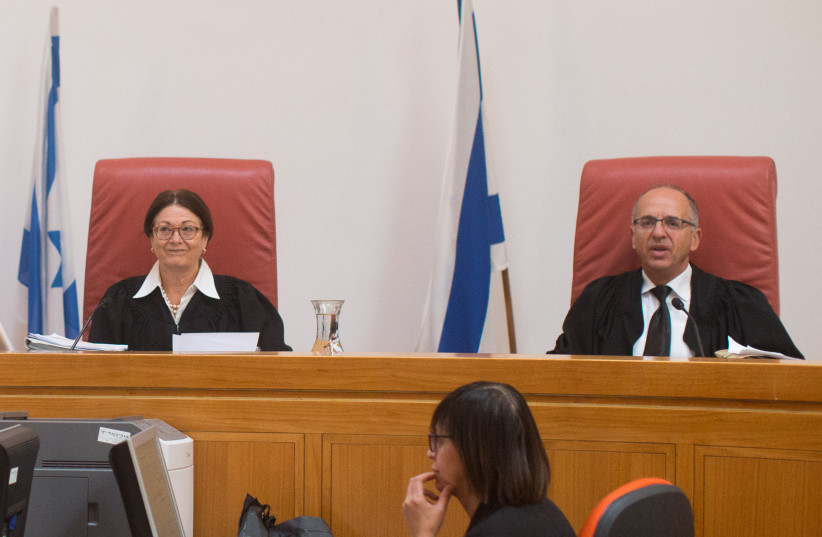
Police argue such searches are critical to effective law enforcement
On the flip side, the offices of the attorney-general and the state attorney, as well as the police, all argued that the suspect’s consent is not damaged by this law, and that his or her privacy is not violated. They added that being able to conduct such a search is critical to effective law enforcement and that a suspect’s ability to consent to such a search actually makes it much smoother to prove their innocence.
Public Defender’s attorneys Yigal Balfour and Gil Shapiro, who submitted the petition, called the ruling “important” and “precedential,” both when it comes to suspects’ constitutional rights and in the message it sends to authorities, that “They can’t work outside the law to achieve justice,” a slippery slope that will be extremely difficult to loop back.
Bini Aschkenasy contributed to this report.