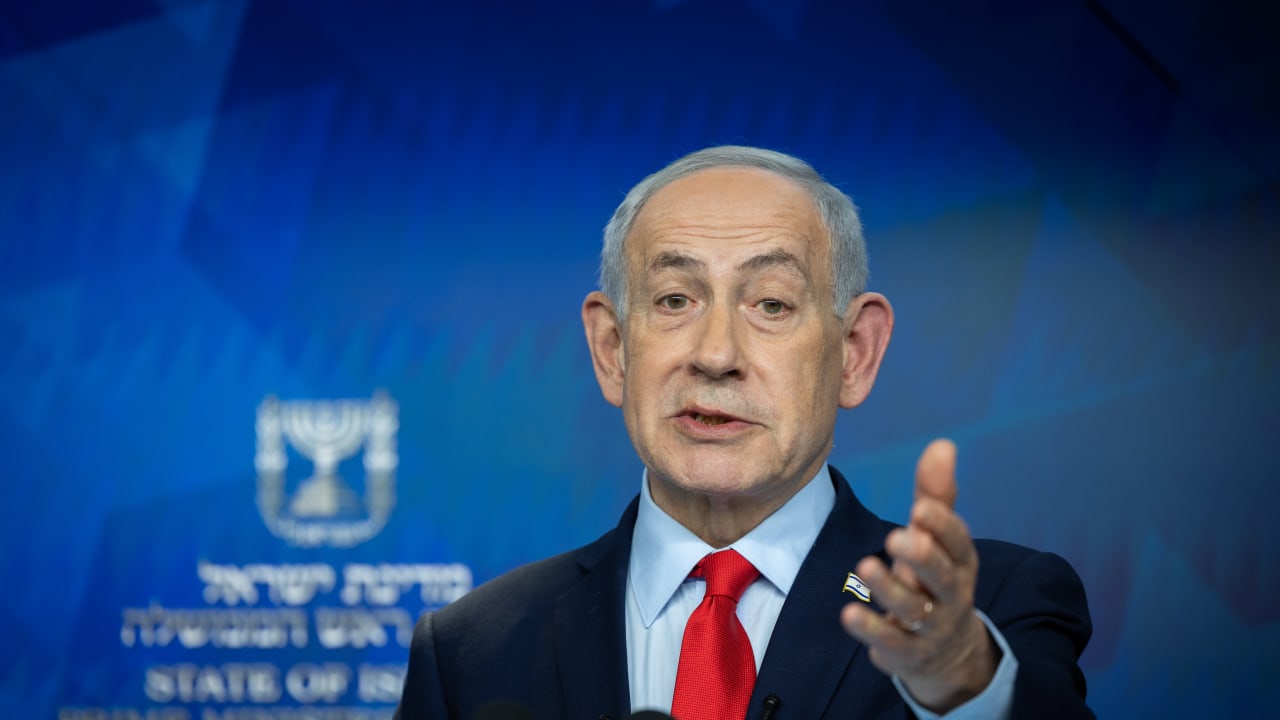
Prime Minister Benjamin Netanyahu returned to the witness stand in his ongoing criminal trial on Monday at the Tel Aviv District Court, clashing repeatedly with the prosecution during the cross-examination focused on his relationship with former Bezeq-Walla owner Shaul Elovitch.
The hearing formed part of the prosecution’s cross-examination in the cases in which Netanyahu is charged with bribery, fraud, and breach of trust. Monday’s session centered on Case 4000, which alleges a quid pro quo under which Netanyahu advanced regulatory decisions benefiting telecommunications giant Bezeq, while Elovitch allegedly ensured favorable and tailored coverage of Netanyahu and his family on the Walla news site. Netanyahu denies all charges.
Late Monday afternoon, the court acceded to Netanyahu’s request that Tuesday’s hearing be canceled, due to what he described as “important diplomatic meetings and preparation for those meetings.” The request came as US Middle East envoy Steve Witkoff was expected to arrive in Israel on Tuesday amid heightened regional tensions following recent developments involving Iran.
At the start of the hearing, Netanyahu was questioned about the 2015 approval of Walla’s sale of the Yad2 classifieds site, a deal he authorized within 10 days. Prosecutor Yehudit Tirosh challenged the pace of the approval, suggesting it was unusually fast and linked to Netanyahu’s ties with Elovitch.
The prime minister rejected that characterization, insisting the approval process was routine and denying that Elovitch had raised regulatory issues in exchange for media coverage. “He didn’t speak to me about it,” Netanyahu said, adding that discussions he had with Elovitch regarding coverage were “few and far between.”

Tirosh pressed Netanyahu over a conversation held shortly before an official trip to Japan, suggesting that media coverage was discussed and that Netanyahu sought Elovitch’s insights.
“You spoke with him at the last minute before flying to Japan, and at the very least, you discussed coverage,” Tirosh said. “You needed Elovitch’s insights?”
Netanyahu rejected the premise, launching a pointed critique of what he described as the prosecution’s bureaucratic worldview. “What you see here is a typical and effective bureaucratic mindset,” he said. “If I had operated only that way, Israel would never have reached its massive economic turnaround.”
Elovitch described as someone with 'very deep and penetrating knowledge'
Turning directly to Tirosh, Netanyahu added that people operating in the market often possess a deeper understanding than government officials. “It’s hard for you to understand because you’re part of the bureaucracy,” he said.
Netanyahu acknowledged consulting Elovitch on more than one occasion, describing him as someone with “very deep and penetrating knowledge,” but denied any connection between those consultations and regulatory decisions.
He also said that he did not consult the legal advisers of the Prime Minister’s Office or the Communications Ministry, namely, Shlomit Barnea Farago and Dana Neufeld, when approving the Yad2 deal, saying there was no conflict of interest requiring disclosure.
“There are a million people I’m in contact with,” Netanyahu said. “I note only those I’m close to like a brother.”
He added, with irony, that he later agreed “in the blink of an eye” not to handle Bezeq-related matters, “despite the great power I supposedly had over Elovitch.”
Tirosh also challenged Netanyahu over his decision to take the communications portfolio in 2014, suggesting it was motivated by Elovitch’s dissatisfaction with then-communications minister Gilad Erdan and the ministry’s director-general, Avi Berger.
Netanyahu rejected that claim, saying that if Elovitch had indeed been unhappy with Berger, he would have dismissed him immediately. Instead, Berger remained in his post and continued reforms, including wholesale market reforms, that harmed Bezeq’s interests.
A central focus of the hearing was the 2015 merger of Bezeq and satellite broadcaster Yes.
Netanyahu testified that he did not know that the merger was particularly important to Elovitch, who was in severe financial difficulty at the time, and whose Eurocom group owned Yes.
He also said he was unaware that the professional position within the Communications Ministry was to condition the merger on progress in the wholesale market reform – a position shared by Erdan.
Tirosh highlighted inconsistencies between Netanyahu’s police interrogation and his testimony regarding Erdan’s departure from the communications portfolio. In police questioning, Netanyahu said Erdan requested to remain for two additional weeks to deal with public broadcasting issues, while in his indictment response and testimony, he cited the reforms affecting Bezeq.
“Who cares?” Netanyahu responded. “Both things happened.” He added that Erdan wanted to remain the minister overseeing public broadcasting, but that was “out of the question.”
Tirosh countered that Erdan testified he wanted to hold both portfolios and was prevented from doing so by Netanyahu, with a two-week extension offered as a compromise. Netanyahu replied that Erdan remained long enough to complete the reforms and did not leave before doing so.
Then, Tirosh cited testimony by state witness Nir Hefetz, who told investigators that Elovitch asked him to pressure Netanyahu to approve the Bezeq-Yes merger; that Hefetz passed Netanyahu a document from Elovitch; that Netanyahu read it, shredded it, and instructed his secretary to arrange a meeting; and that Netanyahu later requested that Elovitch be brought discreetly into the Prime Minister’s Residence on Balfour Street.
Netanyahu flatly denied the account.
“The description is simply not correct. It’s false. Absolute nonsense,” he said.
According to Netanyahu, the meeting in question took place in November 2014, on the eve of the dismissals of ministers Tzipi Livni and Yair Lapid, and focused on political developments ahead of elections, not regulation. While Elovitch may have been deeply concerned about the merger, Netanyahu said, it was not discussed.
“Elovitch didn’t talk about regulation,” Netanyahu said. “Everyone knew that no one asks me for small favors.” He added that if Elovitch had raised such issues with Hefetz, he would have made it clear that it would be his last meeting with the prime minister.