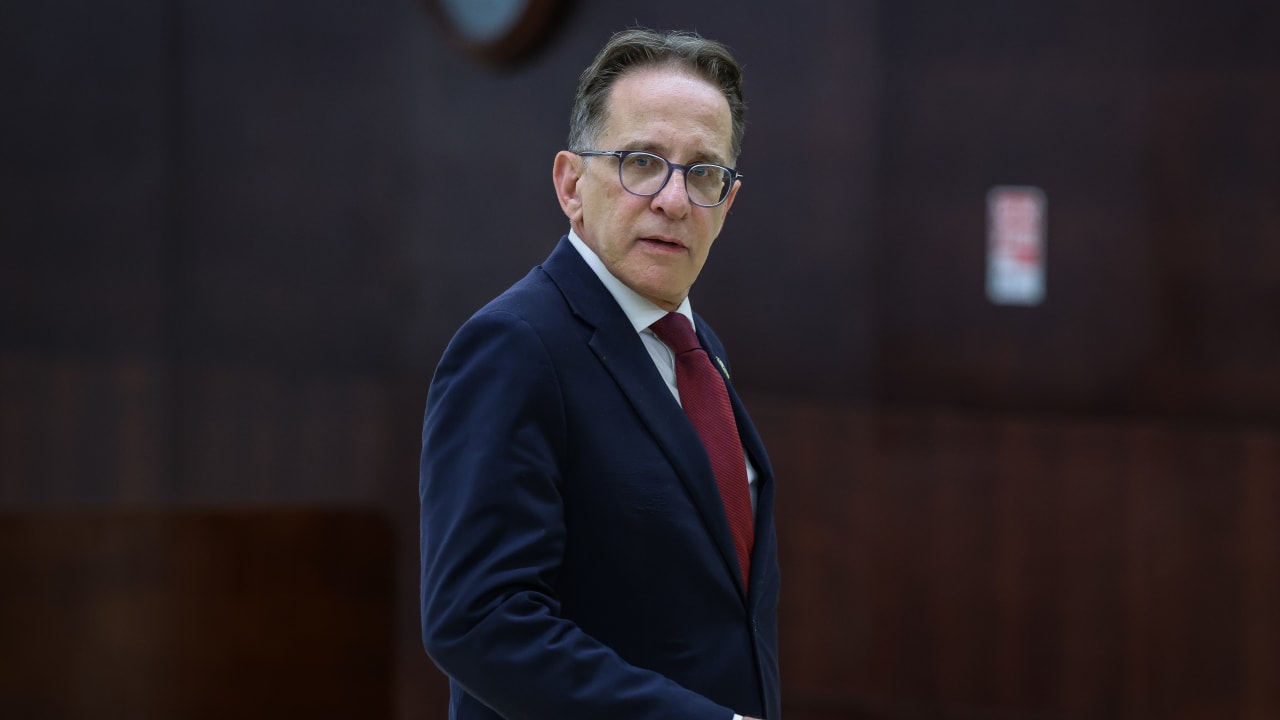
Lod District Court Judge Michael Karshen said Monday that there is “reasonable suspicion” in the investigation into Prime Minister’s Office chief of staff Tzachi Braverman. Not only has the suspicion failed to weaken, but it has strengthened, Karshen said during a hearing on a police appeal seeking to reinstate tighter restrictions on Braverman.
The hearing, held at the Central District Court in Lod, focused primarily on whether Braverman should again be barred from leaving Israel and whether restrictions limiting his contact with key figures, including Prime Minister Benjamin Netanyahu, should be expanded.
The case is part of the so-called “midnight meeting” affair, tied to the broader probe into the leak of classified documents to the German tabloid Bild. The investigation centers on claims by former prime ministerial spokesman Eli Feldstein that Braverman told him he could “turn off” an inquiry into the leak.
The Bild leak itself is part of a wider investigation into the unauthorized transfer of sensitive security materials abroad during wartime, including documents relating to hostage negotiations following the October 7, 2023, massacre by Hamas in southern Israel.
The transfer of materials unfolded against the backdrop of mounting public outrage after six Israeli hostages were murdered in Gaza, and has intersected with what has become known as the “Qatargate” investigation, examining alleged improper channels and external influences surrounding hostage diplomacy.
Braverman’s attorneys argued in court that the central dispute is not whether suspicion exists at the low threshold required early in an investigation, but whether the continued restrictions – particularly a travel ban – remain proportionate.

They maintain that initially, police did not claim that Braverman posed a flight risk, and that a travel ban is traditionally used to prevent escape or ensure appearance, not as a tool to preempt alleged obstruction.
The defense further argued that if investigators believed Braverman could obstruct the probe, such concerns should have been raised immediately after Feldstein’s public interview – not retroactively framed as a developing rationale.
Police prosecutors countered that the investigation has moved well beyond a “version v. version” dispute and that the evidentiary picture has strengthened considerably in recent weeks.
Braverman's travel may damage the investigation
They argued that because the case is highly public and investigative steps often become known quickly, investigators must retain the ability to summon Braverman for questioning immediately. According to police, in one instance, a witness gave testimony at noon, and Braverman was summoned roughly two hours later – before information could spread.
In that context, police said, it was insufficient for Braverman to commit to appearing within 12 hours of a summons. Investigators warned that if he were abroad, the ability to move quickly could be compromised and that the risk of obstruction would increase.
Police also pushed back against arguments previously accepted in part by the Rishon Lezion Magistrate’s Court, that restrictions should be weighed against potential diplomatic harm stemming from Braverman’s planned appointment as Israel’s ambassador to the United Kingdom.
They argued that such considerations fell outside the proper legal framework for assessing investigative risk.
During the hearing, Karshen criticized the lower court’s decision to factor in potential diplomatic implications, questioning whether foreign relations considerations should play a role in a criminal procedural decision.
In parallel, Karshen also expressed concern over the prolonged cycle of temporary restrictions and repeated hearings, remarking that it was unclear what the “end game” of the process was and that restrictions could not continue indefinitely without resolution.
The judge proposed the compromise of an eight-day travel ban, but Braverman’s attorneys declined the offer. Karshen reserved his decision, indicating that a ruling would be issued separately.
The court proceedings come amid mounting institutional pressure on Braverman. The Civil Service Commission recently summoned him to a pre-suspension hearing after the prosecution recommended that he be suspended from his position for six months. He was approved in September to take up the post of ambassador to the UK.
The investigation stems from allegations that Braverman was aware of, and possibly discussed, a probe into the leak of classified materials to Bild before it became public. Feldstein has claimed that Braverman warned him that an investigation had been opened and said he could “shut it down.”
Braverman has denied wrongdoing.