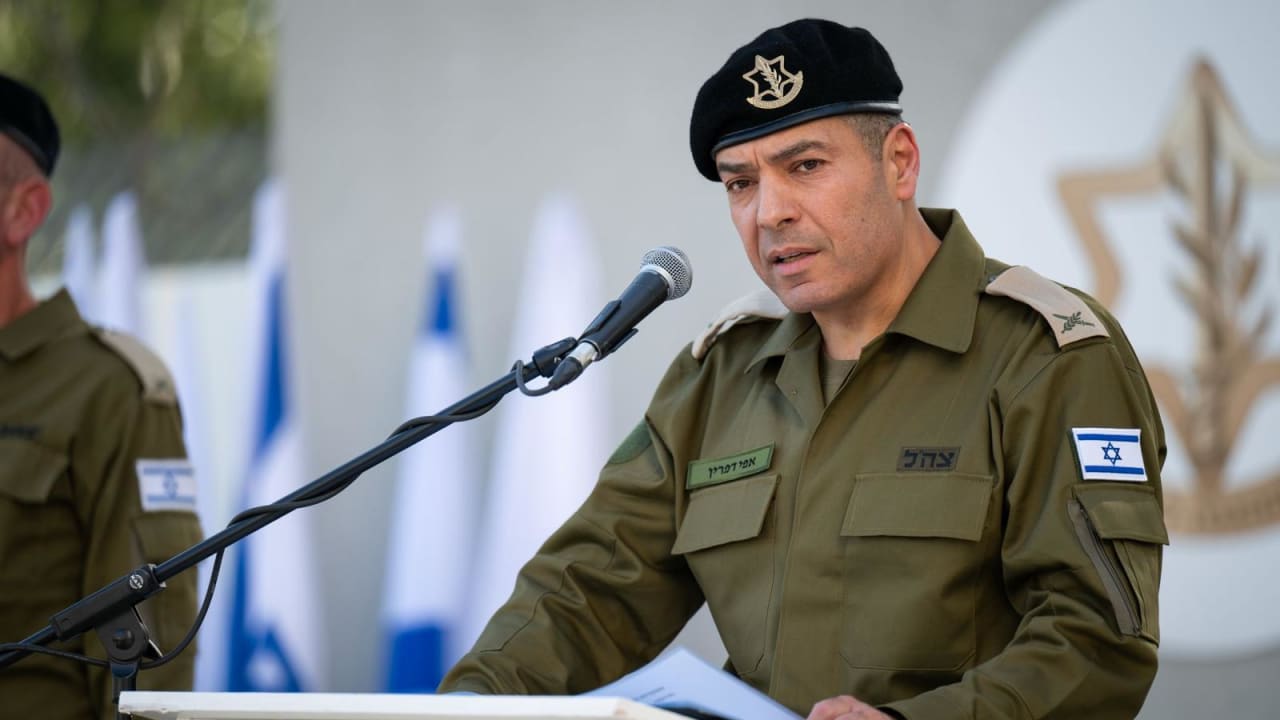
The IDF addressed the public on Friday through IDF spokesperson Effie Defrin, reassuring citizens about their readiness amid escalating tensions with Iran.
Defrin stated that the IDF remains on high alert and is prepared for any changes in the operational situation.
“We are closely monitoring regional developments and are aware of the public discourse regarding Iran," He said. "The IDF is ready to defend; our eyes are open in all directions, and we are more alert than ever in response to any changes in the operational reality.”
Defrin emphasized that there has been no change in the current security guidelines and urged the public to rely only on official announcements from the IDF spokesperson channels and the Home Front Command.
US military buildup
Shortly before his statement, it was reported that the United States aircraft carrier, USS Gerald R. Ford, had arrived in the Mediterranean Sea as part of preparations for a potential conflict.
The United States has significantly increased its military presence in the Middle East after US President Donald Trump warned Iran that it must reach an agreement within “a maximum” of 15 days, or else “bad things will happen.”

According to former Pentagon officials and national security experts, this US military buildup is substantial enough to support an air campaign lasting several weeks, with its scale and the speed of military buildup making an attack highly likely.
The US military presence in the Middle East resembles the buildup before the 2003 invasion of Iraq and is even larger than the recent American military buildup in the Caribbean ahead of the attempted capture of ousted Venezuelan President Nicolás Maduro.
"This is a buildup like what we saw just before the Iraq War in 2003, especially in terms of air power," said Becca Wasser, a military strategy expert at the New American Security Institute.
Iran’s maritime threat
Meanwhile, the Alma Research Institute analyzed Iran’s maritime threat in the Strait of Hormuz.
Iran has employed threatening rhetoric regarding the possible closure of the strategically important strait and has conducted large-scale naval exercises in the area. Key insights from the analysis indicate that Iran's control over Gulf islands and coastal areas enhances its operational capabilities.
Iran frequently uses fast-attack boats, unmanned aerial vehicles (UAVs), mines, and swarm tactics to challenge superior naval forces. Its advanced arsenal, which includes anti-ship missiles, drones, and more than 1,000 unmanned vessels, strengthens Iran’s deterrence.