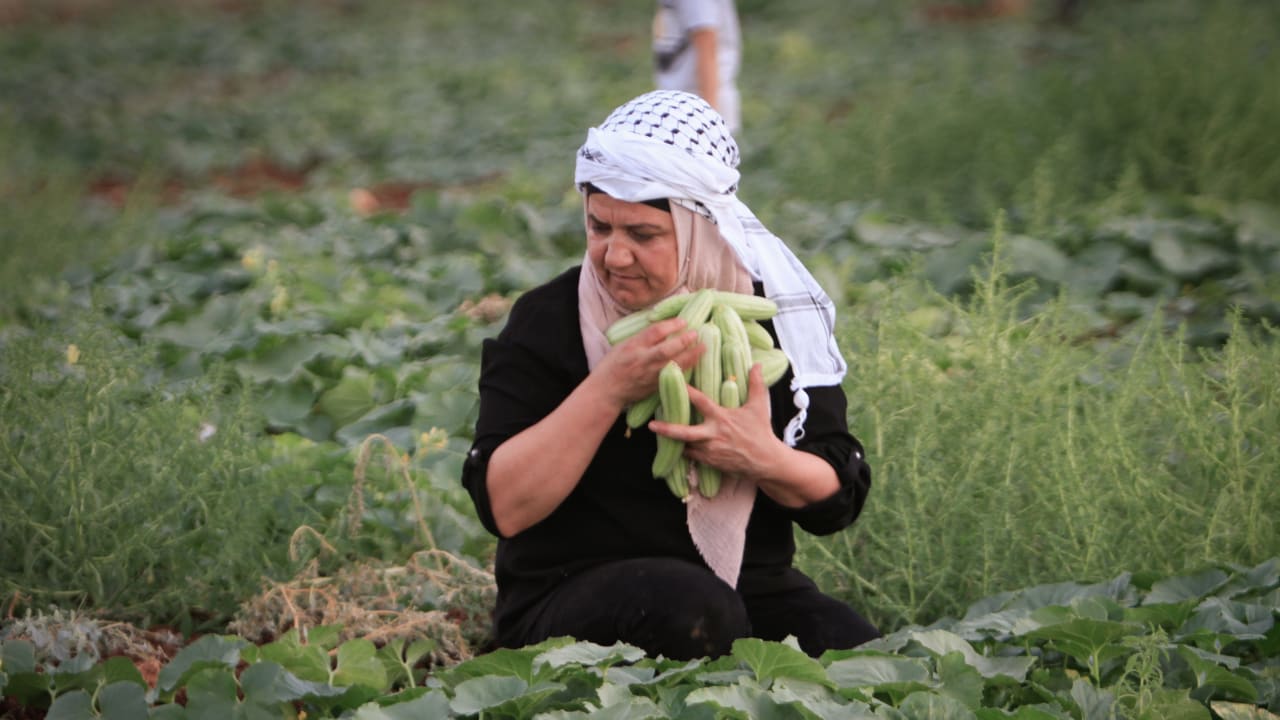
Nearly half of all cucumbers imported from the Palestinian Authority have been contaminated, as revealed on Monday during a Health Committee discussion on the extent of contaminated agricultural produce from the Palestinian Authority. Approximately 15,000 tons of produce arrive annually.
"In my opinion, we should not import any agricultural produce from the Palestinian Authority at all. I do not trust my enemy to grow my food, which can easily be poisoned," MK Limor Son-Har Melech (Otzma Yehudit), who chairs the committee and initiated the discussion, explained.
"I call on anyone who can afford it; make sure to buy Israeli agriculture. We have excellent farmers, great produce, fresher, healthier, and most importantly, far more Zionist."
She continued, "The data paints a picture of true health negligence. The goods coming from the Palestinian Authority are contaminated with pesticide residues at alarmingly high levels. The Health Ministry itself warns that exposure to such pollutants could lead to serious diseases, including cancer, liver and kidney damage, and severe harm to the development of children, babies, and fetuses.
"Although the procedure dictates that goods be held in warehouses until lab results are received, in practice, the produce is immediately distributed to markets. By the time the concerning results arrive several days later, thousands of tons of contaminated produce are already on the plates of Israeli citizens. The reason for not holding back the produce is the Civil Administration's stance, which prioritized avoiding harm to the shelf life of the goods and the Palestinian economy over safeguarding public health in Israel," Har-Melech concluded.

Attorney Avishag Schwartz, from the legal department of the "Lavi" organization, noted that agricultural produce transferred from the Palestinian Authority to Israel is contaminated with pesticide residues at dangerously high levels.
A report published by the State Comptroller a year and a half ago indicated that between 2015 and 2022, the percentage of samples found to have abnormal pesticide residues ranged from 27% to 40%, with a steady increase over the years.
The samples taken at the crossings are sent for laboratory testing, and results are received within a few days, but the produce is distributed immediately, before test results are received. Thus, in practice, thousands of tons of produce with irregularities are already on the shelves.
She stressed that, given the dangerous levels of harmful substances in the produce, about 50%, the upcoming changes are not enough.
Dr. Ziva Hamama, Director of the Risk Management Department at the Health Ministry, warned that, to date, no suspension of food storage has been issued due to the position of the Coordinator of Government Activities in the Territories.
The Coordinator agreed to the suspension starting in eight months. She explained that cucumbers brought from Palestinian Authority areas were contaminated in 50% of cases, tomatoes in 49%, and hot peppers in 66%.
Five different pesticides In 13% of the Palestinian-grown produce
In 13% of the produce, more than five different pesticides were detected, and in 14% of the samples, organophosphates were detected, which are neurotoxic and pose a risk to developing fetuses, as well as to babies and children with developmental defects. Exposure to the active substance also increases the risk of Parkinson’s disease.
Dr. Hamama explained that soon, two field tests would begin, the list of authorized farmers would be managed more practically, additional sampling would be conducted more frequently at the crossings, and financial penalties would be imposed on violators of the regulations.
The produce would be suspended in the warehouse until a clean result is received. Amos Zwerz, Coordinator of Health in the West Bank at the Ministry, admitted that the Civil Administration’s considerations for preventing the suspension of marketing until test results were received were based on economic-security concerns and the preservation of the security situation in the area. "After October 7, they realized that public health is more important."
Samir Maadi, the Agricultural Coordinator at the Civil Administration, responded that any farmer found with contaminated produce had their goods banned from the market. Out of about 3,000 farmers, several hundred are disqualified. A farmer whose goods were disqualified can return to the market after three months, following re-examination.
MK Amit Halevi (Likud) warned, "The data provided by the Health Ministry itself shows that the food of Israeli citizens is poisoned, and the Coordinator of Government Activities' considerations should not influence the ministry’s decisions. Israeli citizens have been suffering from cancer for years because of this produce and the Health Ministry remains silent. Employees of the Ministries of Agriculture and Health have failed in their duties and their mission and obeyed the Civil Administration to poison the citizens."
He called for anyone who has developed cancer as a result of this contaminated produce to sue the head of the Civil Administration who issued this order. He warned that while in the 1990s the volume of produce was about 70,000 tons annually, today the known volume to the authorities is about 14,000 tons per year. "The volume hasn’t changed; what has changed is the increase in smuggling."