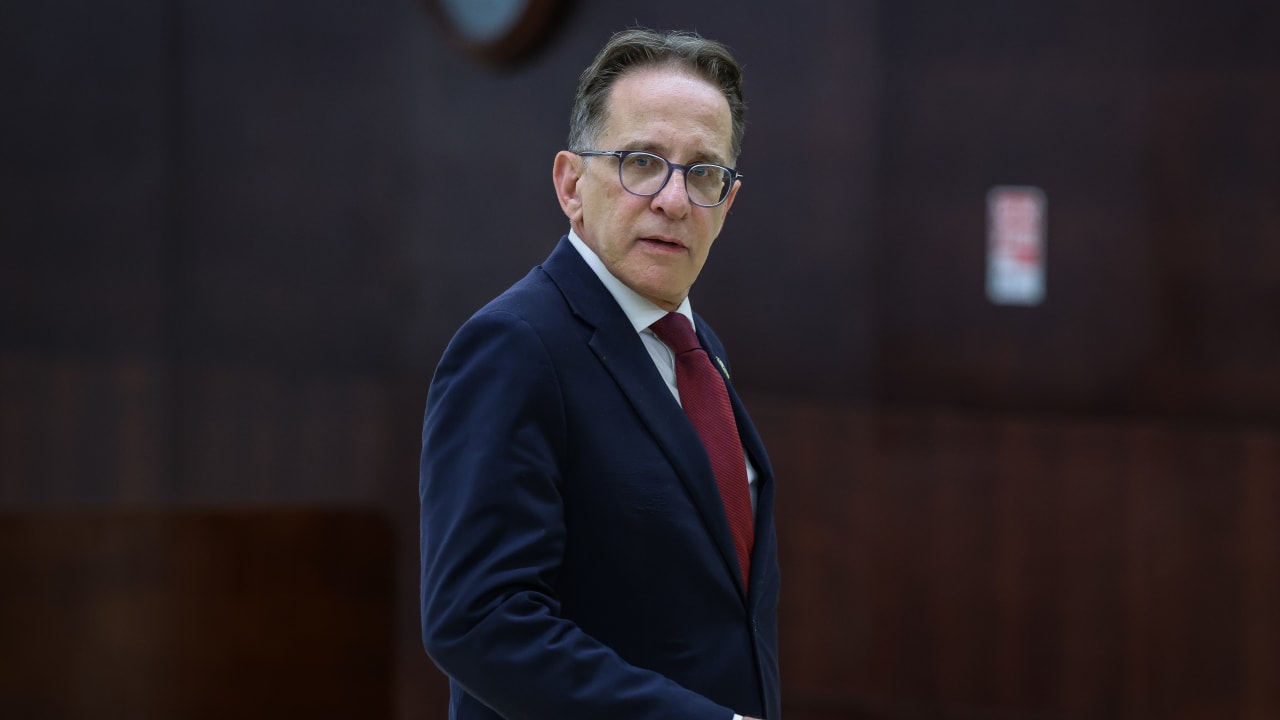
The restrictive conditions imposed on Prime Minister’s Office chief of staff Tzachi Braverman were set to expire at noon on Wednesday, but have now been extended by one day, with the Rishon Lezion Magistrate’s Court scheduled to hold a broader hearing on Thursday to determine whether they should remain in place.
At a hearing before Lod District Court Judge Michael Karshen on Wednesday morning, Braverman’s representatives agreed to temporarily extend the restrictions until Thursday, after police submitted a request to continue the conditions shortly before they were due to lapse, according to the court protocol.
In the written decision issued later that day, the court approved the interim extension, noting that the move was made with the state’s consent and would preserve the existing limitations pending a fuller hearing on their necessity.
Defense counsel argued during the hearing that investigators had failed to meet the procedural deadline for seeking an extension - set for 12:00 p.m. - and that new material presented after that point should not be accepted without affording Braverman an opportunity to respond.
Prosecutors countered that the circumstances warranted maintaining the status quo until the court could consider the request on the merits.

Braverman has been under travel restrictions and limitations on contact with certain individuals as part of an ongoing investigation linked to the leak of classified material to the German newspaper Bild - known as the “midnight meeting” affair.
The leak at the center of the probe concerns classified operational material that was published by Bild in early September, at a time when indirect negotiations between Israel and Hamas over a possible hostage-ceasefire framework were ongoing through Egyptian and Qatari mediators.
The publication - which outlined Hamas’s internal negotiating posture - came just days after six Israeli hostages abducted on October 7 had been murdered by Hamas in captivity in Rafah: Carmel Gat, Eden Yerushalmi, Hersh Goldberg-Polin, Ori Danino, Almog Sarusi and Alexander Lobanov.
Probe examines if Bild leak ties to PMO 'midnight meeting'
Investigators are now examining whether the transmission of that material to Bild - and the subsequent handling of internal inquiries into its source - intersected with a late-night meeting involving senior Prime Minister’s Office officials that has since become known as the “midnight meeting.”
Per allegations, the discussion is believed to have taken place as security authorities were reviewing the leak’s origins, with police probing whether any contact between political appointees and professional officials may have affected how the matter was handled at a sensitive stage in hostage negotiations.
The episode has unfolded alongside the broader so-called “Qatargate” probe, in which authorities are investigating alleged efforts by political figures to shape public messaging and wartime decision-making, under alleged influence by Qatari individuals.
While the investigations remain formally distinct, overlapping personnel and communications between the cases have raised concerns among law enforcement about possible interference in security-sensitive processes at the political level.
The investigation focuses on claims by former prime ministerial spokesman Eli Feldstein that Braverman told him he could “turn off” an internal inquiry into the source of the leak - an allegation Braverman has denied.
Police have argued in court filings that the restrictions are necessary to safeguard the integrity of the investigation. Braverman’s attorneys have countered that while the low threshold of reasonable suspicion required at this stage may exist, the continued imposition of sweeping limitations on a serving senior official is disproportionate absent concrete investigative needs.
Mizrahi is expected to hear arguments on Thursday regarding whether the conditions should be maintained, modified, or allowed to lapse.