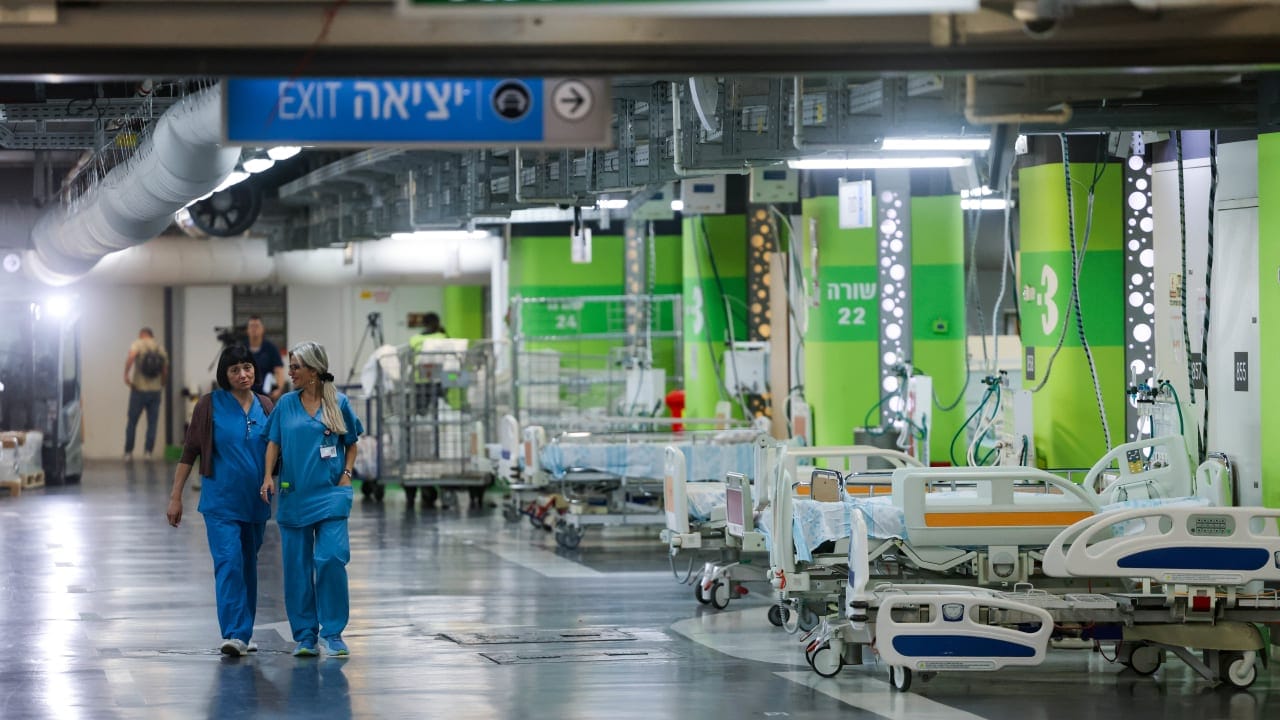
Israel’s Health Ministry and Home Front Command had rapidly reduced hospital occupancy, transferred hundreds of patients, and expanded home hospitalization to prepare for mass-casualty scenarios during Operation Roaring Lion, data released this week revealed.
Within just 36 hours of the start of Operation Roaring Lion, Israel’s healthcare system created significant hospitalization reserves at hospitals across the country, according to the Health Ministry.
The move, carried out in coordination with the Home Front Command, was designed to enable the absorption of large numbers of casualties while maintaining continuity of care and protecting patients and medical staff.
According to ministry data, the shift to a full emergency routine, known as Alert Level D, was based on three central measures: early and controlled patient discharges, transfers between hospitals, and a significant expansion of home hospitalization.
Through these steps, the system met its ward decongestion targets at nearly all medical institutions within a day and a half.

Under the new guidelines, general hospitals were instructed to reduce occupancy to about 50%, while higher-risk hospitals were given a target of roughly 60%.
The goal was to reduce crowding, enable safer movement into protected and underground spaces, and create operational flexibility for receiving casualties as developments on the ground unfolded.
The early discharge of patients was carried out gradually and based on individual medical judgment. In cases where continued monitoring was required, complementary community-based solutions were activated, including home hospitalization and telemedicine, in cooperation with the health funds.
Transfers between hospitals accelerated nationwide
The Health Ministry said the move had been planned in advance as part of lessons learned from previous operations and ongoing emergency preparedness.
At the same time as patients were discharged, a national program was activated to transfer departments and patients between hospitals, especially where there were major differences in levels of protection.
In total, about 800 patients were included in the transfer plan. So far, 243 transfers have been completed in the general hospitalization system, along with another 284 in geriatric and mental health frameworks, the ministry said.
Officials added that all transfers in the general hospitalization system were completed within just 36 hours of the start of the campaign.
The operation is managed through a dedicated hospitalization command center within the Health Ministry’s national health emergency headquarters, which monitors hospital conditions in real time and coordinates activities with the Home Front Command and operational bodies.
Another central layer of the plan was expanding home hospitalization. As of Tuesday, March 3, at 4 p.m., 498 home hospitalizations had been carried out through the health funds since the start of the operation: Some 316 through Clalit, 118 through Meuhedet, 37 through Maccabi, and 27 through Leumit.
The measure frees hospital beds for casualties while allowing patients to continue receiving supervised medical treatment at home. The option of home hospitalization under hospital responsibility was also expanded, allowing closer medical oversight and monitoring in more complex cases.
The Health Ministry said that the combination of controlled early discharge, inter-hospital transfers, and broader home hospitalization has helped the healthcare system maintain control of the situation even under extreme scenarios.
“Nothing is perfect. We are constantly improving and tightening procedures together with close coordination with the Home Front Command,” a senior ministry official said.
“We prepared Assuta Hospital for emergencies, and there is a parking facility there so that, if a hospital becomes non-operational, we will be able to absorb patients there as well.”