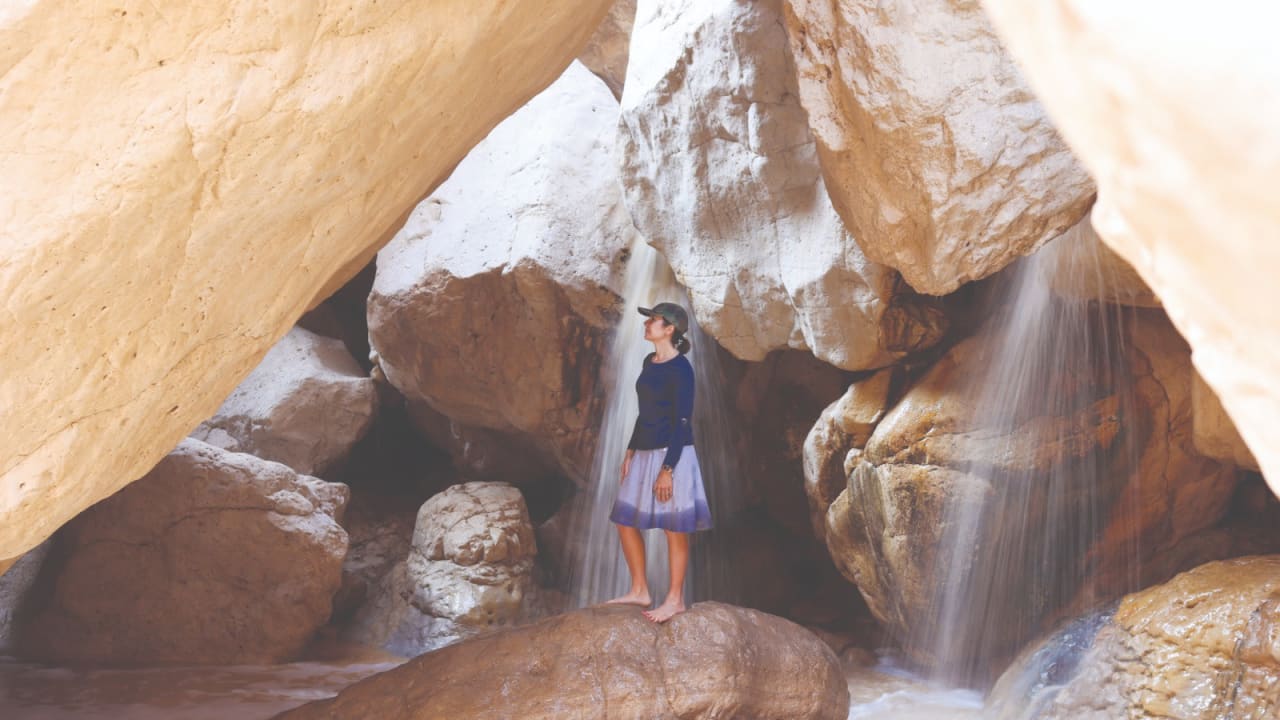
We’re hiking through a desert canyon on a group hike, heading east from the outskirts of the ancient city of Arad toward a viewpoint overlooking the Dead Sea. The canyon is rocky and stunning, all carved in stone and sharp shadows.
As we make our way through, we encounter standing pools of water, left behind when winter rains rush through the canyon in powerful torrents. Some of these pools are deep enough to swim in, glowing an improbable shade of turquoise green against the surrounding stone.
Together, we climb up and down over mid-canyon waterfalls, scrambling past tawny, jagged rock faces worn smooth by centuries of rushing water. As we ascend toward the viewpoint, desert birds fly high above a gaping valley.
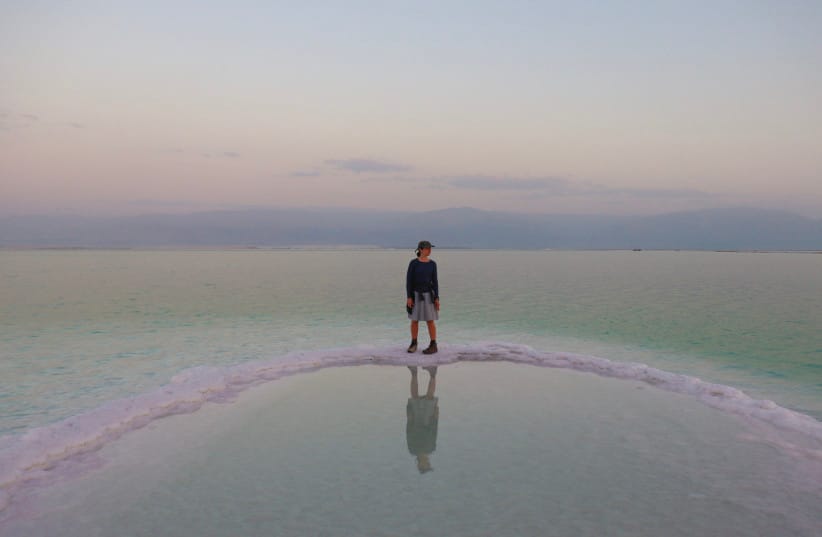
And then, the reveal: the Dead Sea, shining in shades of turquoise and silver in the distance, flanked by the hazy mountains of Jordan on the far shore. It is spectacular.
A few months ago, one man from this group informed me that he would not be joining us on the desert sections.
“Why wouldn’t you?” I asked, genuinely baffled. I couldn’t imagine why anyone would want to miss what I consider the most beautiful part of Israel. His answer surprised me. He believed the desert was boring – “just the same old sand dunes.”
But Israel’s deserts are the opposite of boring.
The beauty of the Israeli desert landscape
From the dramatic cliffs of the Judean Desert to the vast craters of the Negev and all the way south to the Red Sea shores of Eilat, the natural terrain here is as varied and striking as anything in the country’s lush North.
Even the Dead Sea – arguably one of the most remarkable natural features on the planet – is far more than a tourist attraction. It is a beautiful, fascinating, and storied place.
I think the desert suffers from the same problem as the Dead Sea does – people think they already know what it looks like before they get there. I know I did.
Growing up hearing the story of Lot’s wife, Sodom, and Gomorrah, I pictured fire and brimstone, a cursed wasteland, and a woman frozen in salt against a bleak and lifeless backdrop. Something out of a disaster movie.
Standing here on a cool winter morning, watching the turquoise water shimmer against golden cliffs, I realize how wrong that picture was.
The Torah itself seems to acknowledge a transformation. The area where the Dead Sea now sits is described in Genesis as the Valley of Siddim – a valley, not a sea. Before the destruction of Sodom, this plain was lush and well-watered, “like the garden of God,” as the Torah puts it.
The Jordan River flowed through and periodically flooded the area, creating fertile land. Then, in one catastrophic act, an oasis became a salt-encrusted wasteland.
The formerly verdant plain gave way to a vast, mineral-laden lake – Yam Hamelach, the Salt Sea.
Interestingly, the Torah never calls it the Dead Sea. It’s referred to as the Salt Sea, the Sea of the Arabah, and the Eastern Sea.
It served primarily as a boundary marker for the Land of Israel rather than a destination. And south of the Dead Sea, there is in fact a pillar of salt that tour guides will tell you is Lot’s wife. It’s hard not to smile at that.
But the story of this place doesn’t end with destruction. The prophet Ezekiel envisioned water flowing eastward from the Temple, growing deeper and wider as it traveled, until it reached the Dead Sea and healed its waters.
In his vision, fishermen would one day spread their nets along its shores, and trees would grow along its banks. Even in the prophetic imagination, this isn’t a permanently cursed place. It’s a place waiting for restoration.
In the meantime, the Dead Sea is extraordinary enough as it is. Sitting 430 meters below sea level, it holds the record for the lowest point of dry land on earth. Its salinity – around 34% – makes it nearly 10 times saltier than the ocean.
Nothing can survive in its waters, which is how it earned its more modern, morbid name. And yet the surrounding area teems with life. Ibex pick their way along the cliffsides. Hyraxes sun themselves on the rocks.
Foxes and wolves roam the desert edges. Freshwater springs feed hidden oases like Ein Gedi, where King David once hid from Saul in the caves above a waterfall.
Researchers have even discovered freshwater springs and accompanying microorganisms at the bottom of the Dead Sea itself – life insisting on existing in the most unlikely of places.
And then there’s the matter of timing. Most tourists experience this landscape in the brutal summer heat, sweating through a sunrise climb up Masada before retreating to an air-conditioned hotel.
But winter is when the desert truly comes alive. The punishing heat is gone. The light turns golden and soft. Desert streams flow with winter rains, carving through canyons and filling those unexpected swimming pools we encountered on our hike.
The air is cool and clear, and you can hike for hours without wilting.
Our group is hiking the Israel Trail through this region right now, section by section. I don’t blame anyone for having preconceptions about the desert – I had my own. But this landscape has a way of changing minds. It’s ancient, dramatic, and full of surprises.
You just have to show up and walk it to understand.
The writer is the author of From Southerner to Settler: Unexpected Lessons from the Land of Israel and the founder of Hiking the Holyland.